
Results for "mix"
196 films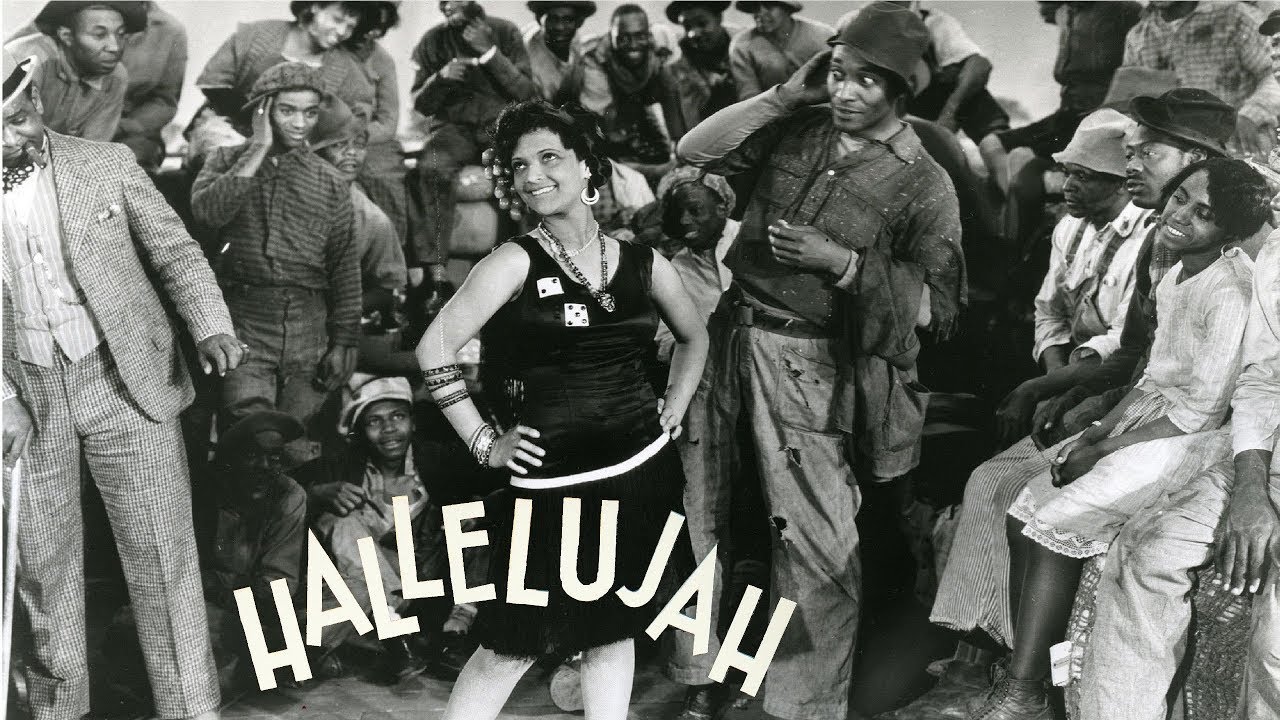
Hallelujah is a 1929 American Metro-Goldwyn-Mayer musical featuring an all-black cast directed by King Vidor and starring Daniel L. Haynes and Nina Mae McKinney. Filmed in Tennessee and Arkansas and chronicling the troubled quest of a sharecropper, Zeke Johnson (Haynes), and his relationship with the seductive Chick (McKinney), Hallelujah was one of the first films with an all-African American cast produced by a major studio. (Although frequently touted as Hollywood's first all-black cast musical, that distinction more properly belongs to Hearts in Dixie, which premiered several months earlier.) It was intended for a general audience and was considered so risky a venture by MGM that they required King Vidor to invest his own salary in the production. Vidor expressed an interest in "showing the Southern Negro as he is" and attempted to present a relatively non-stereotyped view of African-American life. Plot: A sharecropper decides to become a preacher after falling for a vamp from the city. Development: Years before creating Hallelujah, King Vidor had longed to make a film employing an all-African American cast. He had floated the idea around for years but "the studio kept turning the idea down". Vidor’s was in Europe during 1928 promoting his film The Crowd, when heard of talking motion pictures emerging in the United States. He wanted an all-African American cast to sing "Negro spirituals" after he had seen the success of it on Broadway. Vidor stated, "If stage plays with all Negro casts, and stories like those by Octavus Roy Cohen and others, could have such great success, why shouldn’t the screen make a successful Negro play?" Vidor was able to convince Nicholas Schenck, who was the president of MGM at the time, to get the movie made by framing it more as a film that depicted African American’s sexual deviance. Schenck put it simply to Vidor, "Well, if you think like that, I’ll let you make a picture about whores". Vidor received the inspiration to create this film based on real incidents he witnessed as a child during his time at home in the south. He observed: "I used to watch the Negroes in the South, which was my home. I studied their music, and I used to wonder at the pent-up romance in them". Vidor began shooting in Arkansas, Memphis and Southern California at the MGM studios. Hallelujah was King Vidor's first sound film, and combined sound recorded on location and sound recorded post-production in Hollywood. King Vidor was nominated for a Best Director Oscar for the film. Given the equipment available at the time, the film's soundtrack was a technical achievement, employing a much wider range of editing and mixing techniques than was generally used in "talkies" in this period. The Music: The film gives, in some sections, an authentic representation of black entertainment and religious music in the 1920s, though some of the sequences are Europeanized and over-arranged. A sequence which is of vital importance in the history of classic jazz is in the dancehall, where Nina Mae McKinney performs Irving Berlin's "Swanee Shuffle." Although actually filmed in a New York studio using black actors, the sequence gives an accurate representation of a low-life black dance-hall - part of the roots of classic jazz. Most Hollywood films of the period sanitized black music. Hallelujah and Black Stereotypes: Hallelujah was one of the early projects that gave African Americans significant roles in a movie, and though some contemporary film historians and archivists have said that it had "a freshness and truth that was not attained again for thirty years", a number of contemporary film historians and archivists agree that Hallelujah exhibits Vidor’s paternalistic view of rural blacks that included racial stereotyping. Reception: Exhibitors were worried that white audiences would stay away due to the black cast. They hosted two premieres, one in Manhattan and one in Harlem. The Black people who came to watch the film in Manhattan were forced to sit in the balcony. Hallelujah was commercially and critically successful. Photoplay praised the film for its depiction of African Americans and commented on the cast: "Every member of Vidor's cast is excellent. Although none of them ever worked before a camera or a microphone before, they give unstudied and remarkably spontaneous performances. That speaks a lot for Vidor's direction." Mordaunt Hall, in The New York Times, wrote approvingly of the all-Black cast, stating, "Hallelujah!, with its clever Negro cast, is one of the few talking pictures that is really a separate and distinct form of entertainment from a stage play". The combination of two groundbreaking aspects of the film, audible dialogue and an all-black cast, set the movie apart from its contemporaries. Hallelujah entered the public domain on January 1, 2025. Black Excellence:
Hallelujah

Devil in a Blue Dress is a 1995 American neo-noir mystery thriller film written and directed by Carl Franklin, based on Walter Mosley's 1990 novel of the same name and features Denzel Washington, Tom Sizemore, Jennifer Beals, and Don Cheadle. Set in 1948, the film follows World War II veteran Ezekiel "Easy" Rawlins who, desperate in need of a job, becomes drawn into a search for a mysterious woman. Devil in a Blue Dress received positive reviews, with many praising Cheadle's performance. Plot: A Black war hero is hired to find a mysterious woman and gets mixed up in a murderous political scandal in 1948 Los Angeles. Storyline: It is 1948 in LA and Ezekiel "Easy" Rawlins, an African-American World War II veteran, is looking for work. At his friend's bar, he is introduced to a white man, DeWitt Albright, who is looking for someone to help him find a missing white woman assumed to be hiding somewhere in LA's Black community. This woman, Daphne Monet, happens to be the fiancée of a wealthy "blue blood," Todd Carter, who is currently the favorite in the city's mayoralty race. Daphne Monet is known to frequent the Black jazz clubs in LA. Easy, innocently, accepts Albright's offer; however, he quickly finds himself amidst murder, crooked cops, ruthless politicians, and brutalizing hoodlums. This is a Chandler-esque "who-done-it" with an African-American theme. Synopsis: The bone-deep disillusionment of postwar film noir becomes a powerful vehicle to explore America’s racial injustices in Carl Franklin’s richly atmospheric Devil in a Blue Dress, an adaptation of the hard-boiled novel by Walter Mosley. Denzel Washington has charisma to burn as the jobless ex-GI Easy Rawlins, who sees a chance to make some quick cash when he’s recruited to find the missing lover (Jennifer Beals) of a wealthy mayoral candidate in late-1940s Los Angeles—only to find himself embroiled in murder, political intrigue, and a scandal that crosses the treacherous color lines of a segregated society. Featuring breakout work by Don Cheadle as Rawlins’s cheerfully trigger-happy sidekick, this stylish mystery both channels and subverts classic noir tropes as it exposes the bitter racial realities underlying the American dream. Tagline: In a world divided by black and white, Easy Rawlins is about to cross the line. We do not own the rights to any of this film. This film is being used for historical and educational purposes only. No copyright infringement intended. Black Excellence:
Starring Denzel Washington, Tom Sizemore, Jennifer Beals
Devil in a Blue Dress

The Landlord is a 1970 American comedy-drama film directed by Hal Ashby, adapted by Bill Gunn from the 1966 novel by Kristin Hunter. The film stars Beau Bridges in the lead role of a privileged and ignorant white man who selfishly becomes the landlord of an inner-city tenement, intending to evict the occupants, unaware that the people he is responsible for are low-income, streetwise residents. Also in the cast are Lee Grant, Diana Sands, Pearl Bailey, and Louis Gossett Jr. The film was Ashby's directorial debut. Plot: Naïve 29-year-old Elgar Enders buys a building in a black Brooklyn ghetto to evict the tenants and upgrade it. But instead, he grows fond of the tenants, especially a black woman married to a black radical, and falls in love with a mixed-race girl while his wealthy parents disapprove. Storyline: Elgar Enders, who lives off an allowance from his wealthy parents, buys an inner-city tenement in Park Slope, Brooklyn, which is undergoing gentrification, planning to evict the occupants and construct a luxury home for himself. (A one-man urban renewal project). However, once he ventures into the tenement, he grows fond of the low-income black residents. Enders decides to remain the landlord and help fix the building. He rebels against his WASP upbringing and, to his parents' dismay, romances a black woman and a biracial woman. Trivia: Charlie Murphy, older brother of Eddie Murphy, lived in the neighborhood where the film was shot, and he appears in a brief scene as a boy stealing Elgar's hubcaps. Historical Context: In the early seventies, Hollywood studio executives began to realize there was a huge untapped market for films dealing with Afro-Americans - a situation made obvious by the unexpected success of Cotton Comes to Harlem (1970), an action-comedy film. In the ensuing rush to capture this previously ignored audience, the "blaxploitation" film was born, but the majority of these films were urban crime thrillers like Shaft (1971) and Superfly (1972). Films which attempted to explore racial issues or feature complicated black and white relationships were a rarity, but one unique exception was The Landlord (1970), which was virtually ignored by the public when it opened. Critical Reaction: The film garnered mostly positive reviews from critics. On Rotten Tomatoes, it has received a 93% overall approval rating from 14 critics. Upon its release, New York Times film critic Howard Thompson, called the film "a wondrously wise, sad and hilarious comedy." On September 19, 2007, journalist Mike Hale discussed the film in a New York Times article called "Before Gentrification Was Cool, It Was a Movie". Hale praised the film for tackling the racial tension that arose in the aftermath of the assassination of Martin Luther King Jr. and wrote in surprise how the film "would disappear after its 1970 release – rarely shown and just as rarely discussed." We do not own the rights to any of this film. This film is being used for historical and educational purposes only. No copyright infringement intended. Black Excellence:
Starring Beau Bridges, Lee Grant, Diana Sands
The Landlord

Mr. and Mrs. Loving is a 1996 drama television film directed by Richard Friedenberg that aired on Showtime. This drama is based on the true story of an interracial couple whose marriage defied Virginia law in the 1960s. Starring Timothy Hutton ("Leverage") and Lela Rochon ("Any Given Sunday"). Plot: A racially mixed couple (white man and black woman) live in Virginia which violates the state's miscegenation laws. Arrested on the night of their wedding, Richard Loving and Mildred “Bean” Jeter are given the option to either be imprisoned or leave the state. The couple chooses to move to Washington, D.C. The Civil Rights Movement and the fight for their marriage led to their win of the Supreme Court case Loving v. Virginia. Storyline: A moving and uplifting drama about the effects of interracial marriage in the 1960s. Friends since childhood, and loved by both families, this couple are exiled after their wedding and must wage a courageous battle to find their place in America as a loving family. Reception: Lisa D. Horowitz, writing for Variety said, "Director-scripter Richard Friedenberg has fashioned a straightforward tale that doesn’t pull any punches. He’s a better writer than helmer, crafting some fine dialogue. But he’s blessed with an excellent cast, led by the reliably understated Hutton". Scott D. Pierce of Deseret News wrote, "Showtime doesn't make a lot of movies worth watching, but Mr. and Mrs. Loving is an exception." Trivia: Based on the true story that led the Supreme Court to declare unconstitutional Virginia's anti-miscegenation law (in Loving v. Virginia, 1967), paving the way for legal interracial marriages. We do not own the rights to any of this film. This film is being used for historical and educational purposes only. No copyright infringement intended. Black Excellence:
Starring Timothy Hutton, Lela Rochon, Ruby Dee
Mr. and Mrs. Loving

For Queen and Country is a 1988 British-American crime drama film co-written and directed by Martin Stellman and starring Denzel Washington in Panavision. Washington stars as Reuben James, a Black British former paratrooper, who joined the British Army to escape the poverty of inner city London; Reuben fights in the Falklands War, and upon returning home he finds that society ignores and challenges him while trying to adjust to normal life. As you watch Reuben's hopes for the future fade away, there truly is no justice for the little man. This is a gritty, urban drama. The film received mixed reviews and was a box office flop. It has recently been reevaluated as a serious critique of Thatcherism and its effect in 1980's Britain. Storyline: Reuben, having been discharged from the British military, returns to London after a tour of duty in Northern Ireland and the Falklands, where he was decorated as a war Hero. However, given his vocation to his country, he finds interviews for jobs surprisingly difficult to arrange, even though they were sorted out by his careers officers in the army. Within time, he realizes his illustrious army record holds no sway in everyday life. Trivia: British schoolboy Stephen Lawrence, whose high-profile murder at a bus stop in 1993 led to accusations of institutional racism in the Metropolitan Police, appeared as an extra in this film. Reception: Leonard Maltin described the film as a "striking, laced-in-acid contemporary thriller of life in Thatcherite Britain". We do not own the rights to any of this film. This film is being used for historical and educational purposes only. No copyright infringement intended. Black Excellence:
Starring Denzel Washington, Dorian Healy, Amanda Redman
For Queen & Country
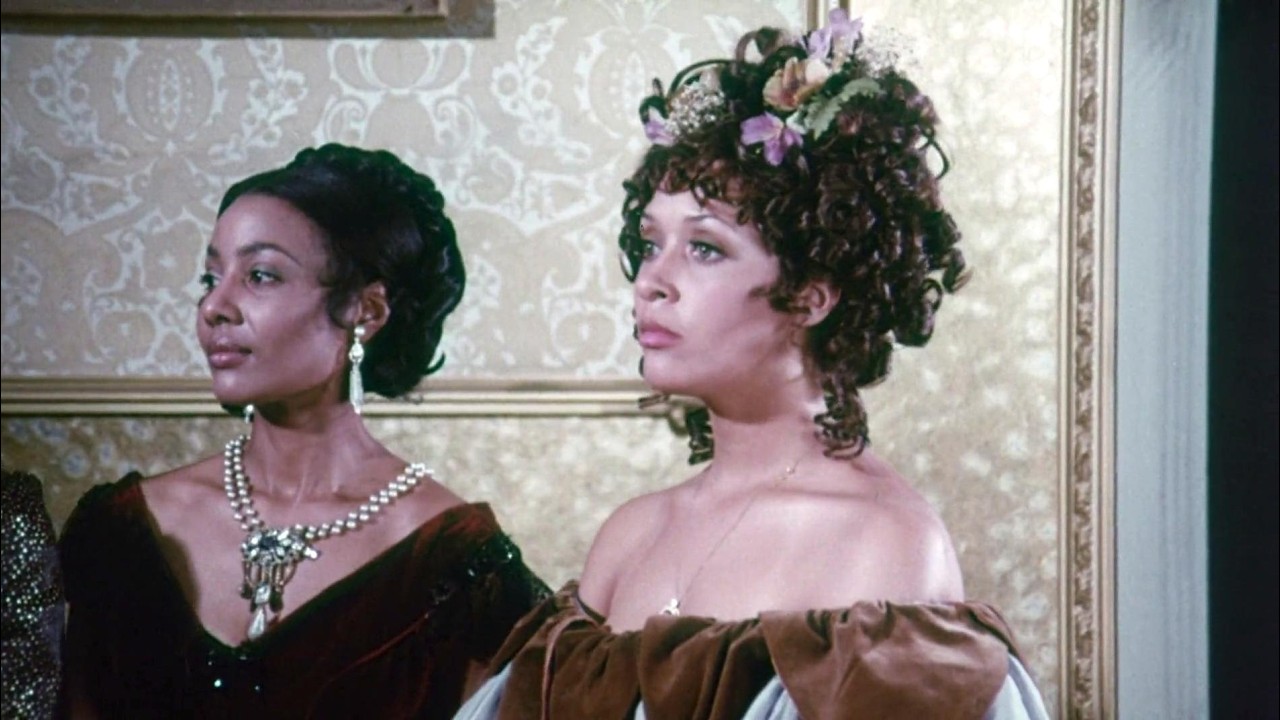
Quadroon (1971), also known as The Color of Truth, is a low-budget historical drama and early blaxploitation film set in 1830s New Orleans and starring Kathrine McKee. Directed by Jack Weis, the film explores the racial caste system of the antebellum South through the story of a "quadroon" woman (a person of one-quarter Black and three-quarters White ancestry) living as an enslaved person. It is noted for being one of the first blaxploitation films to focus on slavery, predating more famous and high-budget "slavesploitation" movies like Mandingo (1975) and Drum (1976). Quadroon is a landmark film that confronts the harsh realities of race, identity, and forbidden love in the pre-Civil War American South. The 1971 exploitation film Quadroon was filmed and set on location in New Orleans, Louisiana. The production featured scenes in the French Quarter and surrounding areas, focusing on the 1830s antebellum era and the historical "plaçage" system. Theme: Set in 19th-century Louisiana, Quadroon follows a young creole woman of mixed heritage whose life is shaped by rigid racial caste systems and unjust social hierarchies. As love, loyalty, and family collide, she must navigate a society determined to define her worth by bloodlines rather than humanity. The film exposes the emotional cost of racism while highlighting resilience, dignity, and the struggle for self-determination. Although the acting and production may be subpar, this emotionally charged period drama remains an important cinematic milestone that challenged audiences to confront America’s racial past with honesty and emotional depth. It is a socially significant story dealing with the complicated history of race and caste in America. Storyline: The story follows Caleb, a young Yankee from Boston who arrives in New Orleans and loses his money in a gambling match against a cruel slaveholder named Monsieur Dupree. To support himself, Caleb becomes a tutor for young women of mixed race who are being raised to become "erudite concubines" for wealthy white men. He falls in love with one of his students, Coral (Kathrine McKee), but finds himself in conflict with Dupree, who intends to purchase her at an auction. We do not own the rights to any of this film. This film is being used for historical and educational purposes only. No copyright infringement intended. Black Excellence:
Starring Kathrine McKee, Tim Kincaid, Robert Priest
Quadroon
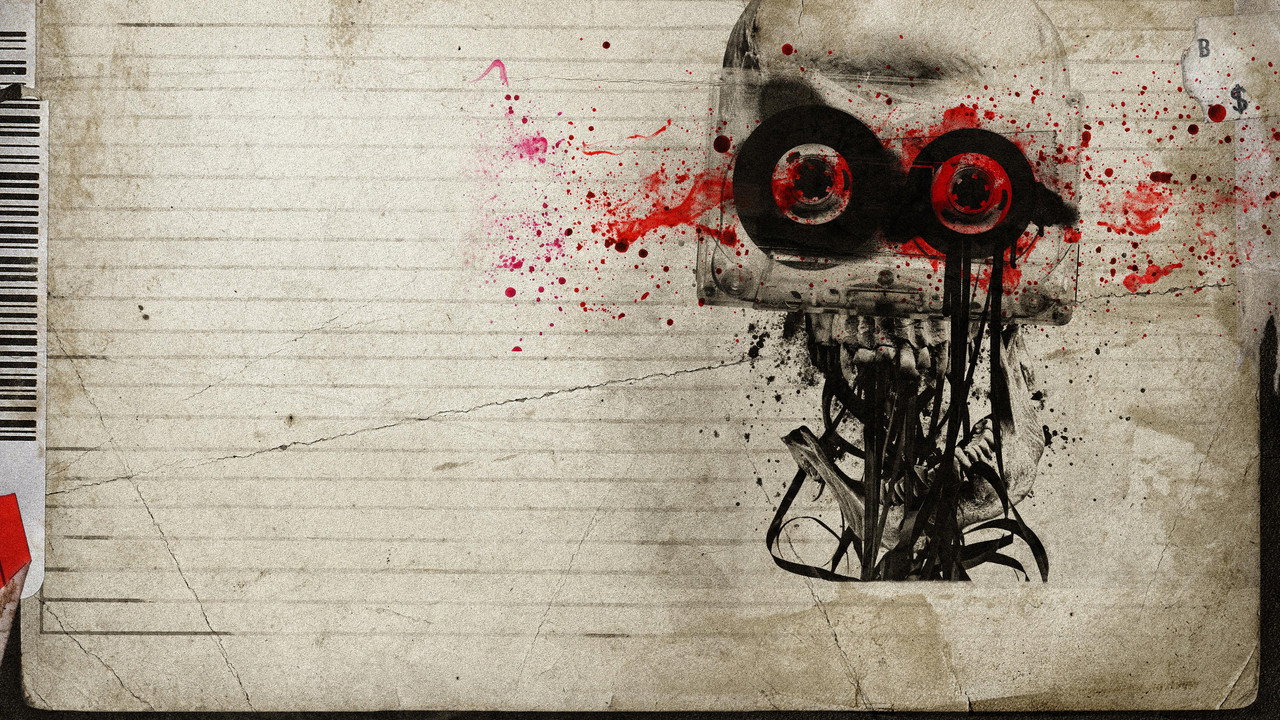
V/H/S/MIXTAPE cranks the volume on horror with a blood-soaked collection of cursed music videos, terrifying performances, and found footage. Press play. Pray it stops.
V/H/S/MIXTAPE

A young college professor and three of her students seek shelter during a storm in the rural farmhouse of a strange woman who collects lifelike mannequins. Miss Leslie's Dolls (1973) Genre: Horror, Folk Horror, Crime Starring: Salvador Ugarte, Terri Juston, Marcelle Bichette Director: Joseph G. Prieto Click on the link and subscribe for more movies ⬇️ 🎥 Explore the spine-tingling world of retro horror, dive into exhilarating martial arts movies, uncover hidden cult classics, retro sci-fi films and discover rare cinematic gems and b-movies! Subscribe to now and never miss the magic of classic cinema. 🍿👻🥋🔮 Explore the latest in thrilling, horror, and action movies on our sister channel, Subscribe now to stay up-to-date with our weekly releases. We ask you to please contact us if you believe there are any copyright issues copyright.com **
Starring Salvador Ugarte, Terri Juston, Kitty Lewis
Miss Leslie's Dolls

The Old Settler is a 2001 television drama film that is an adaptation of John Henry Redwood's play of the same name. Real life sisters Phylicia Rashad and Debbie Allen share their on-and-off stage charm in this production of The Old Settler, a powerful mix of comedy and drama set in Harlem during the 1940s. The Old Settler is directed by Debbie Allen. Quilly (Debbie Allen) has separated from her husband and has moved in with her unwed sister Elizabeth (Phylicia Rashad), an "old settler" (forties slang for a middle-aged woman with no marriage prospects). Quilly is dismayed that her sister has rented a room in their apartment to a handsome young man named Husband Witherspoon (Bumper Robinson) who has traveled from South Carolina in search of his sweetheart Lou Bessie (Crystal Fox). Unable to fit into Lou's fast-paced lifestyle, he courts Elizabeth, who is much older, causing tension between the two sisters. Quilly is both jealous and certain the relationship can never work. We do not own the rights to any of this film. This film is being used for historical and educational purposes only. No copyright infringement intended. Black Excellence:
Starring Phylicia Rashād, Debbie Allen, Bumper Robinson
The Old Settler

The Neighborhood is a 1982 television movie starring Howard Rollins and Sheryl Lee Ralph,. Storyline: A neighborhood in Brooklyn reacts to the first black families moving into the community. Synopsis: Residents of a blue-collar neighborhood in the New York borough of Queens become alarmed when several black families move in to change the ethnic make-up. This pilot to a prospective series was filmed on location in Brooklyn in 1979, several years before Howard E. Rollins, Jr., gained celebrity as an Academy Award nominee for "Ragtime". Synopsis: Based on a story by Jimmy Breslin, "The Neighborhood" takes place in an all-white, blue collar neighborhood in Brooklyn, NY. A "blockbuster" real estate agent begins selling houses to black families (among the new neighbors is recent Oscar nominee Howard Rollins Jr.), resulting in mixed emotions (most of them leaning towards hostility) from the white residents. There are isolated incidents of terrorism, including a burning cross, before wiser heads prevail and the neighbors learn to live together in harmony. The nicer white residents include Christine Belford and Ron Masak, playing the sort of altruistic types that seem to exist exclusively in TV movies. Filmed in 1979, but did not air until 1982. The contrived upbeat ending of "The Neighborhood" is something we can only dream about in real life Amerikkka. Trivia: Although made in 1979, this film was not shown on television until 1982. We do not own the rights to any of this film. This film is being used for historical and educational purposes only. No copyright infringement intended. Black Excellence:
The Neighborhood

The official music video for David Guetta - Hey Mama ft Nicki Minaj, Bebe Rexha & Afrojack. 🔔 Subscribe to be notified for new videos: Follow David Guetta: Instagram: TikTok: Twitter: Facebook: Website: David Guetta - Hey Mama (Feat Nicki Minaj, Bebe Rexha & Afrojack) (David Guetta, Giorgio Tuinfort, Nick Van de Wall, Ester Dean, Bebe Rexha, Sean Douglas, Nicki Minaj) Produced by David Guetta, Afrojack & Giorgio Tuinfort. Co-Produced by Ester Dean. All instruments & programming by David Guetta & Giorgio Tuinfort. Additional Instruments & Programming by Afrojack. Brass Arrangement: Jel Jongen & Giorgio Tuinfort. Brass: The Jay Horns. Trumpet: Serge Plume. Trombone: Jel Jongen. Recorded by Jel Jongen at Jay Sound Studio Hilversum, Netherlands & by Aubry «Big Juice» Delaine and Daniel Zaidenstadt at MSR studios NYC and EKAS studios Santa Monica, CA, assisted by Dan Fyfe and Todd Bergman. Vocals Engineers: Daniel Zaidenstadt, Ryan Gladieux. Vocals mixed by Rutger «Rutti» Kroese. Assisted by Jeremia Jones. Mixed by Afrojack & Rutger «Rutti» Kroese at Afrojack Studio’s Leersum, Netherlands & Cruise Control Studio’s Amsterdam, Netherlands. Publishers: What A Publishing Ltd ; Piano Songs / BMG Talpa Music B.V. (BUMA) / Sony ATV (BMI) ; Warner-Tamerlane Publishing Corp. (BMI) & Eastman Pond Publishing (BMI) ; Damn Dat Music admin by Universal Music Publishing; BMG Platinum Songs/Kiss Me If You Can Music (BMI) All Rights Administered By BMG Rights Management (US) LLC ; DLG Publishing/BMG Talpa Music B.V.; O. Maraj Publishing Co: Harajuku Barbie Music/Money Mack Music/Songs of Universal, Inc.(BMI). Nicki Minaj appears courtesy of Young Money Entertainment / Cash Money Records / Universal Motown records. Bebe Rexha appears courtesy of Warner Bros. Records Inc. (P) & (C) 2014 What A Music Ltd, Under Exclusive Licence to Parlophone/Warner Music France, a Warner Music Group Company Lyrics: Be my woman, girl, I'mma Be your man Be my woman, girl, I'll Be your man Yes I be your woman Yes I be your baby Yes I be whatever that you tell me when you ready Yes I be your girl, forever your lady You ain't never gotta worry, I'm down for you baby Best believe that when you need that I'll provide that you will always have it I'll be on deck keep it in check When you need that I'mma let you have it You beatin' drum like dum di di dey I love the dirty rhythm you play I wanna hear you calling my name Like hey mama mama hey mama mama (Hey) Banging the drum like dum di di dey I know you want it in the worst way I wanna hear you calling my name Like hey mama mama hey mama mama (Hey) Be my woman, girl, I'mma Be your man Be my woman, girl, I'll Be your man Yes I do the cooking Yes I do the cleaning Yes I keep the nana real sweet for your eating Yes you be the boss yes I be respecting Whatever that you tell me 'cause it's game you be spitting Best believe that when you need that I'll provide that you will always have it I'll be on deck keep it in check When you need that I'mma let you have it You beatin' my drum like dum di di dey I love the dirty rhythm you play I wanna hear you calling my name Like hey mama mama hey mama mama (Hey) Banging the drum like dum di di dey I know you want it in the worst way I wanna hear you calling my name Like hey mama mama hey mama mama (Hey) Be my woman, girl, I'mma Be your man Be my woman, girl, I'll Be your man Whole crew got the juice Your d*ck game the truth My screams is the proof Them other dudes get the deuce I might speed in the coupe Leaving this interview It ain't nothin' new, I been f*ckin' with you None of them bitches ain't taking you, Just tell them to make a U (Make a U) Huh, that how it be, I come first like debuts, huh So baby when you need that, give me that word I'm no good, I'll be bad for my baby So I make sure that he's getting his share So I make sure that his baby take care So I make sure mama, toes on my knees Keep him, please, rub him down, be a lady and a freak You beatin' my drum like dum di di dey I love the dirty rhythm you play I wanna hear you calling my name Like hey mama mama hey mama mama (Hey) Banging the drum like dum di di dey I know you want it in the worst way I wanna hear you calling my name Like hey mama mama mama hey mama mama (Hey) Be my woman, girl, I'mma Be your man Be my woman, girl, I'll Be your man
David Guetta - Hey Mama ft Nicki Minaj Bebe Rexha & Afrojack

OMI - Cheerleader (Felix Jaehn Remix) out now on Ultra Records! iTunes: All other stores: Official Video for "Cheerleader (Felix Jaehn Remix)" by OMI Director: Lenny Bass Exec Producer: Mikha Grumet Producer: Carolina Nunez Director of Photography: Angel Barroeta Production Company: Indigo Films Insightful Jamaican artist Omi (Omar Samuel Pasley) is bringing his breakthrough story to the U.S., with the compelling sheen of “Cheerleader,” leading the way. The smash dance song has notched more than 90 million Spotify streams, topping iTunes in 14 territories, including Germany, Australia, Sweden and others (Top 10 in nearly 30 other markets). Released in 2012, a cleverly understated remix by German DJ/Producer Felix Jaehn helped power the global momentum building around the infectious track. “Cheerleader” originally took off in Hawaii, but Omi was getting a larger sense of the song’s ‘stickiness’ where ever he performed it live. “People just gravitated to it, always remarking how it was their favorite.” Felix Jaehn’s 2014 remix added to the combustible nature of the track,” but by deftly imbuing acoustic gestures into the mix – conga, piano, trumpet – embellishing its unornamented feel. “I loved the mix even before it took off,” says Omi. “So calm; And unusual for a remix, it made you want to listen to the words, too.” Follow OMI: Follow Us: