
Results for "york"
124 films
Léon, the top hit man in New York, has earned a rep as an effective "cleaner". But when his next-door neighbors are wiped out by a loose-cannon DEA agent, he becomes the unwilling custodian of 12-year-old Mathilda. Before long, Mathilda's thoughts turn to revenge, and she considers following in Léon's footsteps.
Starring Jean Reno, Natalie Portman, Gary Oldman
Léon: The Professional

An African prince decides it’s time for him to find a princess... and his mission leads him and his most loyal friend to Queens, New York. In disguise as an impoverished immigrant, the pampered prince quickly finds himself a new job, new friends, new digs, new enemies and lots of trouble.
Starring Eddie Murphy, Shari Headley, Arsenio Hall
Coming to America

Claudine is a 1974 American romantic comedy-drama film, directed by John Berry. Claudine was written by Lester Pine and Tina Pine, produced by Third World Cinema, and distributed by 20th Century Fox, starring James Earl Jones, Diahann Carroll, and Lawrence Hilton-Jacobs. The film was released on April 22, 1974, grossing about $6 million, a modest hit for the times. It was praised for showing a new dimension in black cinema during the height of blaxploitation. Synopsis: A single mother of six on welfare and a garbage collector fall in love in 1970s Harlem. Plot: Claudine is a single mother on welfare in New York City who endures an exhausting commute to the suburbs where she works as a maid for wealthy families. In one carefully tended white community, she meets Roop, a charismatic but irresponsible garbage collector. Romance quickly ensues, but Claudine doubts that their relationship is good for her six children, and Rupert, despite his good nature, is reluctant to take on fatherhood. Storyline: Diahann Carroll is radiant in an unforgettable, Oscar-nominated performance as Claudine, a strong-willed single mother, raising six kids in Harlem, whose budding relationship with a gregarious garbage collector (an equally fantastic James Earl Jones) is stressed by the difficulty of getting by in an oppressive system. As directed by the formerly blacklisted leftist filmmaker John Berry, this romantic comedy with a social conscience deftly balances warm humor with a serious look at the myriad issues—from cycles of poverty to the indignities of the welfare system—that shape its characters’ realities. The result is an empathetic chronicle of both Black working-class struggle and Black joy, a bittersweet, bighearted celebration of family and community set to a sunny soul soundtrack composed by Curtis Mayfield and performed by Gladys Knight & the Pips. We do not own the rights to any of this film. This film is being used for historical and educational purposes only. No copyright infringement intended. Black Excellence:
Starring Diahann Carroll, James Earl Jones, Lawrence Hilton-Jacobs
Claudine

Intro - You Should Be Dancing / Alone Massachusets To Love Somebody Words Closer Than Close Islands In The Stream Our Love (Don't Throw It All Away) Ft. Andy Gibb Night Forever / More Than a Woman Lonely Days New York Mining Disaster 1941 I Can't See Nobody And The Sun Will Shine Nights On Broadway How Can You Mend a Broken Heart Heartbreaker Guilty Immortality Ft. Celine Dion Tragedy I Started a Joke Grease Jive Talkin' How Deep Is Your Love Stayin' Alive You Should Be Dancing ----------------------------------------------- Bee Gees, performing live concert at One Night Only Don't forget buy the original DVD © 2013 Bee Gees
Bee Gees - Storytellers

Marfil, daughter of a powerful Spanish businessman, sees her life in New York turned upside down when she is kidnapped and released without explanation. Her father hires Sebastian Moore as bodyguard and, forced to spend every minute together, an inevitable attraction ignites in a world where nothing is as it seems.
Starring Ester Expósito, Hugo Diego Garcia, Pablo Molinero
Drawn Together
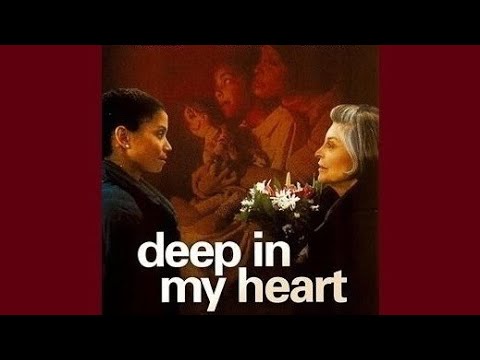
Deep in My Heart is a 1999 American drama television film directed by Anita W. Addison. It stars Anne Bancroft and Lynn Whitfield. It is based on a true story. The film was broadcast on CBS on February 14, 1999. Bancroft received a Primetime Emmy Award for Outstanding Supporting Actress in a Limited Series or Movie for her role. Synopsis: A white woman who was raped by a black man gives the baby up for adoption. The film follows the life of the child as she grows up and has children of her own. Storyline: An adopted woman decides to find her birth mother. Her search leads her to a shocking discovery that she has to face and why her upbringing was not an easy one. Critical Reception: William McDonald of The New York Times said the film is buoyed by "a strong supporting cast" and "[sidesteps] traps of sentimentality", though he admitted, "But what's lost in the blur is a fuller picture of the lonely racial limbo in which Barbara, as a girl, is forced to live. Instead, we have to trust her moodiness and her own testimony to understand her unhappiness." We do not own the rights to any of this film. This film is being used for historical and educational purposes only. No copyright infringement intended. Black Excellence:
Starring Anne Bancroft, Lynn Whitfield, Alice Krige
Deep in My Heart
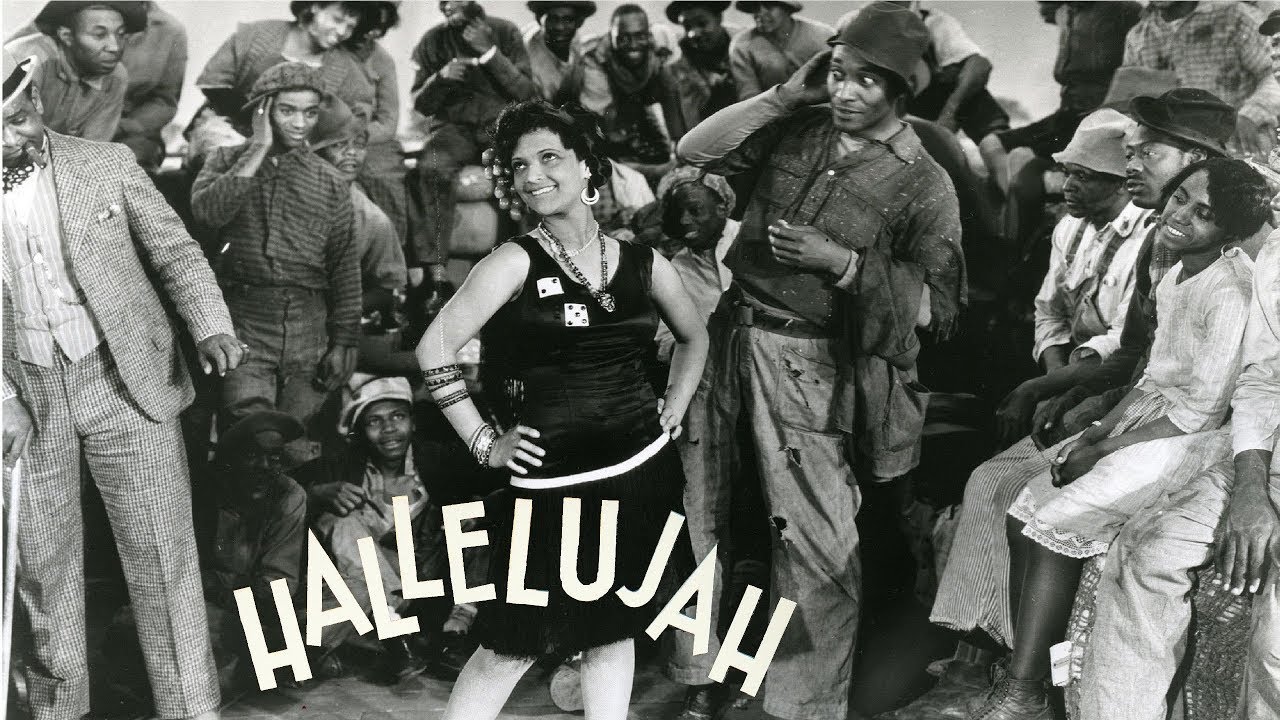
Hallelujah is a 1929 American Metro-Goldwyn-Mayer musical featuring an all-black cast directed by King Vidor and starring Daniel L. Haynes and Nina Mae McKinney. Filmed in Tennessee and Arkansas and chronicling the troubled quest of a sharecropper, Zeke Johnson (Haynes), and his relationship with the seductive Chick (McKinney), Hallelujah was one of the first films with an all-African American cast produced by a major studio. (Although frequently touted as Hollywood's first all-black cast musical, that distinction more properly belongs to Hearts in Dixie, which premiered several months earlier.) It was intended for a general audience and was considered so risky a venture by MGM that they required King Vidor to invest his own salary in the production. Vidor expressed an interest in "showing the Southern Negro as he is" and attempted to present a relatively non-stereotyped view of African-American life. Plot: A sharecropper decides to become a preacher after falling for a vamp from the city. Development: Years before creating Hallelujah, King Vidor had longed to make a film employing an all-African American cast. He had floated the idea around for years but "the studio kept turning the idea down". Vidor’s was in Europe during 1928 promoting his film The Crowd, when heard of talking motion pictures emerging in the United States. He wanted an all-African American cast to sing "Negro spirituals" after he had seen the success of it on Broadway. Vidor stated, "If stage plays with all Negro casts, and stories like those by Octavus Roy Cohen and others, could have such great success, why shouldn’t the screen make a successful Negro play?" Vidor was able to convince Nicholas Schenck, who was the president of MGM at the time, to get the movie made by framing it more as a film that depicted African American’s sexual deviance. Schenck put it simply to Vidor, "Well, if you think like that, I’ll let you make a picture about whores". Vidor received the inspiration to create this film based on real incidents he witnessed as a child during his time at home in the south. He observed: "I used to watch the Negroes in the South, which was my home. I studied their music, and I used to wonder at the pent-up romance in them". Vidor began shooting in Arkansas, Memphis and Southern California at the MGM studios. Hallelujah was King Vidor's first sound film, and combined sound recorded on location and sound recorded post-production in Hollywood. King Vidor was nominated for a Best Director Oscar for the film. Given the equipment available at the time, the film's soundtrack was a technical achievement, employing a much wider range of editing and mixing techniques than was generally used in "talkies" in this period. The Music: The film gives, in some sections, an authentic representation of black entertainment and religious music in the 1920s, though some of the sequences are Europeanized and over-arranged. A sequence which is of vital importance in the history of classic jazz is in the dancehall, where Nina Mae McKinney performs Irving Berlin's "Swanee Shuffle." Although actually filmed in a New York studio using black actors, the sequence gives an accurate representation of a low-life black dance-hall - part of the roots of classic jazz. Most Hollywood films of the period sanitized black music. Hallelujah and Black Stereotypes: Hallelujah was one of the early projects that gave African Americans significant roles in a movie, and though some contemporary film historians and archivists have said that it had "a freshness and truth that was not attained again for thirty years", a number of contemporary film historians and archivists agree that Hallelujah exhibits Vidor’s paternalistic view of rural blacks that included racial stereotyping. Reception: Exhibitors were worried that white audiences would stay away due to the black cast. They hosted two premieres, one in Manhattan and one in Harlem. The Black people who came to watch the film in Manhattan were forced to sit in the balcony. Hallelujah was commercially and critically successful. Photoplay praised the film for its depiction of African Americans and commented on the cast: "Every member of Vidor's cast is excellent. Although none of them ever worked before a camera or a microphone before, they give unstudied and remarkably spontaneous performances. That speaks a lot for Vidor's direction." Mordaunt Hall, in The New York Times, wrote approvingly of the all-Black cast, stating, "Hallelujah!, with its clever Negro cast, is one of the few talking pictures that is really a separate and distinct form of entertainment from a stage play". The combination of two groundbreaking aspects of the film, audible dialogue and an all-black cast, set the movie apart from its contemporaries. Hallelujah entered the public domain on January 1, 2025. Black Excellence:
Hallelujah
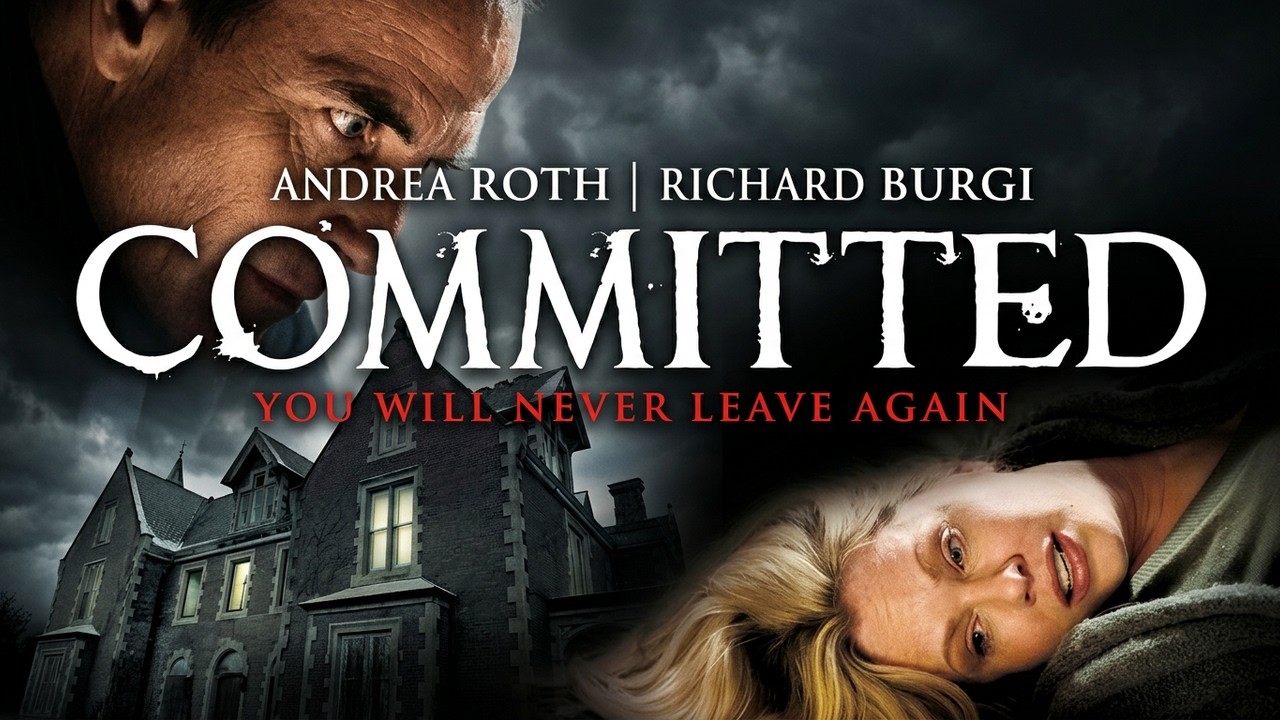
After the death of her fiancé Paul, psychotherapist Dr. Celeste Dupont takes on a new job at the Milburn Institute in upstate New York. The clinic is run by Dr. Quilley, who refers to his patients as “guests” and follows the principle “You are who you think you are.” But when Celeste notices that she is treated as a “guest” as well, she realizes she might be trapped. The charming Dr. Desmond Moore almost succeeds in convincing her to accept she is a patient. After all, the fact that she forgot all the details about her fiancé’s death is indicative that she still has certain issues to solve. Paul did not die in accident, he says, presenting her with a newspaper clipping … it was suicide. Then, one of Celeste’s favorite patients tells her a secret: Quilley is an impostor. The real Quilley was murdered and buried in the cellar. Celeste starts her own investigations, but before she can begin to lose her mind, she learns a shocking truth… _______________________ 👉
Starring Andrea Roth, Richard Burgi, Peter MacNeill
Committed

Separate but Equal is a 1991 American two-part television miniseries that dramatizes the landmark Supreme Court case Brown v. Board of Education, which challenged racial segregation in public schools. The film stars Sidney Poitier as lead NAACP attorney Thurgood Marshall, Richard Kiley as Chief Justice Earl Warren, Burt Lancaster (in his final television role) as lawyer John W. Davis (loser of Briggs v. Elliott and the Democratic candidate in the 1924 US presidential election), Cleavon Little as lawyer and judge Robert L. Carter, and Lynne Thigpen as Ruth Alice Stovall. Directed by George Stevens Jr., the miniseries received critical acclaim for its performances and historical accuracy, highlighting the moral and legal complexities of the case. In 1991, the Academy of Television Arts and Sciences rewarded the film with the Outstanding Miniseries award. The film received 8 nominations for Emmy Awards in 1991 and won 2 and received 3 nominations for Golden Globe Awards in 1992. Synopsis: A dramatization of the American court case that destroyed the legal validity of racial segregation. Storyline: This film follows the true story of the NAACP court challenge of racial school segregation in the Brown vs. Board of Education. This was the struggle that would destroy the legal validity for racial segregation in general and prove to be the start and the first major victory of the civil rights movement. Tagline: The true story behind the most important legal battle of our time. Critical Reception: John Leonard called the film "splendid" and "a triumph" in New York Magazine. While generally praising the film, Richard Zoglin in Time Magazine called the portrayal of Warren's visit to Gettysburg "simplistic." A contemporary review in the Orlando Sentinel called the film "one of television's finest hours." We do not own the rights to any of this film. This film is being used for historical and educational purposes only. No copyright infringement intended. Black Excellence:
Starring Sidney Poitier, Burt Lancaster, Richard Kiley
Separate but Equal

Cane River is a 1982 American romantic drama independent film that was lost until its rediscovery in 2013 and its subsequent re-release in 2018 and beyond. It was written, produced, and directed by Horace B. Jenkins. The film features the lives of African Americans in the US state of Louisiana. While the film premiered in New Orleans, Louisiana, in 1982, Horace Jenkins died before the film could be released in New York City and beyond. The film was considered lost until a negative was recovered in 2013. Following its re-release, Cane River received critical acclaim. Highly rated on Rotten Tomatoes and Metacritic, it was lauded for its exploration of racial history and blending romance with political undertones. Despite some noted technical limitations, critics highlighted its pioneering portrayal of black experiences and its significance in American cinema. Storyline: Written, produced, and directed by the late Emmy Award-winning Horace B. Jenkins, financed by the prominent New Orleans' Rhodes family, and crafted by an entirely African American cast and crew - CANE RIVER is a historically informed love story set in Louisiana's Natchitoches Parish, a "free community of color." Aspiring writer and hopeless romantic Peter - former athlete and scion of an elite Creole family - returns to his hometown and immediately falls for a breathtaking historical tour guide, Maria. Maria's disenfranchised, darker-skinned family disapprove of Peter's family and condemn their burgeoning romance while highlighting the painful legacy of colorism in their tightly-knit community. The lovers must work through Peter's contentious family legacy as privileged, former slave-owning, light-skinned Creoles if they want their romance to survive. Synopsis: The New Orleans Film Society described the film, "Cane River is set near Natchitoches, in one of the first 'free communities of color.' Richard Romain plays Peter Metoyer, home to fight for his land, and Tommye Myrick plays the headstrong Maria Mathis, reluctant to succumb to his charms just because he's the scion of a famous family. Together they confront schisms of class, color and complexion within the black community that threaten to keep them apart and that still roil America today." Themes: Cane River delves into the intricacies of independence and the burdens of personal and collective history. A significant focus is placed on racial identities, emphasizing the interplay between race, complexion, class and societal structure. The economic disparities prevalent in society are not left unaddressed, along with the legacy of Black American history. The story also touches upon the nuances of forbidden romance, and the web of relationships that individuals navigate through. History, both personal and cultural, especially as it pertains to Louisiana, is a recurring theme, The film sheds light on the importance of personal and collective identity, intellect, and the significance of one's roots. Racial complexities and the trauma of slavery are meticulously explored, further delving into the caste systems that still have remnants in society. Themes of love are omnipresent, intertwined with land ownership and its implications. Lastly, the film brings to the fore conflicts revolving around class and skin color, emphasizing the significance of heritage. We do not own the rights to any of this film. This film is being used for historical and educational purposes only. No copyright infringement intended. Black Excellence:
Starring Tommye Myrick, Richard Romain, Barbara Tasker
Cane River

The Liberation of L.B. Jones is a 1970 American neo noir film directed by William Wyler, his final project in a career that spanned 45 years. The screenplay by Jesse Hill Ford and Stirling Silliphant is based on Ford's 1965 novel The Liberation of Lord Byron Jones. The novel, in turn, was based on events that happened in a Southern town where writer Ford lived. After he wrote the book, he was verbally attacked for writing about the events that had occurred in his town. The motion picture's release added to the controversy, especially in Humboldt, Tennessee, where Ford lived. The film explores racial politics in the South during the Jim Crow era. The plot follows L. B. Jones, the richest black man in his Tennessee county, as he navigates the complexities of his wife's affair with a white policeman. This is a gripping and powerful drama that exposes racism, corruption, and injustice in the Deep South. It is a harrowing exploration of systemic oppression and the violent realities of race relations in America. As tensions rise in the racially charged town, Jones’ fight for dignity becomes a symbol of the broader struggle against injustice. The film stars Roscoe Lee Browne, Lee J. Cobb, Lola Falana, Anthony Zerbe, Lee Majors, Arch Johnson, Yaphet Kotto, Eve McVeagh, Chill Wills and Barbara Hershey in an early role. Synopsis: A black undertaker stands against racism in a small Southern town. Plot: A successful African American businessman in the Jim Crow South has a quarrel with a white policeman, suspecting that he is having an affair with his wife. The policeman's colleagues are seeking to avoid publicity. Release: The film was released March 18, 1970 in 4 theaters in Chicago, New York and Los Angeles and grossed $151,000 in its opening week. In the two theaters in New York, Variety noted that the audience in the opening week was 90% Black. After eight weeks of release, it became number one at the US box office. Awards and Nominations: Lola Falana was nominated for the Golden Globe Award for New Star of the Year – Actress. We do not own the rights to any of this film. This film is being used for historical and educational purposes only. No copyright infringement intended. Black Excellence:
Starring Lee J. Cobb, Anthony Zerbe, Roscoe Lee Browne
The Liberation of L.B. Jones

The Landlord is a 1970 American comedy-drama film directed by Hal Ashby, adapted by Bill Gunn from the 1966 novel by Kristin Hunter. The film stars Beau Bridges in the lead role of a privileged and ignorant white man who selfishly becomes the landlord of an inner-city tenement, intending to evict the occupants, unaware that the people he is responsible for are low-income, streetwise residents. Also in the cast are Lee Grant, Diana Sands, Pearl Bailey, and Louis Gossett Jr. The film was Ashby's directorial debut. Plot: Naïve 29-year-old Elgar Enders buys a building in a black Brooklyn ghetto to evict the tenants and upgrade it. But instead, he grows fond of the tenants, especially a black woman married to a black radical, and falls in love with a mixed-race girl while his wealthy parents disapprove. Storyline: Elgar Enders, who lives off an allowance from his wealthy parents, buys an inner-city tenement in Park Slope, Brooklyn, which is undergoing gentrification, planning to evict the occupants and construct a luxury home for himself. (A one-man urban renewal project). However, once he ventures into the tenement, he grows fond of the low-income black residents. Enders decides to remain the landlord and help fix the building. He rebels against his WASP upbringing and, to his parents' dismay, romances a black woman and a biracial woman. Trivia: Charlie Murphy, older brother of Eddie Murphy, lived in the neighborhood where the film was shot, and he appears in a brief scene as a boy stealing Elgar's hubcaps. Historical Context: In the early seventies, Hollywood studio executives began to realize there was a huge untapped market for films dealing with Afro-Americans - a situation made obvious by the unexpected success of Cotton Comes to Harlem (1970), an action-comedy film. In the ensuing rush to capture this previously ignored audience, the "blaxploitation" film was born, but the majority of these films were urban crime thrillers like Shaft (1971) and Superfly (1972). Films which attempted to explore racial issues or feature complicated black and white relationships were a rarity, but one unique exception was The Landlord (1970), which was virtually ignored by the public when it opened. Critical Reaction: The film garnered mostly positive reviews from critics. On Rotten Tomatoes, it has received a 93% overall approval rating from 14 critics. Upon its release, New York Times film critic Howard Thompson, called the film "a wondrously wise, sad and hilarious comedy." On September 19, 2007, journalist Mike Hale discussed the film in a New York Times article called "Before Gentrification Was Cool, It Was a Movie". Hale praised the film for tackling the racial tension that arose in the aftermath of the assassination of Martin Luther King Jr. and wrote in surprise how the film "would disappear after its 1970 release – rarely shown and just as rarely discussed." We do not own the rights to any of this film. This film is being used for historical and educational purposes only. No copyright infringement intended. Black Excellence:
Starring Beau Bridges, Lee Grant, Diana Sands