
Results for "ti west"
10 films
John “King” Marley vive dando la caccia ai ricercati. Ma quando i fratelli Benson colpiscono la sua famiglia, la ricerca di una banda di trafficanti d’armi diventa una questione personale. Seguendo le loro tracce lungo la frontiera tra Stati Uniti e Messico, King dovrà scoprire chi controlla il traffico e capire di chi può davvero fidarsi. Richard Harrison interpreta King, affiancato da Klaus Kinski nel ruolo dello sceriffo Brian Foster. Tra vendetta, contrabbando e lealtà nascoste, il film racconta una caccia all’uomo accompagnata dalle musiche di Luis Bacalov. 🎞️ DETTAGLI DEL FILM Titolo originale: Lo chiamavano King Regia: Giancarlo Romitelli — accreditato come Don Reynolds Sceneggiatura: Renato Savino Soggetto: Renato Savino Musiche: Luis Bacalov Fotografia: Guglielmo Mancori Data di uscita: 18 maggio 1971 (Italia) Luogo delle riprese: Studi Elios Film, Roma, Lazio, Italia ⭐ CAST PRINCIPALE • Richard Harrison — John “King” Marley • Klaus Kinski — Sceriffo Brian Foster • Anne Puskin — Carol Marley • Goffredo Unger — Ben Benson, accreditato come John Silver • Federico Boido — Sam Benson, accreditato come Rick Boyd • Luciano Pigozzi — Mr. Collins • John Bartha — Sceriffo Roberts • Tom Felleghy — Maggiore Ericson 🌐 TITOLI INTERNAZIONALI E ALTERNATIVI 🇮🇹 Lo chiamavano King — Titolo originale 🇺🇸 🇨🇦 His Name Was King 🇫🇷 On m’appelle King 🇧🇷 O Rei do Oeste 🇩🇰 Westens terrorister 🇫🇮 Viimeinen luoti 🇪🇸 Le llamaban King 🇬🇧 The Last Bullet 🇬🇧 The Man Called King 🎵 UNA COLONNA SONORA OLTRE IL SUO TEMPO Le musiche di Lo chiamavano King hanno trovato una nuova vita anche in Django Unchained (2012) di Quentin Tarantino e nel videogioco Red Dead Revolver (2004). Un legame musicale che unisce questo film del 1971 a due successive interpretazioni dell’immaginario western. 🤠 GENERI Western • Spaghetti western • Drammatico 💬 Richard Harrison o Klaus Kinski: quale interpretazione ti ha colpito di più? Scrivilo nei commenti.
Starring Dayo Wong Tsz-wah, Michael Hui Koon-man, Michelle Wai Si-nga
1971

Django Unchained is a 2012 American revisionist Western film written and directed by Quentin Tarantino, starring Jamie Foxx, Christoph Waltz, Leonardo DiCaprio, Kerry Washington, and Samuel L. Jackson, with Walton Goggins, Dennis Christopher, James Remar, Michael Parks, and Don Johnson in supporting roles. Set in the Old West and Antebellum South, it is a highly stylized, heavily revisionist tribute to spaghetti Westerns, in particular the 1966 Italian film Django by Sergio Corbucci (the star of which, Franco Nero, has a cameo appearance). The story follows a slave who trains under a German bounty hunter with the ultimate goal of reuniting with his wife. Become a Sponsor of the Silver Screen Breakdowns Podcast! 👉 Follow On All Podcasts 👉 Sign up for UNDERDOG FANTASY and play best ball weekly!!! 👉 To get into 420 crew to get in leagues, get advice etc click the link below! 👉 Join this channel to get access to perks like the custom 420 Crew Emojis 👉 Follow Alex the 420 Fantasy Hustler on all platforms! 👉 Sponsor the Hustler Podcast 👉 Fantasy Football Hustler Merch use Promo Code "FF420" 👉 Listen to the 420 Crew Playlist on Spotify 👉
Django Unchained

Joshua The Black Rider: Full Free Blaxploitation Western Movie, Full Length Cowboy Film, English: Joshua (1976), Drama. Joshua is a 1976 American film directed by Larry G. Spangler. The film is also known as Black Rider, Joshua the Black Rider or Revenge. In this post-Civil War Western, Fred Williamson stars as a vigilante on the hunt for the men who killed his mother. First titled The Black Rider. A black soldier returns from fighting for the Union in the Civil War only to find out that his mother has been murdered by a gang of white thugs. He becomes a bounty hunter, determined to track down and kill the men who killed his mother. Director: Larry G. Spangler (as Larry Spangler) Writer: Fred Williamson (story and screenplay) Stars: Fred Williamson, Cal Bartlett, Brenda Venus Runtime: 1h 30min A low budget and lower aspirations do in this underplotted 1976 western, in which Fred Williamson does a passable imitation of Clint Eastwood, managing about 40 words of dialogue in the whole film. Larry Spangler directed, with more mismatched shots than are forgivable, even in these liberal times. PG, 75 min. Synopsis: Back from fighting for the Union in the Civil War, a black soldier becomes a bounty hunter to exact revenge on the white thugs who killed his mother. DAVID F. WALKER: Some evil racists make the mistake of killing Civil War veteran Joshua’s (Fred “the Hammer” Williamson) momma. In the process of killin’ Momma Hammer, they also kidnap the wife of the white man that she worked for. Now, I don’t need to tell you Joshua ain’t givin’ a rusty shit ‘bout the wife of no white man; but as anyone who’s seen ORIGINAL GANGSTAS knows, Fred ain’t havin’ that abuse of his momma. And quicker than you can say, “Don’t be messin’ wif my momma”, our main man sets out on a trail-o-revenge. Joshua tracks them no good varmints across the open prairie; and one by one he makes sure they all contract a serious case of the deaths. One sucka gets took out with a rattlesnake, one gets spear chucked, others get filled fulla lead, and one gets blown to smithereens. It all sounds pretty exciting…but it isn’t. Like director Jack Arnold’s BOSS NIGGER (which also starred Williamson), JOSHUA draws much of its inspiration from the European-produced spaghetti westerns, which had been popular in the 1960s, but by the 1970s had become increasingly dependent on comedy to keep the genre going. While BOSS NIGGER is a technically poor film, it is fun to watch, coming across like a blaxploitation version of Enzo Barboni’s TRINITY films. JOSHUA, on the other hand is reminiscent of spaghetti westerns from the mid-to-late 1960s, playing like a Franco Nero or John Garko film – something along the lines of MASSACRE TIME or VENGEANCE IS MINE, neither of which are all that good in their own right. But even by the standards of mediocre-to-crappy spaghetti westerns, JOSHUA isn’t all it’s cracked up to be, lacking the visual flare that fueled even some of the more craptacular Eurowesterns. While not being brain-melting terrible, JOSHUA ain’t exactly good either. The Hammer is the only saving grace to the film, but he doesn’t keep the film moving the way Charles Bronson propels the similar CHATO’S LAND. And pretty much all the moving this film does is at a turtle’s pace, thanks in part to Larry Spangler’s flat, uninspired direction. Spangler also produced Williamson’s first western, THE LEGEND ON NIGGER CHARLEY, and he wrote, produced, and directed the sequel THE SOUL OF NIGGER CHARLEY (neither of which comfortably rest in the realm of what might be considered “decent” films). But beyond Spangler’s lifeless direction, we also have Williamson’s script, which takes no chances and gives no dimension to the hero. And while a dimensionless hero may be somewhat acceptable, flat and stale villains can really weigh a movie down, which is just another part of this sorry state of affairs. COPYRIGHT: All of the films published by us are legally licensed. We have acquired the rights (at least for specific territories) from the rightholders by contract. If you have questions please send an email to: info.de
REVENGE Blaxploitation Classic Feature Film

Fans of Open Range (2003) and Old Henry (2021) cannot miss this faith-based post-classical western movie, directed by Matt Maloney, that proves Western themes remain a remarkably flexible canvas for exploring timeless questions of redemption, community, and the sacred amid the frontier. Set against the sun-baked topography of the American Southwest in the 1870s, the story centers on a solitary protagonist whose life is upended by a letter from his dying brother. The brother’s final, baffling wish asks him to shelter and employ a disgraced woman of ill repute, forcing the hardened horseman into a volatile cohabitation that tests both his standing in a conservative frontier community and his personal code of honor. As regional tensions mount and past sins demand reckoning, the narrative evolves into a earnest study of moral duty and grace under pressure. Lead actor Matt Malone delivers a grounded, stoic performance that anchors the picture, balancing taciturn ruggedness with a fragile emotional vulnerability that earned accolades on the independent festival circuit. Emerging from the contemporary revival of low-budget, faith-infused Western cinema, The Whore And The Horseman represents a stark, moralistic entry in the American frontier tradition. Maloney steers the narrative away from the nihilistic revisionism of late 20th-century Westerns and aligns it instead with an older, biblical ethos of redemption and spiritual endurance. Positioning itself within the indie Western sub-genre, the film anchors its dramatic weight on the clash between societal stigma and Christian charity, creating a work that feels at once intensely local and consciously archetype-driven. Distributed by Indie Rights, a hallmark distributor for independent filmmakers operating outside the studio apparatus, The Whore And The Horseman, within the modern Western landscape, which frequently leans toward extreme violence or grand historical deconstruction, deliberately opts for a chamber-drama intensity laced with classical action set-pieces. Emphasizing its grassroots roots, the film garnered attention on the specialized festival circuit, particularly at the Wild Bunch Film Festival where it picked up multiple awards, including honors for its romantic-Western screenplay and acting. A notable detail of its regional rollout included screenings held at local venues and community churches, including the King’s Trail Cowboy Church in Whitewright, Texas—a testament to how contemporary regional cinema bypasses traditional theatrical pipelines to forge direct connections with tailored audiences. The Whore And The Horseman (2025) Genre: Western, Romance © 2026 Indie Rights. Published under license. We secure AVOD rights for the grittiest and most popular Wild West epics and cowboy movies to provide you with a 100% FREE full-length American Frontier entertainment experience on YouTube!
THE WHORE AND THE HORSEMAN

Vengeance rides! A schoolteacher's quest for justice turns the Wild West wilder. 🔥 After outlaws led by Pudge Elliott attack a stagecoach, Alice McAndrew is rescued by the Apache warrior Chatto. Together, they track the desperados through treacherous terrain, turning the hunters into the hunted. Original Title: The Animals (1970) Uncensored version: Western • Spaghetti Western • Crime Drama • Cult • Exploitation • 70s ⭐️ STARRING Michele Carey - Alice McAndrew Henry Silva - Chatto Keenan Wynn - Pudge Elliott John Anderson - Sheriff Pierce Joe Turkel - Peyote 🎬 CREW Directed by Ron Joy (Get Smart TV series) Written by Richard Bakalyan (The Cool and the Crazy) Musical score by Rupert Holmes (Escape: The Pina Colada Song) 🌍 Also known as (AKA) The Animals (Original Title) — 🇺🇸 🇬🇧 Apache Vengeance — 🇺🇸 Five Savage Men — 🇨🇦 🇺🇸 The Desperadoes — 🇨🇦 5 Homens Selvagens — 🇧🇷 Cinco Selvagens — 🇵🇹 Los Cinco Hombres Salvajes — 🇪🇸 Jusqu'au bout de la vengeance — 🇫🇷 La vengeance de l'apache — 🇫🇷 Le long chemin de la vengeance — 🇫🇷 Les Cinq Visages de la vengeance — 🇫🇷 5 mand jages — 🇩🇰 Viisi pahaa miestä — 🇫🇮 I ora tou Chato — 🇬🇷 Zwierzęta — 🇵🇱 Bes vahsi adam — 🇹🇷 🎯 WHY WATCH? 🔫 Revenge Western • 🤠 Cult Classic • 🎭 Iconic Performances 🔔
Five Savage Men They took what they wanted Anywhere Anytime

Unforgiven and Unrelenting - A fractured outlaw faces his ultimate reckoning A stoic bounty hunter tracks a deeply disturbed young gunslinger who has taken control of a terrified frontier town. The local sheriff is torn between upholding the law and protecting the renegade he raised like a son, building to an inevitable clash of loyalties. Original Title: Garringo (1969) ALSO KNOWN AS (AKA) 🌐 🇪🇸 🇮🇹 🇬🇷 Garringo (Original Title) 🇺🇸 Dead Are Countless 🇩🇪 Garringo - Der Henker 🇩🇰 Garringo - manden ingen kunne skyde 🇭🇺 Halott cowboy nem cowboy 🇮🇹 Garringo: I morti non si contano (Alternative Title) 🇪🇸 Jugando a morir (Working Title) Spaghetti Western • Action • Drama • Cult Classic • European Cinema • Adventure ⭐️ CASTLIST Anthony Steffen - Garringo Peter Lee Lawrence - Johnny Solvi Stubing - Julie José Bódalo - Sheriff Raf Baldassarre - Damon Antonio Molino Rojo - Harriman Rossana Rovere - Sarah 🎬 CREW Directed by Rafael Romero Marchent Written by Joaquín Luis Romero Marchent and Giovanni Simonelli Musical Score by Marcello Giombini Cinematography by Aldo Ricci Release date: August 28, 1969 Filming location: Almería, Andalusia, Spain WHY WATCH? 🤠 Psychological Western - 🌵 Spanish-Italian Co-production - 🐎 Intense Rivalry 🔔
A STONE-COLD KILLER MEETS HIS MATCH Garringo
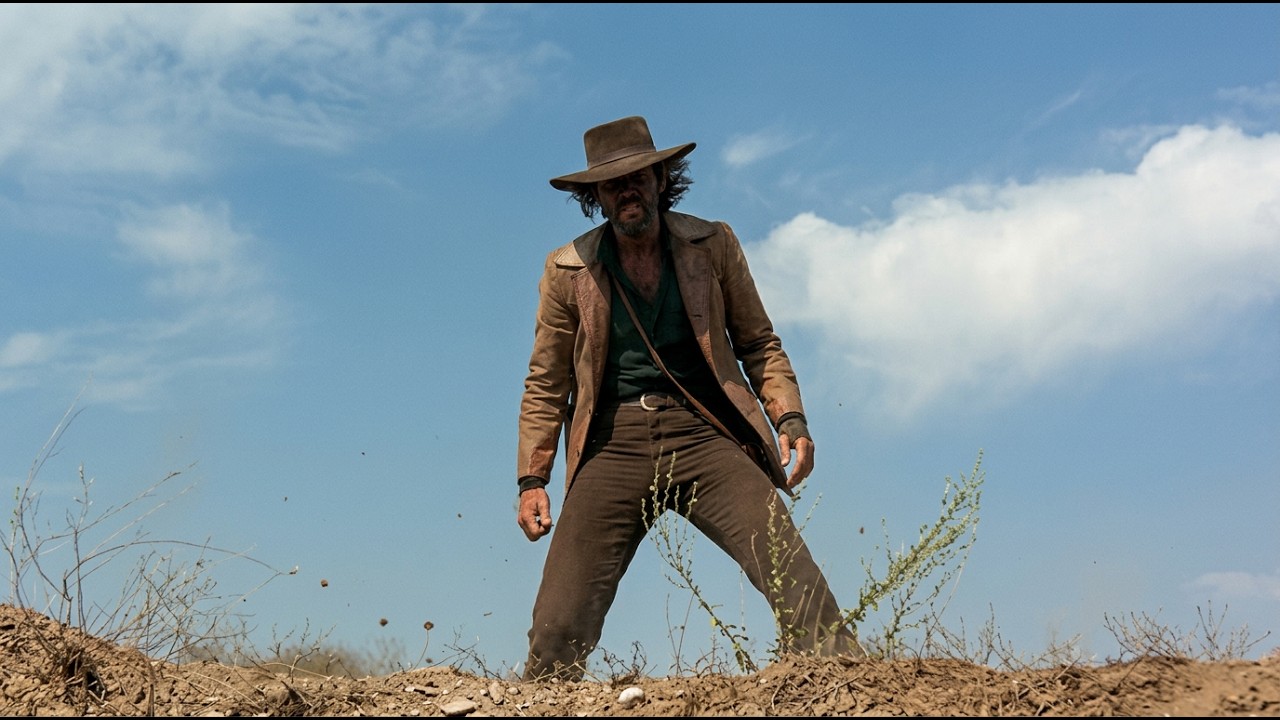
Bounty hunter Acquasanta Joe finds himself broke after a gang robs the local bank holding his savings. Led by the cunning Jeff Donovan, the outlaws are armed, carrying out their raids using a stolen army cannon disguised inside a covered wagon. Determined to recover his money, Joe sets off on Donovan's trail. As he closes in on the formidable gang, Joe must navigate dangerous double-crosses, uneasy alliances, and unpredictable shootouts. Facing overwhelming firepower, the bounty hunter relies on his sharp wits and unconventional tactics to settle the score. ⭐️ CAST Lincoln Tate — Acquasanta Joe Ty Hardin — Jeff Donovan Richard Harrison — Charlie Bennett Silvia Monelli — Estella Tuccio Musumeci — The Sicilian Pietro Ceccarelli — Sergeant Butch Dante Maggio — The Banker 🎥 DIRECTOR Mario Gariazzo ✍️ WRITING CREDITS Screenplay by Mario Gariazzo and Ferdinando Poggi 🎞️ FILM INFORMATION Release year: 1971 Genre: Western Production country: Italy Genres: Spaghetti Western, Adventure. 🎭 GENRES Western, Action, Drama, Spaghetti Western. 🌍 ALSO KNOWN AS Acquasanta Joe — Original Italian title Holy Water Joe — English-language title Los violentos de Texas — Spain Weihwasser Joe — Germany Joe, o Pistoleiro — Brazil Palkkionmetsästäjä — Finland.
HE WANTED HIS MONEY THEY BROUGHT A CANNON The Violent Ones of Texas

Buy the book here ( , or here ( . Revolution in 35mm: Political Violence and Resistance in Cinema from the Arthouse to the Grindhouse, 1960–1990 examines how political violence and resistance was represented in arthouse and cult films from 1960 to 1990. This historical period spans the Algerian war of independence and the early wave of postcolonial struggles that reshaped the Global South, through the collapse of Soviet Communism in the late 1980s. It focuses on films related to the rise of protest movements by students, workers, and leftist groups, as well as broader countercultural movements, Black Power, the rise of feminism, and so on. The book also includes films that explore the splinter groups that engaged in violent, urban guerrilla struggles throughout the 1970s and 1980s, as the promise of widespread radical social transformation failed to materialize: the Weathermen and the Black Liberation Army in the United States, the Red Army Faction in West Germany and Japan, and Italy’s Red Brigades. Many of these movements were deeply connected to culture, including cinema, and they expressed their values through it. Twelve authors, including film critics and academics, deliver a diverse examination of how filmmakers around the world reacted to the political violence and resistance movements of the period and how this was expressed on screen. This includes looking at the production, distribution, and screening of these films, audience and critical reaction, the attempted censorship or suppression of much of this work, and how directors and producers eluded these restrictions. Including over two hundred illustrations, the book examines filmmaking movements like the French, Japanese, German, and Yugoslavian New Waves; subgenres like spaghetti westerns, Italian poliziotteschi, Blaxploitation, and mondo movies; and films that reflect the values of specific movements, including feminists, Vietnam War protesters, and Black militants. The work of influential and well-known political filmmakers such as Costa-Gavras, Gillo Pontecorvo, and Glauber Rocha is examined alongside grindhouse cinema and lesser-known titles by a host of all-but-forgotten filmmakers, including many from the Global South that deserve to be rediscovered. Learn more about your ad choices. Visit megaphone.fm/adchoices (
Revolution in 35mm: from Arthouse to Grindhouse
End of the reel — 10 films