
Results for "stereo"
14 films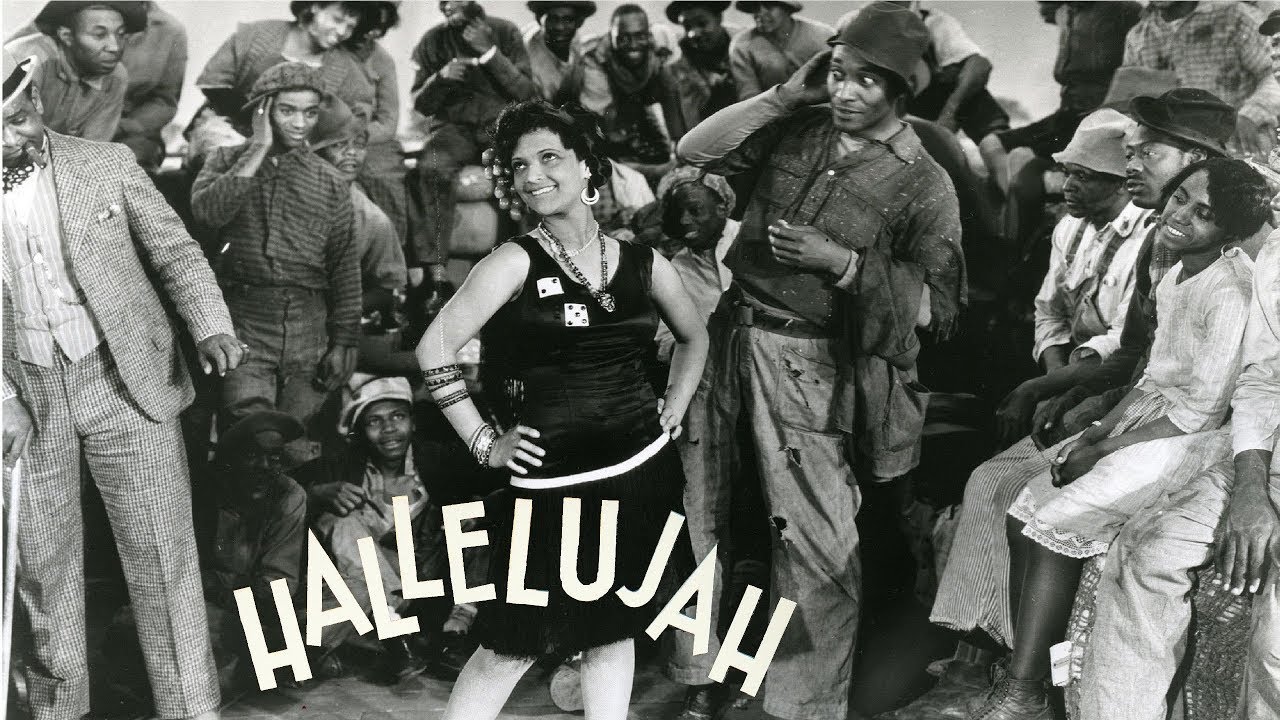
Hallelujah is a 1929 American Metro-Goldwyn-Mayer musical featuring an all-black cast directed by King Vidor and starring Daniel L. Haynes and Nina Mae McKinney. Filmed in Tennessee and Arkansas and chronicling the troubled quest of a sharecropper, Zeke Johnson (Haynes), and his relationship with the seductive Chick (McKinney), Hallelujah was one of the first films with an all-African American cast produced by a major studio. (Although frequently touted as Hollywood's first all-black cast musical, that distinction more properly belongs to Hearts in Dixie, which premiered several months earlier.) It was intended for a general audience and was considered so risky a venture by MGM that they required King Vidor to invest his own salary in the production. Vidor expressed an interest in "showing the Southern Negro as he is" and attempted to present a relatively non-stereotyped view of African-American life. Plot: A sharecropper decides to become a preacher after falling for a vamp from the city. Development: Years before creating Hallelujah, King Vidor had longed to make a film employing an all-African American cast. He had floated the idea around for years but "the studio kept turning the idea down". Vidor’s was in Europe during 1928 promoting his film The Crowd, when heard of talking motion pictures emerging in the United States. He wanted an all-African American cast to sing "Negro spirituals" after he had seen the success of it on Broadway. Vidor stated, "If stage plays with all Negro casts, and stories like those by Octavus Roy Cohen and others, could have such great success, why shouldn’t the screen make a successful Negro play?" Vidor was able to convince Nicholas Schenck, who was the president of MGM at the time, to get the movie made by framing it more as a film that depicted African American’s sexual deviance. Schenck put it simply to Vidor, "Well, if you think like that, I’ll let you make a picture about whores". Vidor received the inspiration to create this film based on real incidents he witnessed as a child during his time at home in the south. He observed: "I used to watch the Negroes in the South, which was my home. I studied their music, and I used to wonder at the pent-up romance in them". Vidor began shooting in Arkansas, Memphis and Southern California at the MGM studios. Hallelujah was King Vidor's first sound film, and combined sound recorded on location and sound recorded post-production in Hollywood. King Vidor was nominated for a Best Director Oscar for the film. Given the equipment available at the time, the film's soundtrack was a technical achievement, employing a much wider range of editing and mixing techniques than was generally used in "talkies" in this period. The Music: The film gives, in some sections, an authentic representation of black entertainment and religious music in the 1920s, though some of the sequences are Europeanized and over-arranged. A sequence which is of vital importance in the history of classic jazz is in the dancehall, where Nina Mae McKinney performs Irving Berlin's "Swanee Shuffle." Although actually filmed in a New York studio using black actors, the sequence gives an accurate representation of a low-life black dance-hall - part of the roots of classic jazz. Most Hollywood films of the period sanitized black music. Hallelujah and Black Stereotypes: Hallelujah was one of the early projects that gave African Americans significant roles in a movie, and though some contemporary film historians and archivists have said that it had "a freshness and truth that was not attained again for thirty years", a number of contemporary film historians and archivists agree that Hallelujah exhibits Vidor’s paternalistic view of rural blacks that included racial stereotyping. Reception: Exhibitors were worried that white audiences would stay away due to the black cast. They hosted two premieres, one in Manhattan and one in Harlem. The Black people who came to watch the film in Manhattan were forced to sit in the balcony. Hallelujah was commercially and critically successful. Photoplay praised the film for its depiction of African Americans and commented on the cast: "Every member of Vidor's cast is excellent. Although none of them ever worked before a camera or a microphone before, they give unstudied and remarkably spontaneous performances. That speaks a lot for Vidor's direction." Mordaunt Hall, in The New York Times, wrote approvingly of the all-Black cast, stating, "Hallelujah!, with its clever Negro cast, is one of the few talking pictures that is really a separate and distinct form of entertainment from a stage play". The combination of two groundbreaking aspects of the film, audible dialogue and an all-black cast, set the movie apart from its contemporaries. Hallelujah entered the public domain on January 1, 2025. Black Excellence:
Hallelujah

Honeybaby, Honeybaby is a 1974 blaxploitation action thriller directed by Michael Schultz and starring Diana Sands in one of her most memorable and groundbreaking screen roles. Calvin Lockhart plays a mercenary who teams up with Sands. Diana Sands plays Laura “Honey Baby” Lewis, a young woman from Harlem whose game show trip to Beirut, Lebanon turns dangerous after she unknowingly becomes the target of international mercenaries. A stolen microdot containing a secret formula places her at the center of a high-stakes chase involving assassins, political intrigue, and betrayal. As Honey Baby navigates a web of danger involving political figures, impostors, and hired killers, she is forced to rely on her instincts and intelligence to survive. Unlike many films of the era, Honeybaby, Honeybaby places a Black woman at the center of a globe-trotting action narrative, blending suspense, style, and social commentary without reducing its lead to a stereotype. Honeybaby, Honeybaby remains a cult favorite within blaxploitation cinema and stands out as a rare example of a Black female-led international action thriller from the era. The film was also released in the United States under a variety of alternate titles such as, "Honeybaby, Honeybaby", "Honeybaby", and "Three Days in Beirut". Tagline: She's After Your Money, Honey. Trivia: Final film of Diana Sands. We do not own the rights to any of this film. This film is being used for historical and educational purposes only. No copyright infringement intended. Black Excellence:
Starring Diana Sands, Calvin Lockhart, Seth Allen
Honeybaby, Honeybaby

Black Hollywood is a 1984 feature documentary that explores the role of black actors, black directors and the black audience in American movies. it was shot entirely on location in Hollywood. Remember the early 80s - hip hop had just been born, break dancing filled clubs and streets and Eddie Murphy and late great Richard Pryor were the only two black stars making it. In an action-packed showcase of clips and interviews, Diahnne Abbott, Rosalind Cash and Alfre Woodard talk about negative stereotyping. Jim Brown, Vonetta McGee and D'Urville Martin come up with alternative solutions to the one-way-street that was "blaxploitation" and discuss new ways of advancing an independent black cinema. There is a rare interview with Lorenzo Tucker, the Black Valentino, about his career with Oscar Micheaux. Joel Fluellen and Vincent Tubbs tell memorable stories of what life was like for the few blacks working in Hollywood in the 50s and 60s (including Dorothy Dandridge). There is a marvelous speech by Sidney Poitier on accepting the Black Hall of Fame "oscar". Griffiths' Birth Of A Nation is panned. Grandmaster Flash and his "Message" is the theme tune and the writer Oscar Williams holds the whole show together with his advice to the creative outsider. We do not own the rights to any of this film. This film is being used for historical and educational purposes only. No copyright infringement intended. Black Excellence:
Starring Jim Brown, Diahnne Abbott, Rosalind Cash
Black Hollywood
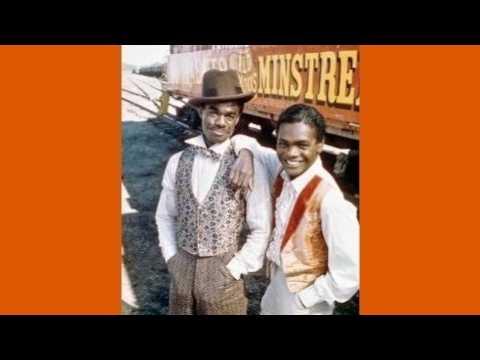
Minstrel Man (1977) is a critically acclaimed TV movie about two black brothers navigating a traveling minstrel show, praised for its authentic portrayal of racial struggles and strong performances. Minstrel Man tackles sensitive issues of racial identity and representation in entertainment through the story of Harry Brown Jr. (Glynn Turman), who seeks to reclaim his dignity and self-worth amid the complicated legacy of minstrel shows. Also stars Stanley Clay and Ted Ross. The film is known for its portrayal of the challenges faced by black entertainers in the minstrelsy era, where they had to wear blackface (to hide their own blackness beneath the makeup of a white man imitating a black) in order to be accepted by white audiences. The film is praised for its authentic depiction of the era and its exploration of the inhumanity and evils of racism. It is considered a lost gem in television history and is often sought after by fans of the genre. Plot: During the early 1900's, 2 black brothers who work in a traveling minstrel show have different goals; one's determined to succeed in a field which is dominated by white performers in blackface, whilst the other is a composer, fighting to break away from the stereotypes associated with black minstrel performers. Taglines: Two brothers decided to stop shuffling and start strutting... and gave America a ragtime rhythm it had never heard before. We do not own the rights to any of this film. This film is being used for historical and educational purposes only. No copyright infringement intended. Black Excellence:
Starring Glynn Turman, Ted Ross, Stanley Bennett Clay
Minstrel Man

CELEBRATING TEN YEARS OF TEENAGE DREAM!! REMASTERED IN 4K! Get “California Gurls” from Katy Perry’s ‘Teenage Dream’: Katy Perry Complete Collection on Spotify: Katy Perry Essentials on Apple Music: Watch your favorite Katy videos on YouTube: Follow Katy Perry: Website: Instagram: Twitter: Facebook: Directed by Matthew Cullen and Produced by Bernard Rahill, Patrick Nugent, Javier Jimenez, and Danny Lockwood Lyrics: (Snoop) Greetings, loved ones Let’s take a journey (Verse 1) I know a place Where the grass is really greener Warm, wet and wild There must be something in the water Sippin’ gin and juice Laying underneath the palm trees (undone) The boys break their necks Trying to creep a little sneak peek (at us) (Pre-Chorus) You could travel the world But nothing comes close to the golden coast Once you party with us You’ll be falling in love o o o o (Chorus) California gurls We’re unforgettable Daisy Dukes, bikinis on top Sun-kissed skin so hot We’ll melt your popsicle Oh oh oh oh California gurls We’re undeniable Fine fresh fierce We got it on lock West Coast represent, now put your hands up Oh oh oh oh (Verse 2) Sex on the beach We don’t mind sand in our stilettos We freak in my Jeep Snoop Doggy Dogg on the stereo oh oh Pre-Chorus You could travel the world But nothing comes close to the golden coast Once you party with us You’ll be falling in love o o o o (Chorus) California gurls We’re unforgettable Daisy Dukes, bikinis on top Sun-kissed skin so hot We’ll melt your popsicle Oh oh oh oh California gurls We’re undeniable Fine fresh fierce We got it on lock West Coast represent, now put your hands up Oh oh oh oh (Snoop) Toned tan fit and ready Turn it up cuz it’s getting heavy Wild Wild West Coast These are the girls I love the most I mean the ones, I mean like she’s the one Kiss her, touch her, squeeze her buns The girl’s a freak, she drive a Jeep and live on the beach I’m okay, I won’t play I love the bait just like I love LA Venice Beach and Palm Springs Summertime is everything Homeboys bangin’ out All that ass hangin’ out Bikinis, zucchinis, martinis, no weenies, just a king and a queenie Katy my lady (yeah) Lookie here, baby I’m all up on ya Cuz you’re representin’ California (Chorus) California gurls We’re unforgettable Daisy Dukes, bikinis on top Sun-kissed skin so hot We’ll melt your popsicle Oh oh oh oh California gurls We’re undeniable Fine fresh fierce We got it on lock West Coast represent, now put your hands up Oh oh oh oh California California (Snoop) California gurls, man I really wish you all could be California gurls Music video by Katy Perry performing California Gurls. (C) 2010 Capitol Records, LLC
Katy Perry - California Gurls ft Snoop Dogg
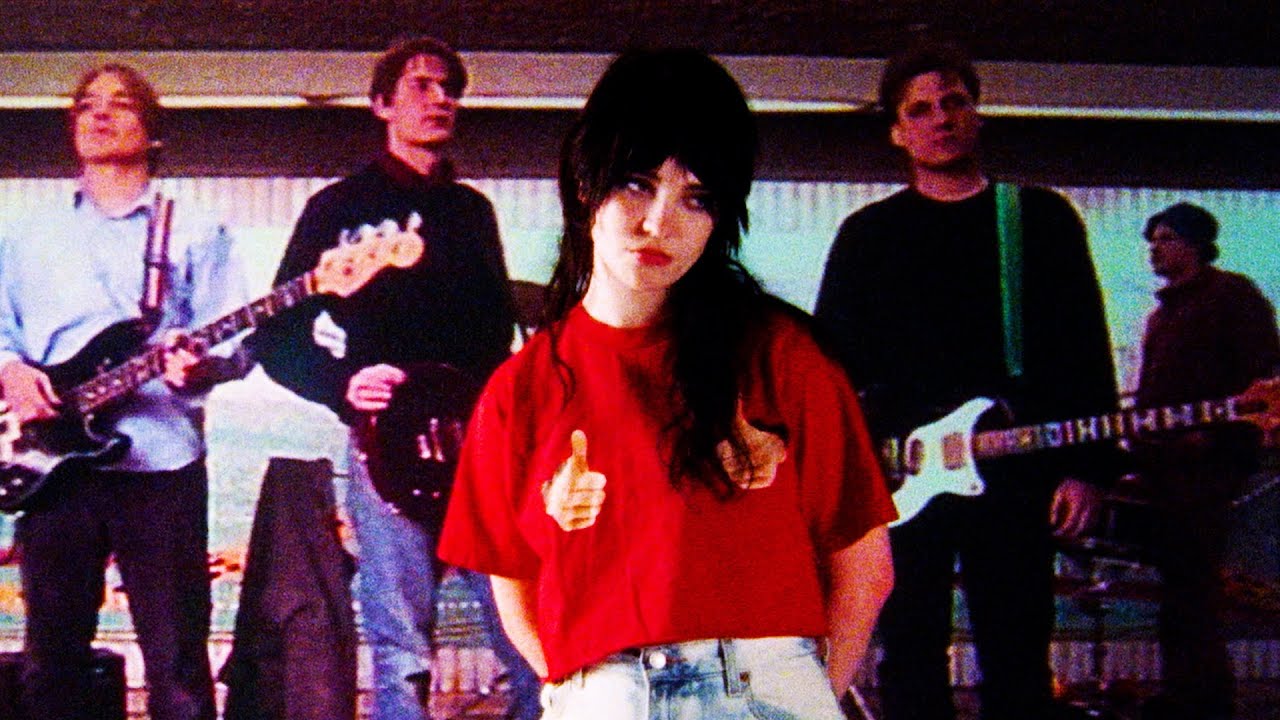
The "Harness Your Hopes" official music video, directed by Alex Ross Perry and starring Sophie Thatcher. "Harness Your Hopes" is featured on the re-issue of the 'Spit on a Stranger' EP, out now on Matador Records. Pre-order here: Revisit all of the original Pavement videos here: Lyrics: Harness your hopes on just one person You know, because a harness was only made for one Don't telegraph your passes, you'll end up with molasses Cauterized in syrup and syrup's not molasses And I'm checking out the asses, the assets that attract us To anything that moves, we're deep inside the groove And it's time to shake the rations 'cause someone's gonna cash in The movie starts at ten, the plot, it never ends Well, show me a word that rhymes with pavement And I won't kill your parents and roast them on a spit And don't you try to etch it or permanently sketch it Or you're gonna catch a bad, bad cold 'Cause the freaks have stormed the White House I lived inside a lighthouse It's on a scenic quay, it's, oh, so far away Far away from the beginning, the shroud is made of linen The goth kid has a hearse, the filly lost her purse Nun is to church, as the parrot is to perch And my heart's wide open, truly Leisure, a leisure suit is nothing It's nothing to be proud of in this late century And I'm asking you to hold me just like a morning paper Pinched between your pointer, your index, and your thumb It's a semi-automatic, believers are ecstatic You see the way they cling, the cold metallic sting And I'm living in a coma for Donna de Varona The harness made of hopes, the lovers on the ropes Earth-shaking, rattle-snaking Kiwis are a-home baking Minds wide open, truly Pavement: Matador Records: Credits: Starring Sophie Thatcher Director: Alex Ross Perry Producers: Bruno Vernaschi-Berman and Daniel April Co-Producers: Meg Vatterott and Eduardo Sobrino Director of Photography: Hil Steadman Production Designer: Emily Steiker-Epstein Art Assistants: Effie Frank and Bryan Duffy 1st AC: Colin Morris 2nd AC / Loader: Jade Alexia Gaffer: David Williamson Key Grip: Jonas Hayes Stylist: Holly McClintock Hair / Make-Up Design: Meraly Lopez Editor / Colorist / Archivist: Robert Kolodny Stills: Nikki Moriello Rear Projection: Rooftop Films, James Martin, John-Phillip Faienza Film: Kodak Scanning & Processing: Metropolis Film Works and Kodak Film Lab NYC Special Thanks to Gabe Spierer, Jay Giampietro, Matt Atwood, and Craig Butta A Penguin Fiasco and Gummy Films Production
Pavement- Harness Your Hopes
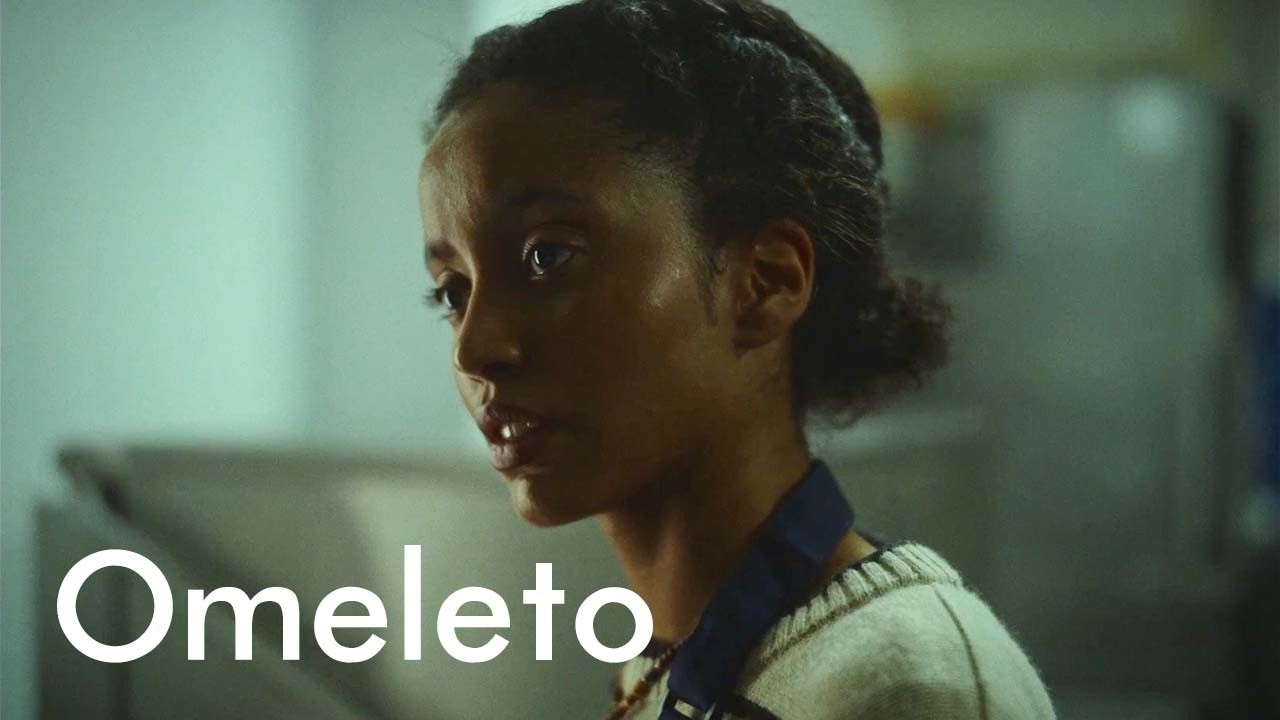
A woman is lost. Mya is a dishwasher who works in the kitchen of a fine restaurant, isolated by the sinks and by her own difficulty understanding the language of her adopted country. One night after her shift, she helps a homeless man, despite the fact that she has little herself. But when she has a miscommunication with the police, the situation becomes tense, exacerbated by her inability to communicate under stress and the officers' unwillingness to fully understand what's going on. Directed and written by Cesar Velasco, this intriguing and emotionally piercing short drama has a bold premise. Its dialogue is in an entirely fictional language that is never meant to be understood; even the signs are in this made-up language. But the film's lucid directing, deft camerawork and rich performances still immerse us in the experience of language barriers, often navigated by immigrants, foreigners and the proverbial stranger in a strange place. In doing so, we understand the helpless invisibility and social peril of being unable to communicate and be understood. We open with a fluid, swooping long take that brings us deep into a bustling restaurant at the height of dinner service, with people talking, laughing and eating. Though we don't know the language and see no subtitles to translate the ambient noise, we feel the belonging, joy and togetherness of the restaurant's community. But then the shot lands on Mya, washing dishes and listening to music on her headphones, set apart from the warmth and conviviality of the main restaurant. That physical and social separation is vividly rendered in the opening shot, and explored in the events following, from Mya's kind gesture towards a homeless man to the police who misunderstand and misinterpret her during a confusing, tense encounter, setting her on a journey of escape and trying to find safety. That odyssey expands and contracts from the fast-paced, almost thriller-like action to a more emotionally intimate, lyrical style that captures Mya's loneliness. Throughout, we feel her confusion, isolation and fear, brought to life by actor Razan Nassar's lovely, affecting performance as Mya, which grounds us through a number of turns and events, some of which are frightful and tense. Mya is scared, alone and without help or resources, evoking the experiences of struggling immigrants everywhere. But the film is ultimately a heart-opening, hopeful one, showing that no matter what the language, kindness and compassion need no words to be given or received. Intelligent, empathetic and beautifully crafted, A FILM IN ANOTHER LANGUAGE was inspired by the writer-director's own experience, having not learned English until his teenage years. It's a powerful evocation of how language barriers have both immediate, concrete effects on our lives and on our psyches, compounded by the film's refusal to allow us full understanding of its dialogue. Instead, we must pay close attention to expression, gesture and feeling. And like Mya, we might find those who look beyond simple stereotypes and ideas to the full, dimensional human being underneath. A FILM IN ANOTHER LANGUAGE. Courtesy of Cesar Velasco at
A FILM IN ANOTHER LANGUAGE

Dr. Jerry Kroth reviews the 118 year-old tradition of White people telling stories of black people which are negative, destructive, and injurious. From pimps to prostitutes, murderers to junkies, the media menagerie of racial stereotypic imagery mightily influences American biases. Numerous films are reviewed for these features, and the number of White people involved in writing, directing, producing and distributing these films is astonishing. Dr. Kroth does not indict these individuals but considers this process part of a rogue Hollywood tradition that is deeply in denial about the force and power of such imagery and the traumatic collective conditioning that occurs as a result. This lecture comes from his recent book, Implosion: delusion, denial, and the prospect of collapse BUY THE BOOK FROM AMAZON HERE More info or to contact Dr. Kroth go to TO
Blaxploitation racial stereotypes and their lasting impact on the American psyche
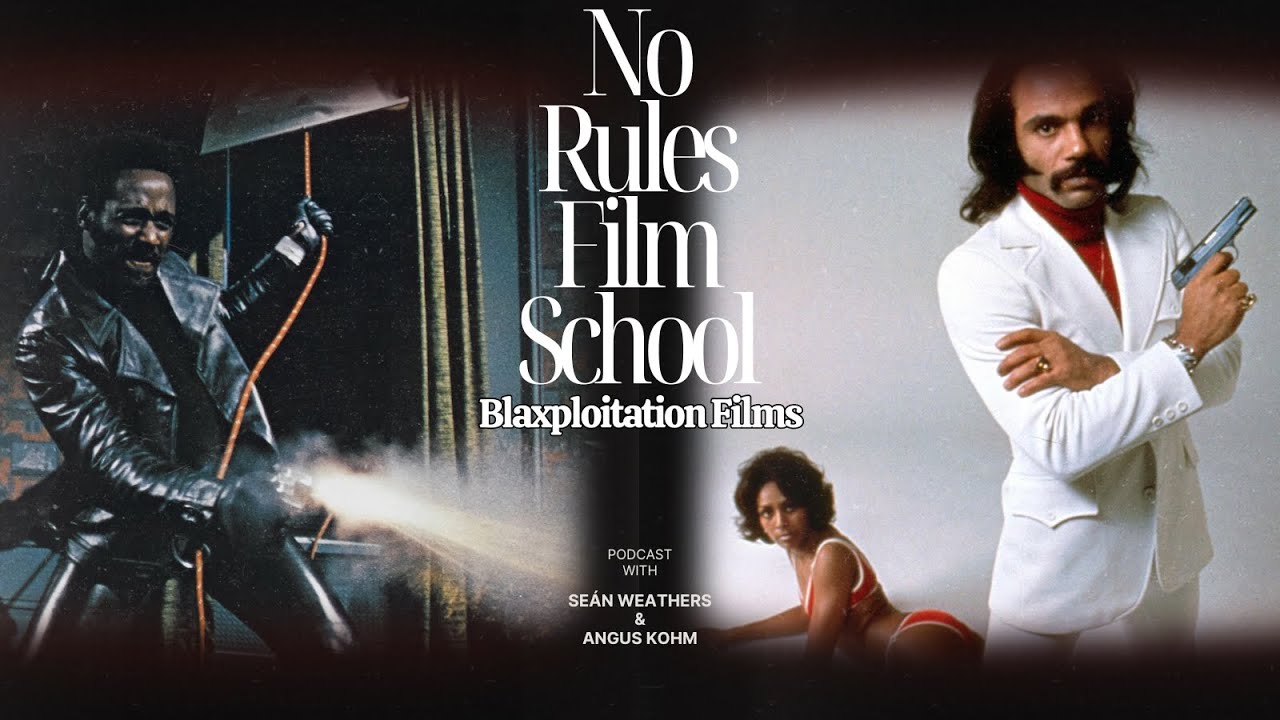
Blaxploitation is an ethnic subgenre of the exploitation film that emerged in the United States during the early 1970s. The term, a portmanteau of the words "black" and "exploitation", was coined in August 1972 by Junius Griffin, the president of the Beverly Hills–Hollywood NAACP branch. He claimed the genre was "proliferating offenses" to the black community in its perpetuation of stereotypes often involved in crime. The genre does rank among the first after the race films in the 1940s and 1960s in which black characters and communities are the protagonists and subjects of film and television, rather than sidekicks supportive characters, antagonists or victims of brutality. The genre's inception coincides with the rethinking of race relations in the 1970s. Blaxploitation films were originally aimed at an urban African-American audience but the genre's audience appeal soon broadened across racial and ethnic lines. Hollywood realized the potential profit of expanding the audiences of blaxploitation films. Variety credited Sweet Sweetback's Baadasssss Song and the less radical Hollywood-financed film Shaft (both released in 1971) with the invention of the blaxploitation genre, although Cotton Comes to Harlem was released the prior year. Blaxploitation films were also the first to feature soundtracks of funk and soul music. For more on Angus Kohm, my co-host on this video ► SOCIAL MEDIA Twitter ► Instagram ► Facebook ► TikTok ►
No Rules Film School Blaxploitation

Midnight Ramble is a 1994 documentary about the early history of Black American movies from the period between 1910 and 1950. Known as "race movies", these films, traditionally independent of Hollywood, were made primarily by, for and about the black community. This documentary is a tribute to a film genre that lasted for more than 40 years, produced over 500 movies, and created a foundation for contemporary films from directors such as Spike Lee and Tyler Perry. James Avery narrates this exploration of the early black film industry. There is a mistaken assumption that "race films" began largely in reaction to D. W. Griffith's 1915 The Birth of a Nation. Nothing could be further from the truth. Race movies actually began around 1910 in Chicago in response to the Black Community longing to see themselves reflected on the silver screen via this new medium of film. Wanting to see themselves through their own eyes, on their own terms, thus counteracting the Hollywood stereotypes within the American media. The film focuses especially on the work of Oscar Micheaux, considered the "Dean of Black American film", a controversial filmmaker who wrote, produced, and directed over 40 features, and tackled difficult social issues in Black America. It includes clips from films by a number of African-American directors of the period, which is very helpful since many of these films are difficult to find or unavailable. There are two versions of the title of the documentary, both referring to the same work. Initially released in 1994 as, Midnight Ramble: Oscar Micheaux & the Story of Race Movies. It was re-released as Midnight Ramble: The Story of the Black Film Industry by PBS in 1995. The 1995 version also eliminates the David McCullough introduction. From the early days of American film, roles for blacks in mainstream, white-produced films were either demeaning or unimportant; below the line, blacks just didn’t participate. But around 1910, enterprising black producers began making films with all-black casts, writers, directors and producers. Chicago, which had become a refuge for blacks leaving the Deep South, became the Hollywood of race pictures, as they were called, and the documentary offers footage from the silent era. The race pictures were hugely popular. But all over the U.S., blacks were restricted to special areas in theaters — often the balcony — or to a special showing time, i.e., the midnight ramble. Then blacks-only houses sprang up, theaters around the U.S. where colored people could enjoy race pictures anytime they wanted to. By 1920, more than 30 race-picture companies, formed by blacks and some whites , were entertaining black audiences, who were lining up to see themselves portrayed from the black point of view. As host David McCullough observes, blacks knew more about whites than whites knew about blacks. We do not own the rights to any of this film. This film is being used for historical and educational purposes only. No copyright infringement intended. Black Excellence:
Midnight Ramble - The Story of Race Movies

Ouanga, also advertised as The Love Wanga, is a voodoo-themed 1936 American film starring Fredi Washington. George Terwilliger wrote and directed the film. The film's themes include miscegenation and it features various racial stereotypes and portrays the people who practice voodoo as primitive. The movie is considered to be perhaps the second zombie film ever made after White Zombie. Storyline: In Haiti, a mixed-race female plantation owner enacts a voodoo curse and revives zombies for revenge on a white male neighbor, who has chosen a white woman over her for marriage. Production: Ouanga is the second film to feature zombies, after the 1932 film White Zombie. Black actress Fredi Washington was cast to play the "tragic mulatto" role of Klili Gordon while white actor Sheldon Leonard was cast as LeStrange, the black man who looks over Adam's plantation. LeStrange may have been cast as a black character due to an incident involving the 1933 film The Emperor Jones, in which censors thought that Washington kissing a black man looked too close to "a white woman kissing a black man". In The Emperor Jones, Washington wore darker makeup to look "more black". Although originally scheduled to film in Haiti, production on Ouanga had to move to Jamaica when locals expressed hostility at the idea of having voodoo exploited for cheap thrills. Trivia: Due to threats made toward crew-members by Haitian Papaloi priests, production was moved to Jamaica. Two crewmen reportedly died there, one from yellow fever, the other from an infection resulting from a barracuda bite. We do not own the rights to any of this film. This film is being used for historical and educational purposes only. No copyright infringement intended. Black Excellence:
Ouanga
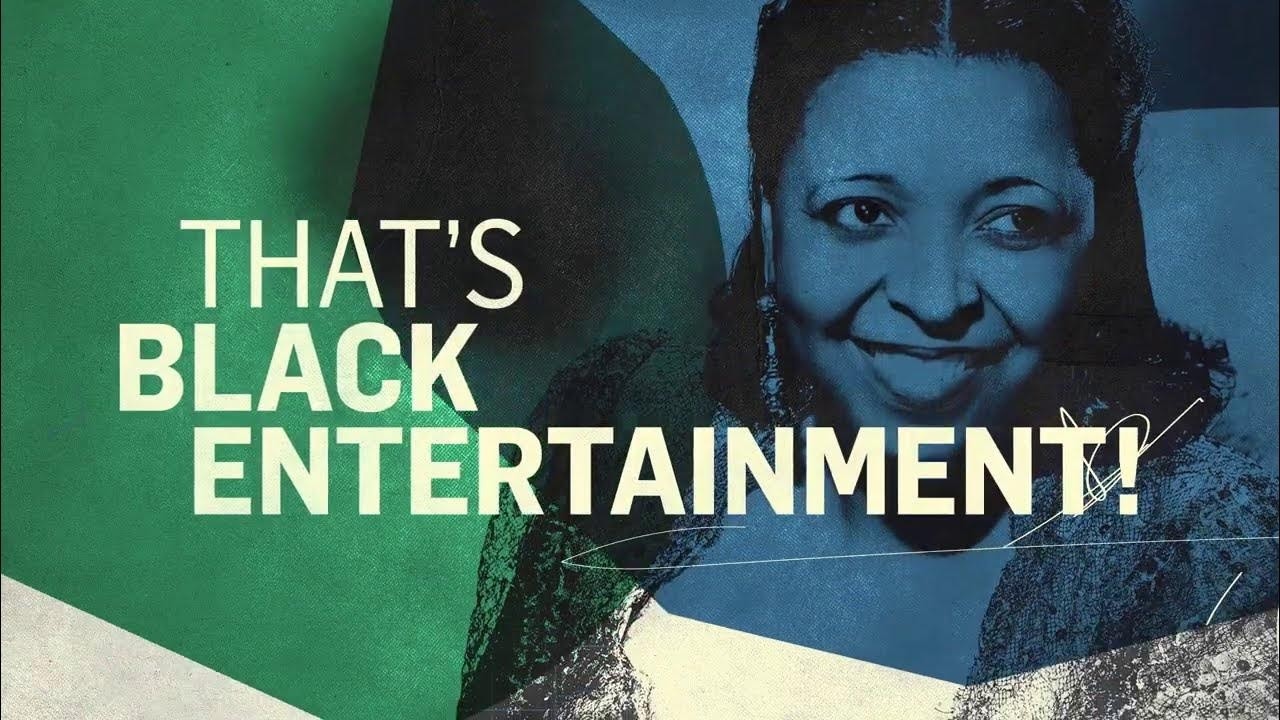
That's Black Entertainment is a 1989 documentary film starring African American performers and featuring clips from black films from 1929–1957, narrated and directed by William Greaves. The clips are from the Black Cinema Collection of the Southwest Film/Video Archives at Southern Methodist University in Dallas, Texas. It is 60 minutes long. The film contains more than 29 clips, including: Paul Robeson (in Song of Freedom) Bessie Smith (in St. Louis Blues) Eubie Blake, Nina Mae McKinney, and The Nicholas Brothers (in Pie, Pie Blackbird) Lena Horne (in The Duke Is Tops) Nat 'King' Cole and Moms Mabley (in Killer Diller) Sammy Davis Jr. and Ethel Waters (in Rufus Jones for President) Cab Calloway (in Cab Calloway's Jitterbug Party) Ethel Waters (in Carib Gold) Not only musical clips are shown, but dramatic clips as well, like Murder in Harlem (1935), Juke Joint (1947), Four Shall Die (1940), and Souls of Sin (1949). The film also includes clips from white films stereotyping blacks, including D.W. Griffith's The Birth of a Nation (1915), and a blackfaced Bing Crosby in Crooner's Holiday (1932). We do not own the rights to any of this film. This film is being used for historical and educational purposes only. No copyright infringement intended. Black Excellence: