
Results for "sidney poitier"
7 films
No Way Out is a 1950 American crime drama film noir directed by Joseph L. Mankiewicz and starring Sidney Poitier in his film debut, alongside Richard Widmark, Linda Darnell and Stephen McNally. The film centers on an African American doctor who confronts the racism of a poor slum after he treats a racist white criminal. Nominated for the 1950 Oscar for Best Writing, Story and Screenplay, this intense drama about racial hatred pulls no punches. One of the first Hollywood films to directly address racism. No Way Out was controversial in its "graphic representation of racial violence" in what director Mankiewicz termed "the absolute blood and guts of Negro hating." The film marked the feature-acting debuts of Poitier, Mildred Joanne Smith, and Ossie Davis. Richard Widmark delivers one of his most chilling roles. Mankiewicz and Lesser Samuels were nominated for Best Story and Screenplay at the 23rd Academy Awards. It is a gripping film noir and Sidney Poitier’s powerful debut, following a Black doctor whose treatment of an injured white criminal sparks intense racial tension in a working-class community. Directed by Joseph L. Mankiewicz, it blends crime drama and social commentary, tackling racism with rare candor for its era. Praised for Poitier’s commanding performance and the film’s boldness, it remains a powerful, unsettling classic worth watching for its historical and cinematic impact. Released during the early days of the Civil Rights Movement, No Way Out received critical acclaim but faced censorship for many years due to its incendiary nature. Storyline: The Biddle brothers, shot while robbing a gas station, are taken to the prison ward of the County Hospital; Ray Biddle, a rabid racist, wants no treatment from black resident Dr. Luther Brooks. When brother John dies while Luther tries to save him, Ray is certain it's murder and becomes obsessed with vengeance and the situation slides rapidly toward violence. Trivia: Richard Widmark was apparently very uncomfortable with some of the racist comments his character, Ray Biddle, made, especially given his friendship with Sidney Poitier. As a result, after some of the takes involving particularly venomous remarks, Widmark apologized to Poitier. We do not own the rights to any of this film. This film is being used for historical and educational purposes only. No copyright infringement intended. Black Excellence:
Starring Richard Widmark, Linda Darnell, Sidney Poitier
No Way Out

This revealing documentary honors the legendary Sidney Poitier—iconic actor, filmmaker, and civil rights activist. Featuring interviews with Denzel Washington, Spike Lee, Halle Berry, and more.
Starring Sidney Poitier, Harry Belafonte, Halle Berry
Sidney

A Warm December is a 1973 American romantic drama film directed by Sidney Poitier and starring him in the lead role as Dr. Matt Younger. It also stars Jamaican actress Esther Anderson as Catherine, Matt's love interest. Anderson's performance as an African princess won her an NAACP Image Award for Best Actress in 1973. The film is also notable for an appearance of Letta Mbulu singing, with an African choir, "Nonqonqo" by Miriam Makeba. Coleridge-Taylor Perkinson wrote and conducted the score. The story was influenced by Roman Holiday and Love Story. A Warm December was shot at Pinewood Studios. Plot: An African-American doctor falls in love with the niece of an African ambassador during his vacation in London, but it turns out that she is suffering from a rare terminal illness. We do not own the rights to any of this film. This film is being used for historical and educational purposes only. No copyright infringement intended. Black Excellence:
Starring Sidney Poitier, Ester Anderson, Yvette Curtis
A Warm December

Separate but Equal is a 1991 American two-part television miniseries that dramatizes the landmark Supreme Court case Brown v. Board of Education, which challenged racial segregation in public schools. The film stars Sidney Poitier as lead NAACP attorney Thurgood Marshall, Richard Kiley as Chief Justice Earl Warren, Burt Lancaster (in his final television role) as lawyer John W. Davis (loser of Briggs v. Elliott and the Democratic candidate in the 1924 US presidential election), Cleavon Little as lawyer and judge Robert L. Carter, and Lynne Thigpen as Ruth Alice Stovall. Directed by George Stevens Jr., the miniseries received critical acclaim for its performances and historical accuracy, highlighting the moral and legal complexities of the case. In 1991, the Academy of Television Arts and Sciences rewarded the film with the Outstanding Miniseries award. The film received 8 nominations for Emmy Awards in 1991 and won 2 and received 3 nominations for Golden Globe Awards in 1992. Synopsis: A dramatization of the American court case that destroyed the legal validity of racial segregation. Storyline: This film follows the true story of the NAACP court challenge of racial school segregation in the Brown vs. Board of Education. This was the struggle that would destroy the legal validity for racial segregation in general and prove to be the start and the first major victory of the civil rights movement. Tagline: The true story behind the most important legal battle of our time. Critical Reception: John Leonard called the film "splendid" and "a triumph" in New York Magazine. While generally praising the film, Richard Zoglin in Time Magazine called the portrayal of Warren's visit to Gettysburg "simplistic." A contemporary review in the Orlando Sentinel called the film "one of television's finest hours." We do not own the rights to any of this film. This film is being used for historical and educational purposes only. No copyright infringement intended. Black Excellence:
Starring Sidney Poitier, Burt Lancaster, Richard Kiley
Separate but Equal
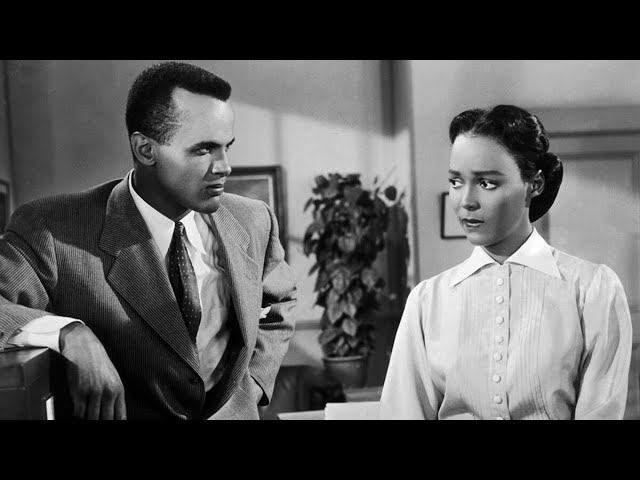
Bright Road is a 1953 low-budget film adapted from the Christopher Award-winning short story "See How They Run" by Mary Elizabeth Vroman. Directed by Gerald Mayer and featuring a nearly all-black cast, the film stars Dorothy Dandridge as an idealistic first-year elementary school teacher trying to communicate with a problem student. The film is also notable as the first appearance by Harry Belafonte, who costars as the principal of the school. Bright Road was groundbreaking for its positive and realistic depiction of Black professionals in a time when such portrayals were rare in Hollywood. Dandridge had been attracted to the lack of racial conflict in the story. She wrote that she was "profoundly fond of ... a theme which showed that beneath any color skin, people were simply people. I had a feeling that themes like this might do more real good than the more hard-hitting protest pictures. I wanted any black girl in the audience to look at me performing in this film and be able to say to herself, 'Why, this schoolteacher could be me.'" Alongside schoolteacher Jane Richards (Dorothy Dandridge) is Principal Williams (Harry Belafonte), who provides support as Jane seeks to inspire and uplift her students. The film is a touching portrayal of perseverance, the power of education, and the impact of dedicated Black educators on young lives. Synopsis: A young teacher helps a troubled student who's fascinated by a caterpillar's metamorphosis. After losing his sister and facing challenges, he proves himself by handling a bee crisis at school. Plot: A drama starring Dorothy Dandridge as a dedicated teacher in a rural African American community. The film explores her struggles and triumphs as she aims to inspire her young students, confronting societal challenges along the way. Review: "Bright Road" is a film that Hollywood decided to present with an almost all black cast, something that was not done often prior to the fifties and the arrival of such stars as Dorothy Dandridge, Harry Belafonte, and the man that would make it all possible for other performers of color: Sidney Poitier! The story is simple, and yet, it speaks volumes of what a good teacher can do to inspire the young people in her charge. Jane Richards is such a person. She sees the good bottled inside C.T. Young, the rebellious poor boy that, deep inside, is a wonderful youngster who has had no luck with other teachers in the school, who have made him repeat two years and haven't really seen the potential in him. Dorothy Dandridge makes a sweet, yet firm Jane Richards. She was a star that could do anything, as proved by her other films, most notably in "Carmen Jones". She was a beautiful presence in this film, who with her positive attitude changes and inspires her students. Tall and handsome Harry Belafonte is seen as the Principal in his screen debut. Dandridge and Belafonte are an attractive duo when they are onscreen together. Philip Hepburn played C.T. Young with conviction for such a small child. Bright Road showcases an inspiring tale of hope, resilience, and transformation. Through powerful performances and a compelling narrative, the film explores the challenges of education, love, and growth. CT's journey, symbolized by a caterpillar’s metamorphosis, reminds us of the importance of second chances and personal change. Don't miss this rare and beautiful moment in Black cinema history, a film whose message resonates as much today as it did in 1953. "Bright Road" is a charming film thanks to Ms. Dandridge and the direction of Mr. Mayer. We do not own the rights to any of this film. This film is being used for historical and educational purposes only. No copyright infringement intended. Black Excellence:
Starring Dorothy Dandridge, Philip Hepburn, Harry Belafonte
Bright Road

Black Hollywood is a 1984 feature documentary that explores the role of black actors, black directors and the black audience in American movies. it was shot entirely on location in Hollywood. Remember the early 80s - hip hop had just been born, break dancing filled clubs and streets and Eddie Murphy and late great Richard Pryor were the only two black stars making it. In an action-packed showcase of clips and interviews, Diahnne Abbott, Rosalind Cash and Alfre Woodard talk about negative stereotyping. Jim Brown, Vonetta McGee and D'Urville Martin come up with alternative solutions to the one-way-street that was "blaxploitation" and discuss new ways of advancing an independent black cinema. There is a rare interview with Lorenzo Tucker, the Black Valentino, about his career with Oscar Micheaux. Joel Fluellen and Vincent Tubbs tell memorable stories of what life was like for the few blacks working in Hollywood in the 50s and 60s (including Dorothy Dandridge). There is a marvelous speech by Sidney Poitier on accepting the Black Hall of Fame "oscar". Griffiths' Birth Of A Nation is panned. Grandmaster Flash and his "Message" is the theme tune and the writer Oscar Williams holds the whole show together with his advice to the creative outsider. We do not own the rights to any of this film. This film is being used for historical and educational purposes only. No copyright infringement intended. Black Excellence:
Starring Jim Brown, Diahnne Abbott, Rosalind Cash
Black Hollywood

Join us for a delightful trip back in time with our Saturday Morning Cinema feature: *Uptown Saturday Night*! This 1974 classic comedy, directed by Sidney Poitier, stars Poitier himself alongside the legendary Bill Cosby. *Uptown Saturday Night* is a hilarious caper following two best friends, Steve Jackson (Sidney Poitier) and Wardell Franklin (Bill Cosby), as they find themselves in a wild adventure after a night out at Madame Zenobia’s nightclub. Things take a turn when their wallets are stolen during a robbery, and Steve realizes his wallet held a winning lottery ticket worth $50,000! Determined to recover it, the duo embarks on a side-splitting journey through the lively streets of Uptown, encountering eccentric characters and getting into one comical situation after another. This film is a gem of 1970s cinema, blending humor, charm, and cultural vibrancy. The dynamic chemistry between Poitier and Cosby is complemented by stellar performances from a supporting cast including Harry Belafonte, Flip Wilson, and Richard Pryor. *Uptown Saturday Night* remains a timeless classic that perfectly captures the spirit of its era. 🎬 **Movie Details** - Director: Sidney Poitier - Starring: Sidney Poitier, Bill Cosby, Harry Belafonte, Flip Wilson, Richard Pryor - Release Year: 1974 - Genre: Comedy, Crime Grab your popcorn and settle in for a fun-filled ride with *Uptown Saturday Night*! Don’t forget to like, comment, and
Blaxploitation
End of the reel — 7 films