
Results for "relationship"
132 films
Olive Smith, a biology PhD candidate, and Dr. Adam Carlsen, a hotshot professor and well-known tyrant, enter into a fake relationship, seeing each of their carefully calculated theories on love get thrown into chaos.
Starring Lili Reinhart, Tom Bateman, Rachel Marsh
The Love Hypothesis

Chris and his girlfriend Rose go upstate to visit her parents for the weekend. At first, Chris reads the family's overly accommodating behavior as nervous attempts to deal with their daughter's interracial relationship, but as the weekend progresses, a series of increasingly disturbing discoveries lead him to a truth that he never could have imagined.
Starring Daniel Kaluuya, Allison Williams, Catherine Keener
Get Out

Seasoned musician Jackson Maine discovers — and falls in love with — struggling artist Ally. She has just about given up on her dream to make it big as a singer — until Jack coaxes her into the spotlight. But even as Ally's career takes off, the personal side of their relationship is breaking down, as Jack fights an ongoing battle with his own internal demons.
A Star Is Born

Sassy sitcom centering on radio and television personality Martin Payne. Series focuses on his romantic relationship with girlfriend Gina, her best friend Pam and escapades with best friends Tommy and Cole.
Martin
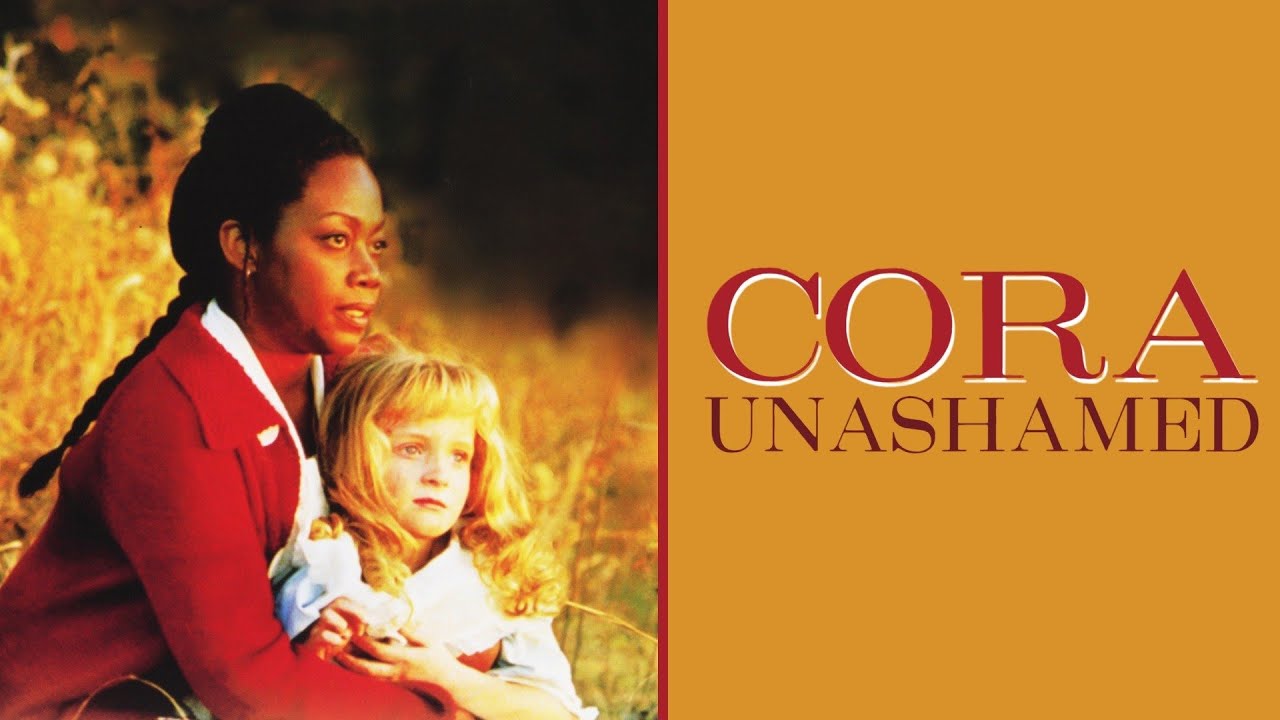
Cora Unashamed is a 2000 American made-for-television drama film from The American Collection directed by Deborah Pratt, starring Regina Taylor and Cherry Jones. The film was shot on location in October 1999 in central Iowa. Cities such as Ames, Cambridge and Story City were used. The movie is based on a short story by the same name in The Ways of White Folks, a 1934 collection of short stories by Langston Hughes. Cinematographer Ernest Holzman won an American Society of Cinematographers (ASC) Award, for Outstanding Achievement in Cinematography in Movies of the Week/Mini-Series'/Pilot for Network or Basic Broadcast TV, for his work on this film. David Herbert Donald called the short story "a brilliantly realized portrait of an isolated black woman in a small Middle Western town, who stoically survives her own sorrows, but in the end lashes out against the hypocrisy of the whites who employ her." Plot: A black servant (Regina Taylor) develops a close bond with her wealthy employers' daughter (Molly Graham) in 1930s Iowa. Storyline: Cora Jenkins and her parents are the only African-Americans in their community in 1920s Iowa, supported only by Cora's wages as housekeeper to the wealthy Studevants. When tragedy strikes, will Cora speak the truth... with consequences? Synopsis: This adaptation of Langston Hughes' powerful tale, set in the 1920s and 30s, tells the story of Cora Jenkins, the daughter of the only African-American family in the small Iowa town of Melton. Cora supports her mother and her daughter, Josephine, by working as a domestic in the home of the socially driven Mrs. Studevant, where she serves almost as a surrogate mother to the Studevants' daughter, Jessie. Cora's own daughter dies, and Cora's relationship with Jessie grows even deeper. When Jessie dies as a result of an abortion arranged by her mother and the latter lies about the cause to preserve her social standing, Cora must risk her livelihood, her security, and her place in the community in order to speak the truth and honor the memory of the child she loved and lost. Overview: An adaptation of a story by Langston Hughes that focuses on the stories of black and white families in 1916-31 Iowa. Cora, an African-American woman living in an all-white Iowa town in the 1930s, gives up her livelihood and security in order to speak the truth about the tragic deaths of two children she loved. Set in the 1930s, the story takes place in the tiny town of Melton, Iowa, where Cora Jenkins and her family live in isolation as the community's only African Americans. Their existence is supported solely by Cora's earnings as housekeeper in the household of socially driven Lizbeth Studevant. Tested early in life by the death of her daughter, Cora transfers her maternal love to the Studevants' daughter, Jessie, whose own mother is unable to demonstrate affection for her child. When Jessie dies as a result of a tragic lapse in judgment by her mother, Cora's devotion to the girl empowers her to speak the truth to the town -- regardless of the cost. We do not own the rights to any of this film. This film is being used for historical and educational purposes only. No copyright infringement intended. Black Excellence:
Starring Regina Taylor, Cherry Jones, Ellen Muth
Cora Unashamed

Claudine is a 1974 American romantic comedy-drama film, directed by John Berry. Claudine was written by Lester Pine and Tina Pine, produced by Third World Cinema, and distributed by 20th Century Fox, starring James Earl Jones, Diahann Carroll, and Lawrence Hilton-Jacobs. The film was released on April 22, 1974, grossing about $6 million, a modest hit for the times. It was praised for showing a new dimension in black cinema during the height of blaxploitation. Synopsis: A single mother of six on welfare and a garbage collector fall in love in 1970s Harlem. Plot: Claudine is a single mother on welfare in New York City who endures an exhausting commute to the suburbs where she works as a maid for wealthy families. In one carefully tended white community, she meets Roop, a charismatic but irresponsible garbage collector. Romance quickly ensues, but Claudine doubts that their relationship is good for her six children, and Rupert, despite his good nature, is reluctant to take on fatherhood. Storyline: Diahann Carroll is radiant in an unforgettable, Oscar-nominated performance as Claudine, a strong-willed single mother, raising six kids in Harlem, whose budding relationship with a gregarious garbage collector (an equally fantastic James Earl Jones) is stressed by the difficulty of getting by in an oppressive system. As directed by the formerly blacklisted leftist filmmaker John Berry, this romantic comedy with a social conscience deftly balances warm humor with a serious look at the myriad issues—from cycles of poverty to the indignities of the welfare system—that shape its characters’ realities. The result is an empathetic chronicle of both Black working-class struggle and Black joy, a bittersweet, bighearted celebration of family and community set to a sunny soul soundtrack composed by Curtis Mayfield and performed by Gladys Knight & the Pips. We do not own the rights to any of this film. This film is being used for historical and educational purposes only. No copyright infringement intended. Black Excellence:
Starring Diahann Carroll, James Earl Jones, Lawrence Hilton-Jacobs
Claudine

Lady Sings the Blues is a 1972 American biographical musical drama film directed by Sidney J. Furie about jazz singer Billie Holiday, loosely based on her 1956 autobiography which, in turn, took its title from Holiday's song. It was produced by Motown Productions for Paramount Pictures. Diana Ross, in her feature film debut, portrayed Holiday, alongside a cast including Billy Dee Williams, Richard Pryor, James T. Callahan, and Scatman Crothers. The film was nominated for five Academy Awards in 1973, including Best Actress for Diana Ross. Plot: The story of the troubled life and career of the legendary Jazz singer, Billie Holiday, who fights drug addiction to make a name for herself. Synopsis: Chronicles the rise and fall of legendary blues singer Billie Holiday. Her late childhood, stint as a prostitute, early tours, marriages and drug addiction are featured. Storyline: Pop star Diana Ross portrays legendary jazz singer Billie Holiday in this biographical drama. Beginning with Holiday's traumatic youth, the film depicts her early attempts at a singing career and her eventual rise to stardom, as well as her difficult relationship with Louis McKay (Billy Dee Williams), her boyfriend and manager. Casting a shadow over even Holiday's brightest moments is the vocalist's severe drug addiction, which threatens to end both her career and her life. We do not own the rights to any of this film. This film is being used for historical and educational purposes only. No copyright infringement intended. Black Excellence:
Lady Sings the Blues
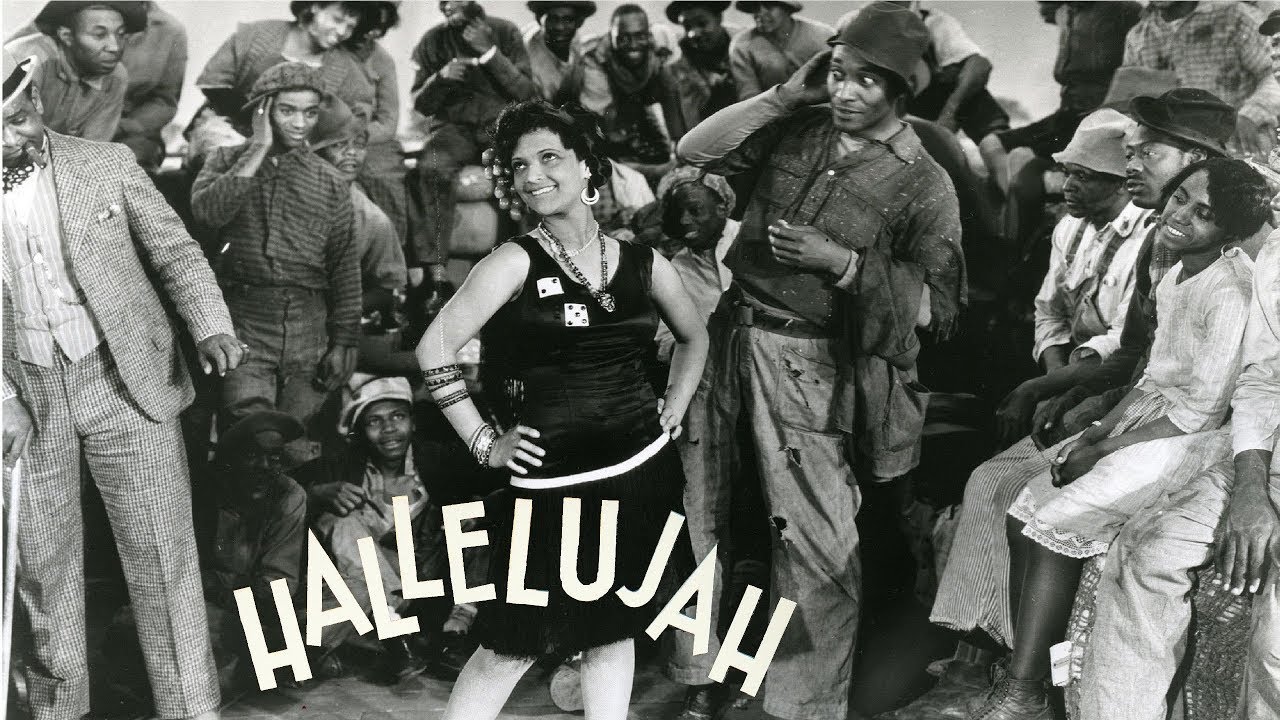
Hallelujah is a 1929 American Metro-Goldwyn-Mayer musical featuring an all-black cast directed by King Vidor and starring Daniel L. Haynes and Nina Mae McKinney. Filmed in Tennessee and Arkansas and chronicling the troubled quest of a sharecropper, Zeke Johnson (Haynes), and his relationship with the seductive Chick (McKinney), Hallelujah was one of the first films with an all-African American cast produced by a major studio. (Although frequently touted as Hollywood's first all-black cast musical, that distinction more properly belongs to Hearts in Dixie, which premiered several months earlier.) It was intended for a general audience and was considered so risky a venture by MGM that they required King Vidor to invest his own salary in the production. Vidor expressed an interest in "showing the Southern Negro as he is" and attempted to present a relatively non-stereotyped view of African-American life. Plot: A sharecropper decides to become a preacher after falling for a vamp from the city. Development: Years before creating Hallelujah, King Vidor had longed to make a film employing an all-African American cast. He had floated the idea around for years but "the studio kept turning the idea down". Vidor’s was in Europe during 1928 promoting his film The Crowd, when heard of talking motion pictures emerging in the United States. He wanted an all-African American cast to sing "Negro spirituals" after he had seen the success of it on Broadway. Vidor stated, "If stage plays with all Negro casts, and stories like those by Octavus Roy Cohen and others, could have such great success, why shouldn’t the screen make a successful Negro play?" Vidor was able to convince Nicholas Schenck, who was the president of MGM at the time, to get the movie made by framing it more as a film that depicted African American’s sexual deviance. Schenck put it simply to Vidor, "Well, if you think like that, I’ll let you make a picture about whores". Vidor received the inspiration to create this film based on real incidents he witnessed as a child during his time at home in the south. He observed: "I used to watch the Negroes in the South, which was my home. I studied their music, and I used to wonder at the pent-up romance in them". Vidor began shooting in Arkansas, Memphis and Southern California at the MGM studios. Hallelujah was King Vidor's first sound film, and combined sound recorded on location and sound recorded post-production in Hollywood. King Vidor was nominated for a Best Director Oscar for the film. Given the equipment available at the time, the film's soundtrack was a technical achievement, employing a much wider range of editing and mixing techniques than was generally used in "talkies" in this period. The Music: The film gives, in some sections, an authentic representation of black entertainment and religious music in the 1920s, though some of the sequences are Europeanized and over-arranged. A sequence which is of vital importance in the history of classic jazz is in the dancehall, where Nina Mae McKinney performs Irving Berlin's "Swanee Shuffle." Although actually filmed in a New York studio using black actors, the sequence gives an accurate representation of a low-life black dance-hall - part of the roots of classic jazz. Most Hollywood films of the period sanitized black music. Hallelujah and Black Stereotypes: Hallelujah was one of the early projects that gave African Americans significant roles in a movie, and though some contemporary film historians and archivists have said that it had "a freshness and truth that was not attained again for thirty years", a number of contemporary film historians and archivists agree that Hallelujah exhibits Vidor’s paternalistic view of rural blacks that included racial stereotyping. Reception: Exhibitors were worried that white audiences would stay away due to the black cast. They hosted two premieres, one in Manhattan and one in Harlem. The Black people who came to watch the film in Manhattan were forced to sit in the balcony. Hallelujah was commercially and critically successful. Photoplay praised the film for its depiction of African Americans and commented on the cast: "Every member of Vidor's cast is excellent. Although none of them ever worked before a camera or a microphone before, they give unstudied and remarkably spontaneous performances. That speaks a lot for Vidor's direction." Mordaunt Hall, in The New York Times, wrote approvingly of the all-Black cast, stating, "Hallelujah!, with its clever Negro cast, is one of the few talking pictures that is really a separate and distinct form of entertainment from a stage play". The combination of two groundbreaking aspects of the film, audible dialogue and an all-black cast, set the movie apart from its contemporaries. Hallelujah entered the public domain on January 1, 2025. Black Excellence:
Hallelujah

Cane River is a 1982 American romantic drama independent film that was lost until its rediscovery in 2013 and its subsequent re-release in 2018 and beyond. It was written, produced, and directed by Horace B. Jenkins. The film features the lives of African Americans in the US state of Louisiana. While the film premiered in New Orleans, Louisiana, in 1982, Horace Jenkins died before the film could be released in New York City and beyond. The film was considered lost until a negative was recovered in 2013. Following its re-release, Cane River received critical acclaim. Highly rated on Rotten Tomatoes and Metacritic, it was lauded for its exploration of racial history and blending romance with political undertones. Despite some noted technical limitations, critics highlighted its pioneering portrayal of black experiences and its significance in American cinema. Storyline: Written, produced, and directed by the late Emmy Award-winning Horace B. Jenkins, financed by the prominent New Orleans' Rhodes family, and crafted by an entirely African American cast and crew - CANE RIVER is a historically informed love story set in Louisiana's Natchitoches Parish, a "free community of color." Aspiring writer and hopeless romantic Peter - former athlete and scion of an elite Creole family - returns to his hometown and immediately falls for a breathtaking historical tour guide, Maria. Maria's disenfranchised, darker-skinned family disapprove of Peter's family and condemn their burgeoning romance while highlighting the painful legacy of colorism in their tightly-knit community. The lovers must work through Peter's contentious family legacy as privileged, former slave-owning, light-skinned Creoles if they want their romance to survive. Synopsis: The New Orleans Film Society described the film, "Cane River is set near Natchitoches, in one of the first 'free communities of color.' Richard Romain plays Peter Metoyer, home to fight for his land, and Tommye Myrick plays the headstrong Maria Mathis, reluctant to succumb to his charms just because he's the scion of a famous family. Together they confront schisms of class, color and complexion within the black community that threaten to keep them apart and that still roil America today." Themes: Cane River delves into the intricacies of independence and the burdens of personal and collective history. A significant focus is placed on racial identities, emphasizing the interplay between race, complexion, class and societal structure. The economic disparities prevalent in society are not left unaddressed, along with the legacy of Black American history. The story also touches upon the nuances of forbidden romance, and the web of relationships that individuals navigate through. History, both personal and cultural, especially as it pertains to Louisiana, is a recurring theme, The film sheds light on the importance of personal and collective identity, intellect, and the significance of one's roots. Racial complexities and the trauma of slavery are meticulously explored, further delving into the caste systems that still have remnants in society. Themes of love are omnipresent, intertwined with land ownership and its implications. Lastly, the film brings to the fore conflicts revolving around class and skin color, emphasizing the significance of heritage. We do not own the rights to any of this film. This film is being used for historical and educational purposes only. No copyright infringement intended. Black Excellence:
Starring Tommye Myrick, Richard Romain, Barbara Tasker
Cane River

Unbowed is a 1999 film about an unlikely romance that develops between a Lakota warrior (Jay Tavare) and a young black woman (Tembi Locke) at an 1890s black college. Storyline: Three Lakota Sioux men enroll in a historically black college, and their reluctance to assimilate causes friction between their black peers. Some come to embrace their similar history, while others remain bitter. One becomes involved in an interracial relationship with an African American woman. We do not own the rights to any of this film. This film is being used for historical and educational purposes only. No copyright infringement intended. Black Excellence:
Starring Tembi Locke, Jay Tavare, Chuma Gault
UnBowed
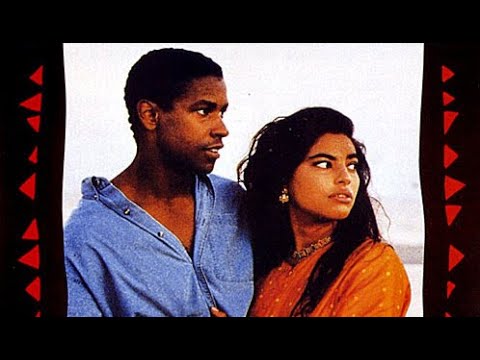
Mississippi Masala is a 1991 romantic drama film directed by Mira Nair, based upon a screenplay by Sooni Taraporevala, starring Denzel Washington, Sarita Choudhury, and Roshan Seth. Set primarily in rural Mississippi, the film explores interracial romance between African Americans and Indian Americans. Storyline: An Indian family is expelled from Uganda when Idi Amin takes power. They move to Mississippi and time passes. The dad sues Uganda to get his property back. The now-adult Indian daughter meets and falls in love with a Black man, and the respective families are forced to come to terms with it in the climate of racial hatred and cultural difference. Synopsis: Demetrius is a stalwart, self-made man and owner of a carpet-cleaning business. A chance traffic accident introduces him to Mina, a beautiful young Indian woman whose family fled Uganda under the rule of Idi Amin. As Demetrius and Mina begin their secret love affair, each is swept into the other's exotic world, soon finding themselves at the center of controversy and scandal. Mina's parents, Jay and his wife Kinnu, are outraged by the relationship and concerned about their daughter's disregard for the values and traditions of their culture. Demetrius, it seems, fares no better. The Indian community is outraged, his business suffers, the bank wants to repossess his carpet cleaning van and friends whisper that he has crossed the color line. However, Demetrius stands steadfast in his belief that a shade of color is all which separates him and Mina. Reception: On the review aggregator website Rotten Tomatoes, 92% of 74 critics' reviews are positive, with an average rating of 7.6/10. The website's consensus reads: "Sarita Choudhury and Denzel Washington's romantic chemistry lights up the screen in Mississippi Masala, Mira Nair's observant and sexy tale of cultures clashing" We do not own the rights to any of this film. This film is being used for historical and educational purposes only. No copyright infringement intended. Black Excellence:
Starring Denzel Washington, Sarita Choudhury, Roshan Seth
Mississippi Masala

The Great White Hope is a 1970 American biographical romantic drama film written and adapted from the 1967 Howard Sackler play of the same name. The film was directed by Martin Ritt, starring James Earl Jones, Jane Alexander, Chester Morris, Hal Holbrook, Beah Richards and Moses Gunn. Jones and Alexander, who also appeared in the same roles in the stage versions, received Best Actor and Actress Academy Award nominations for their performances. This unflinching look at racism, pride, and perseverance remains painfully relevant today. The film and play is based on the true story of boxer Jack Johnson and his first wife, Etta Terry Duryea, and the controversy over their marriage and Duryea's death by suicide in 1912. The Great White Hope is a powerful drama that explores the resilience and struggle of a Black heavyweight boxing champion, Jack Jefferson, as he faces relentless challenges from a society intent on his downfall. Based on true events, The Great White Hope tells the story of Jefferson and his white partner, Eleanor, whose relationship stirs controversy and hostility. With themes of racial prejudice, love, and perseverance, this cinematic gem dives deep into the struggles and sacrifices of a man determined to rise above society’s expectations. Directed by the acclaimed Martin Ritt and starring the legendary James Earl Jones alongside Jane Alexander, The Great White Hope brings heart-wrenching moments, raw performances, and an unflinching look at race and identity in America. Plot: A Black champion boxer and his white female companion struggle to survive while the white boxing establishment looks for ways to knock him down. Synopsis: Jack Jefferson (James Earl Jones) is the boxing heavyweight champion of early 1910s America. But as a black man, he's not only fighting other boxers, but discrimination and prejudice as well. The boxing fans and press resent the idea of a black champion and are actively searching for a "great white hope" that can defeat him. But it's Jefferson's activities outside the ring, primarily involving the white Eleanor Bachman (Jane Alexander), that may prove to be his downfall. Storyline: Boxer Jack Jefferson (James Earl Jones) is the world's reigning heavyweight boxing champion. There's just one problem: he is also the first Black heavyweight champion, which bothers a lot of people. Jack's celebration is cut short when he is framed for crossing a state line with Eleanor, his white fiancée (Jane Alexander in her first film role), a violation of the Mann Act. Facing a prison sentence, Jack escapes to Europe with Eleanor in tow, encountering problems in England, and then France, and eventually landing in Cuba. In Havana, Jack agrees to enter the boxing ring for what might be the bout of his life. Both Jones and Alexander were nominated for Oscars. Tagline: The most honored play in the history of Broadway... becomes an electrifying motion picture! Reception: The film opened to positive responses from both audiences and critics. They especially loved the performances of both James Earl Jones and Jane Alexander, who were in the original stage play: they won Tony Awards for the play. Jones would get bigger roles after this film, and Alexander made a debut here. Jones later contributed commentary to a documentary about Jack Johnson that would sum up this film, saying: "To know the story of Jack Johnson is to know that it is a study in hubris." Critic Emanuel Levy wrote called it a "well-acted drama". Variety said: “Jones' re-creation of his stage role is an eye-riveting experience. The towering rages and unrestrained joys of which his character was capable are portrayed larger than life.” We do not own the rights to any of this film. This film is being used for historical and educational purposes only. No copyright infringement intended. Black Excellence:
Starring James Earl Jones, Jane Alexander, Lou Gilbert