
Results for "public"
206 films
Clementine is a downtrodden store assistant and is thrilled when her boring life is interrupted by Adam, a beguiling but delusional co-worker. She joins him on his flights of fantasy and, to her delight, he comes to her rescue when she gets burdened with her ungrateful mother. But her troubles keep escalating and the repressed rage that has simmered for so long implodes. She makes plans to win her freedom but they’re so extreme even the intrepid Adam balks. However, he’s soon seduced by promises of how their life could be and the two hatch a get-rich-quick scheme that involves fraud and a possible 10-year prison sentence. Please visit our website to get more information: 🔔Love unique stories and talented filmmakers?
Starring Jade Williams, Jenny Tran, Brendan Coughlin
Little Miss Sociopath

All that meets the eye is not the truth, as Amanda, a psychiatrist, discovers on her subsequent journey in search of mysteries that are all the illusions of her own desires. A perfect game plan of lies and myths hiding the truth. Please visit our website to get more information: 🔔Love unique stories and talented filmmakers?
Starring Jen Ayer Drake, Marcus Lawrence, Michael Swidley
Beyond Your Consciousness

In 2005, patient Hunter Scritchfield is committed to Stonegate institute, believing he is under demonic possession. During a medical evaluation by a doctor and a resident priest, Scritchfield attacks the doctor but is murdered by him in self defense. Caught on video, the doctor blackmails the priest into secrecy to protect both of their reputations and covers up the murder as suicide as a result of a schizophrenic episode. 13 years later, Nolan and his group of urban exploring friends break into the now abandoned hospital. They encounter the video tape and watch it back to discover the gruesome secret. What Nolan and his friends do not realize, the secret is connected to them and dealing with the consequences of uncovering this secret unleashes the paranormal and puts their friendship on the line. Please visit our website to get more information: 🔔Love unique stories and talented filmmakers?
Starring Patrick McAvoy, Mark Lund, Rowan Muzzy
Stonegate

Something the Lord Made is a 2004 American made-for-television biographical drama film about the black cardiac pioneer Vivien Thomas (1910–1985) and his complex and volatile partnership with white surgeon Alfred Blalock (1899–1964), the "Blue Baby doctor" who pioneered modern heart surgery. Based on the National Magazine Award-winning Washingtonian magazine article "Like Something the Lord Made" by Katie McCabe, the film was directed by Joseph Sargent and written by Peter Silverman and Robert Caswell. Synopsis: Although Vivien Thomas (Mos Def), a black man in the 1930s, is originally hired as a janitor, he proves himself adept at assisting the "Blue Baby doctor," Alfred Blalock (Alan Rickman), with his medical research. When Blalock insists that Thomas follow him to Johns Hopkins University, they must find a way to skirt a racist system to continue their study of infant heart disease. Thomas is indispensable to Blalock's progress, but Blalock is the only one who is allowed to receive the acclaim. Plot: Fact-based story of a white surgeon and a black lab technician who revolutionized heart surgery amidst the racial injustice of the 1940s. Storyline: Alfred Blalock (1899-1964), a cardiologist (therefore, self-confident to the point of arrogance), leaves Vanderbilt for Johns Hopkins taking with him his lab technician, Vivien Thomas (1910-1985). Thomas, an African-American without a college degree, is a gifted mechanic and tool-maker with hands splendidly adept at surgery. In 1941, Blalock and Thomas take on the challenge of blue babies and invent bypass surgery. After trials on dogs, their first patient is baby Eileen, sure to die without the surgery. In defiance of custom and Jim Crow, Blalock brings Thomas into the surgery to advise him, but when Life Magazine and kudos come, Thomas is excluded. Will he receive his due? Film Background: A man who in life avoided the limelight, Thomas remained virtually unknown outside the circle of Hopkins surgeons he trained. Thomas' story was first brought to public attention by Washington writer Katie McCabe, who learned of his work with Blalock on the day of his death in a 1985 interview with a prominent Washington, D.C. surgeon who described Thomas as "an absolute legend." McCabe's 1989 Washingtonian magazine article on Thomas, "Like Something the Lord Made", generated widespread interest in the story and inspired the making of a 2003 public television documentary on Thomas and Blalock, "Partners of the Heart." A Washington, D.C. dentist, Irving Sorkin, discovered McCabe's article and brought it to Hollywood, where it was developed into the film. Tagline: A breakthrough that changed the face of medicine. A unique partnership that broke the rules. We do not own the rights to any of this film. This film is being used for historical and educational purposes only. No copyright infringement intended. Black Excellence:
Starring Alan Rickman, Yasiin Bey, Kyra Sedgwick
Something the Lord Made

Roll of Thunder, Hear My Cry is a 1978 television movie starring Morgan Freeman. This movie is the shortened version that was released from the original 3 part drama mini series back in 1978 telling the story of a black girl and her family who try to hold onto their land during the Depression. It is based upon the 1977 Newbery Medal awarded novel by Mildred D. Taylor. The novel is a part of her Logan family series. Plot: The pain of racial prejudice is experienced by members of a black family in Depression-era Mississippi. Storyline: With the land to hold them together, nothing can tear the Logans apart. Why is the land so important to Cassie's family? It takes the events of one turbulent year- the year of the night riders and the burnings, the year a white girl humiliates Cassie in public simply because she is black- to show Cassie that having a place of their own is the Logan family's lifeblood. It is the land that gives the Logans their courage and pride- no matter how others may degrade them, the Logans possess something no one can take away. We do not own the rights to any of this film. This film is being used for historical and educational purposes only. No copyright infringement intended. Black Excellence:
Starring Claudia McNeil, Janet MacLachlan, Robert Christian
Roll of Thunder, Hear My Cry

The Rosa Parks Story is a 2002 American television movie written by Paris Qualles and directed by Julie Dash. Angela Bassett portrays Rosa Parks, with Cicely Tyson in a supporting role as her mother. It was broadcast by CBS on February 24, 2002. It received awards from the NAACP and the Black Reel Awards. Storyline: A seamstress recalls events leading to her act of peaceful defiance that prompted the 1955 bus boycott in Montgomery, Alabama. Plot: This biopic tells the story of civil rights activist Rosa Parks (Angela Bassett) from her days as a private-school student to her public battle against racism and segregation. As a secretary for the National Association for the Advancement of Colored People, Parks defends local children who have been victimized by racism. But when she is arrested after refusing to give up her bus seat for a white passenger, Parks inspires the 1955 Montgomery Bus Boycott. Synopsis: Television movie about Mrs. Rosa L. Parks, the woman who inspired others when, exhausted after a long day at work, she refused to give up her seat to a white man on a city bus in Montgomery, Alabama in 1955. Mrs. Parks was then arrested and jailed. Her courage and defiance led to the Montgomery bus boycott, one of the most successful non-violent protests in American History. The stand-off ended only when the U.S. Supreme Court ruled bus segregation illegal. Quotes: Rosa Louise McCauley Parks: Why do you always push us around? Tagline: They needed a common cause... Her heroic stand gave them one. We do not own the rights to any of this film. This film is being used for historical and educational purposes only. No copyright infringement intended. Black Excellence:
Starring Angela Bassett, Peter Francis James, Tonea Stewart
The Rosa Parks Story

Christian Harris (Alisha Ward is an aspiring cosmetic surgeon. She was raised by her spirit lead grandmother Ida Mae Harris (Gail Everette Smith) to always choose right. But when meeting Dr. Ross Webster (Travis Conover) she thinks he's the man of her dreams. She quickly realizes he's not. Now Christian must make a decision to do what is right or continue do do what she knows is wrong. Please visit our website to get more information: 🔔Love unique stories and talented filmmakers?
Starring Jon Bass, Kate Hamilton, Francesca Blanchard
How Did I Get Here

No Reception is a family-friendly comedy that follows a posh city dweller who becomes lost in the wilderness with nothing but his hand sanitizer. He soon becomes entangled in a longstanding feud between two forest hermits. Please visit our website to get more information: 🔔Love unique stories and talented filmmakers?
Starring Alex Campbell, Nico Wan, Donovan Bakin
No Reception
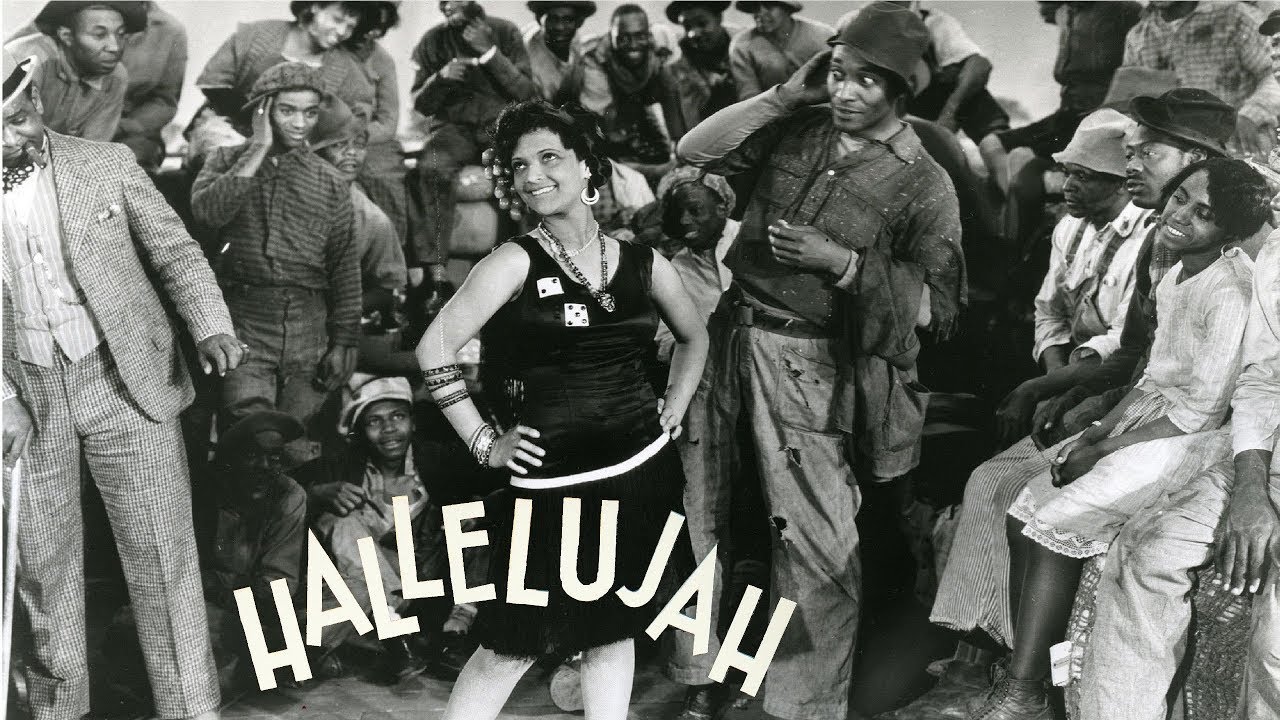
Hallelujah is a 1929 American Metro-Goldwyn-Mayer musical featuring an all-black cast directed by King Vidor and starring Daniel L. Haynes and Nina Mae McKinney. Filmed in Tennessee and Arkansas and chronicling the troubled quest of a sharecropper, Zeke Johnson (Haynes), and his relationship with the seductive Chick (McKinney), Hallelujah was one of the first films with an all-African American cast produced by a major studio. (Although frequently touted as Hollywood's first all-black cast musical, that distinction more properly belongs to Hearts in Dixie, which premiered several months earlier.) It was intended for a general audience and was considered so risky a venture by MGM that they required King Vidor to invest his own salary in the production. Vidor expressed an interest in "showing the Southern Negro as he is" and attempted to present a relatively non-stereotyped view of African-American life. Plot: A sharecropper decides to become a preacher after falling for a vamp from the city. Development: Years before creating Hallelujah, King Vidor had longed to make a film employing an all-African American cast. He had floated the idea around for years but "the studio kept turning the idea down". Vidor’s was in Europe during 1928 promoting his film The Crowd, when heard of talking motion pictures emerging in the United States. He wanted an all-African American cast to sing "Negro spirituals" after he had seen the success of it on Broadway. Vidor stated, "If stage plays with all Negro casts, and stories like those by Octavus Roy Cohen and others, could have such great success, why shouldn’t the screen make a successful Negro play?" Vidor was able to convince Nicholas Schenck, who was the president of MGM at the time, to get the movie made by framing it more as a film that depicted African American’s sexual deviance. Schenck put it simply to Vidor, "Well, if you think like that, I’ll let you make a picture about whores". Vidor received the inspiration to create this film based on real incidents he witnessed as a child during his time at home in the south. He observed: "I used to watch the Negroes in the South, which was my home. I studied their music, and I used to wonder at the pent-up romance in them". Vidor began shooting in Arkansas, Memphis and Southern California at the MGM studios. Hallelujah was King Vidor's first sound film, and combined sound recorded on location and sound recorded post-production in Hollywood. King Vidor was nominated for a Best Director Oscar for the film. Given the equipment available at the time, the film's soundtrack was a technical achievement, employing a much wider range of editing and mixing techniques than was generally used in "talkies" in this period. The Music: The film gives, in some sections, an authentic representation of black entertainment and religious music in the 1920s, though some of the sequences are Europeanized and over-arranged. A sequence which is of vital importance in the history of classic jazz is in the dancehall, where Nina Mae McKinney performs Irving Berlin's "Swanee Shuffle." Although actually filmed in a New York studio using black actors, the sequence gives an accurate representation of a low-life black dance-hall - part of the roots of classic jazz. Most Hollywood films of the period sanitized black music. Hallelujah and Black Stereotypes: Hallelujah was one of the early projects that gave African Americans significant roles in a movie, and though some contemporary film historians and archivists have said that it had "a freshness and truth that was not attained again for thirty years", a number of contemporary film historians and archivists agree that Hallelujah exhibits Vidor’s paternalistic view of rural blacks that included racial stereotyping. Reception: Exhibitors were worried that white audiences would stay away due to the black cast. They hosted two premieres, one in Manhattan and one in Harlem. The Black people who came to watch the film in Manhattan were forced to sit in the balcony. Hallelujah was commercially and critically successful. Photoplay praised the film for its depiction of African Americans and commented on the cast: "Every member of Vidor's cast is excellent. Although none of them ever worked before a camera or a microphone before, they give unstudied and remarkably spontaneous performances. That speaks a lot for Vidor's direction." Mordaunt Hall, in The New York Times, wrote approvingly of the all-Black cast, stating, "Hallelujah!, with its clever Negro cast, is one of the few talking pictures that is really a separate and distinct form of entertainment from a stage play". The combination of two groundbreaking aspects of the film, audible dialogue and an all-black cast, set the movie apart from its contemporaries. Hallelujah entered the public domain on January 1, 2025. Black Excellence:
Hallelujah

Separate but Equal is a 1991 American two-part television miniseries that dramatizes the landmark Supreme Court case Brown v. Board of Education, which challenged racial segregation in public schools. The film stars Sidney Poitier as lead NAACP attorney Thurgood Marshall, Richard Kiley as Chief Justice Earl Warren, Burt Lancaster (in his final television role) as lawyer John W. Davis (loser of Briggs v. Elliott and the Democratic candidate in the 1924 US presidential election), Cleavon Little as lawyer and judge Robert L. Carter, and Lynne Thigpen as Ruth Alice Stovall. Directed by George Stevens Jr., the miniseries received critical acclaim for its performances and historical accuracy, highlighting the moral and legal complexities of the case. In 1991, the Academy of Television Arts and Sciences rewarded the film with the Outstanding Miniseries award. The film received 8 nominations for Emmy Awards in 1991 and won 2 and received 3 nominations for Golden Globe Awards in 1992. Synopsis: A dramatization of the American court case that destroyed the legal validity of racial segregation. Storyline: This film follows the true story of the NAACP court challenge of racial school segregation in the Brown vs. Board of Education. This was the struggle that would destroy the legal validity for racial segregation in general and prove to be the start and the first major victory of the civil rights movement. Tagline: The true story behind the most important legal battle of our time. Critical Reception: John Leonard called the film "splendid" and "a triumph" in New York Magazine. While generally praising the film, Richard Zoglin in Time Magazine called the portrayal of Warren's visit to Gettysburg "simplistic." A contemporary review in the Orlando Sentinel called the film "one of television's finest hours." We do not own the rights to any of this film. This film is being used for historical and educational purposes only. No copyright infringement intended. Black Excellence:
Starring Sidney Poitier, Burt Lancaster, Richard Kiley
Separate but Equal

UNRAVELED is a drama/thriller about a recently widowed woman who suspects that her late husband was having an affair before his death. Her obsession with finding out the truth causes her to make decisions which could endanger herself and others. Starring: Pamela Ricardo, Christian Washington, Ramona Rideout, Xavier Mikal, David Rucker III Directed by Alfred Robbins Please visit our website to get more information: 🔔Love unique stories and talented filmmakers?
Starring Danica Ćurčić, Lars Ranthe, Lily Schjøtt-Wieth
Unraveled

The Liberation of L.B. Jones is a 1970 American neo noir film directed by William Wyler, his final project in a career that spanned 45 years. The screenplay by Jesse Hill Ford and Stirling Silliphant is based on Ford's 1965 novel The Liberation of Lord Byron Jones. The novel, in turn, was based on events that happened in a Southern town where writer Ford lived. After he wrote the book, he was verbally attacked for writing about the events that had occurred in his town. The motion picture's release added to the controversy, especially in Humboldt, Tennessee, where Ford lived. The film explores racial politics in the South during the Jim Crow era. The plot follows L. B. Jones, the richest black man in his Tennessee county, as he navigates the complexities of his wife's affair with a white policeman. This is a gripping and powerful drama that exposes racism, corruption, and injustice in the Deep South. It is a harrowing exploration of systemic oppression and the violent realities of race relations in America. As tensions rise in the racially charged town, Jones’ fight for dignity becomes a symbol of the broader struggle against injustice. The film stars Roscoe Lee Browne, Lee J. Cobb, Lola Falana, Anthony Zerbe, Lee Majors, Arch Johnson, Yaphet Kotto, Eve McVeagh, Chill Wills and Barbara Hershey in an early role. Synopsis: A black undertaker stands against racism in a small Southern town. Plot: A successful African American businessman in the Jim Crow South has a quarrel with a white policeman, suspecting that he is having an affair with his wife. The policeman's colleagues are seeking to avoid publicity. Release: The film was released March 18, 1970 in 4 theaters in Chicago, New York and Los Angeles and grossed $151,000 in its opening week. In the two theaters in New York, Variety noted that the audience in the opening week was 90% Black. After eight weeks of release, it became number one at the US box office. Awards and Nominations: Lola Falana was nominated for the Golden Globe Award for New Star of the Year – Actress. We do not own the rights to any of this film. This film is being used for historical and educational purposes only. No copyright infringement intended. Black Excellence:
Starring Lee J. Cobb, Anthony Zerbe, Roscoe Lee Browne