
Results for "poor"
33 films
The Big Blue - Ocean Stories from Down Under | Full Series | Free Documentary Nature Our Big Blue Backyard is a new blue-chip series that dives deep into the seas to discover stunning stories of New Zealand’s native ocean animals. Six epic marine environments - each hosting a neighbourhood of marine animals living out their daily dramas. Our Big Blue Backyard is a new blue-chip series that dives deep into the seas to discover stunning stories of New Zealand’s native ocean animals. The series travels south to north, exploring six very special environments: 1. It’s the great white shark versus little blue penguins in the southern oasis of Stewart Island; 2. A fur-seal summer off New Zealand’s Wild West Coast; 3. A day out with the athletic Dusky Dolphins of Kaikoura; 4. quality time with the big old snapper and crayfish of Goat Island; 5. Drama in the egg nurseries of the stunning Poor Knights Islands as parents try to protect their young, and 6. Predator versus prey as surfing Orcas travel the golden harbours of Northland, searching for their stingray victims. Each episode is structured around an ocean “neighbourhood” and features the colourful and varied inhabitants as they interact in their unique locations. The range and behaviours of these species in such close proximity are fascinating; from the giant to the tiny and the acrobatic to the rock scrapers - there is plenty of action in these aquatic communities. Orcas and mud crabs, seals and crayfish play out their lives as close neighbours, and their stories weave together to reveal entertaining animal dramas. Subscribe to Free Documentary - Nature Channel for free: Facebook: Twitter: ▬▬▬▬▬▬▬▬▬ ▬▬▬▬▬▬▬▬▬ Free Documentary is dedicated to bringing high-quality documentaries to you on YouTube for free. The latest camera equipment is used by well-known filmmakers working for famous production studios. You will see fascinating shots from the deep seas and up in the air, capturing great stories and pictures from everything our beautiful and interesting planet has to offer.
Starring Rosanna Arquette, Jean-Marc Barr, Jean Reno
The Big Blue

The Ditchdigger's Daughters is a television movie produced by the Family Channel in 1997. The film is based upon the book of the same name by Dr. Yvonne S. Thornton. Plot: Based on the memoirs of Yvonne S. Thornton, this heartwarming, inspirational family drama centers on a poor black laborer who wanted his six daughters to grow up to be doctors. Synopsis: In 1940s New Jersey, a poor, working man aspires to give his six daughters opportunities that he never had. Storyline: In many ways "The Ditchdigger's Daughters" adheres to the well worn path of a genre best described as the black struggle in an unjust white America. But the real plot in this movie revolves around the tyranny of a father and the effect it has on his six daughters as he cajoles, demands, blusters, and drives his daughters to reach for his notion of excellence. Demanding all "A" report cards, prohibiting dating, punishing with housework, and insisting that each daughter aim her sights on a career as a doctor all harken to the underlying fact of his own failure to complete school, and his own view of being poor and black. We do not own the rights to any of this film. This film is being used for historical and educational purposes only. No copyright infringement intended. Black Excellence:
Starring Carl Lumbly, Dulé Hill, Victoria Dillard
The Ditchdigger's Daughters

"A Dream for Christmas" is a TV movie which originally aired on television on December 24, 1973. It was originally designed as the pilot for a never-sold TV series titled The Douglas Family. Synopsis: An all-black cast shines in this pilot for a proposed series involving a southern minister who is assigned to a poor parish in California with the congregation drifting away and the church scheduled for demolition. But it's close to Christmas, a time when miracles have been known to happen. The hope here was for writer Earl Hamner to repeat his success with "The Waltons." Plot: An African-American minister, the Rev. Will Douglas (Hari Rhodes), and his large family relocate from their Arkansas home to Los Angeles in the 1950s. Douglas has been hired to lead the congregation of a neighborhood church. But, when the family finally arrives, they discover that the church is in major disrepair and scheduled for demolition. Douglas; his wife, Sarah (Lynn Hamilton) ; Grandma (Beah Richards) ; and the children must come together as various hardships rock their household. Review: Good Family Entertainment! I hadn't heard of this made for TV movie before it aired on the Me TV channel during the holidays. While it's not a classic in its field, it does prove to be a pleasurable watch. It's interesting that the entire cast is made up of African-Americans, and equally interesting that these characters and experiences have been almost totally written to be universal regardless of what your ethnicity might be. And while the central character is a preacher struggling to keep his church alive, the movie wisely doesn't lay on the religion thick - his words and actions are also universal to all viewers regardless of what your religion might be. We do not own the rights to any of this film. This film is being used for historical and educational purposes only. No copyright infringement intended. Black Excellence:
Starring Hari Rhodes, Beah Richards, Lynn Hamilton
A Dream for Christmas
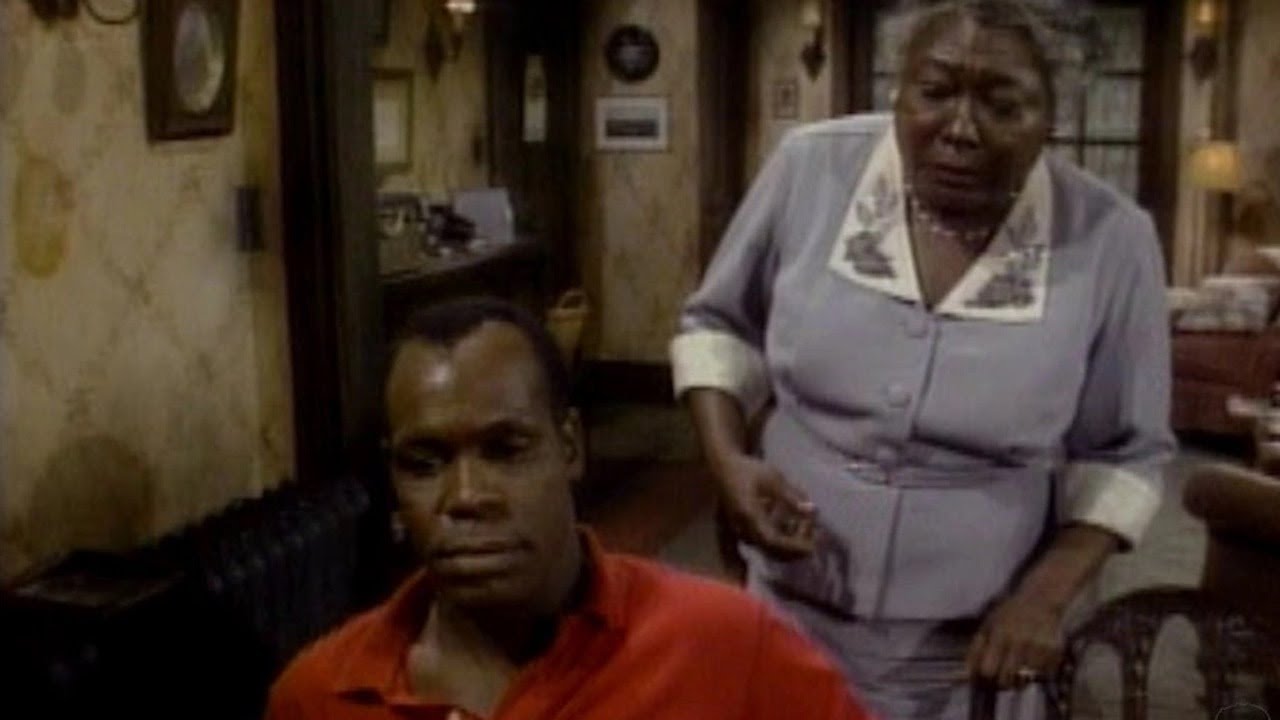
Raisin in the Sun is a 1989 TV adaptation of Lorraine Hansberry's 1959 Broadway play (previously filmed in 1961). Originally broadcast February 1, 1989, Raisin in the Sun was the eighth-season opener for PBS' American Playhouse. For the purposes of this version, a scene from the play that was removed during its original Broadway run is reinstated. Synopsis: An African-American family hopes to use a $10,000 legacy left them by the family's late father to move out of the Chicago projects and into a white neighborhood. Spearheading the move is matriarch Esther Rolle, who wants to open more opportunity doors for herself and her family. Rolle's son Danny Glover is bitter about the move; he'd hoped to use the inheritance to open his own business. Most of the play involves the heated battles between the idealistic Rolle and the hostile Glover, who feels that moving into an all-white suburb will hinder rather than help his future. Storyline: A TV adaptation of the Lorraine Hansberry drama about race relations in America in the 1950s. It is the story of a black American family torn between a mother's pursuit of the middle-class dream, and her son's desire to begin a new life. Plot: A substantial insurance payment could mean either financial salvation or personal ruin for a poor Black family. We do not own the rights to any of this film. This film is being used for historical and educational purposes only. No copyright infringement intended. Black Excellence:
Starring Starletta DuPois, Lou Ferguson, John Fiedler
A Raisin in the Sun

No Way Out is a 1950 American crime drama film noir directed by Joseph L. Mankiewicz and starring Sidney Poitier in his film debut, alongside Richard Widmark, Linda Darnell and Stephen McNally. The film centers on an African American doctor who confronts the racism of a poor slum after he treats a racist white criminal. Nominated for the 1950 Oscar for Best Writing, Story and Screenplay, this intense drama about racial hatred pulls no punches. One of the first Hollywood films to directly address racism. No Way Out was controversial in its "graphic representation of racial violence" in what director Mankiewicz termed "the absolute blood and guts of Negro hating." The film marked the feature-acting debuts of Poitier, Mildred Joanne Smith, and Ossie Davis. Richard Widmark delivers one of his most chilling roles. Mankiewicz and Lesser Samuels were nominated for Best Story and Screenplay at the 23rd Academy Awards. It is a gripping film noir and Sidney Poitier’s powerful debut, following a Black doctor whose treatment of an injured white criminal sparks intense racial tension in a working-class community. Directed by Joseph L. Mankiewicz, it blends crime drama and social commentary, tackling racism with rare candor for its era. Praised for Poitier’s commanding performance and the film’s boldness, it remains a powerful, unsettling classic worth watching for its historical and cinematic impact. Released during the early days of the Civil Rights Movement, No Way Out received critical acclaim but faced censorship for many years due to its incendiary nature. Storyline: The Biddle brothers, shot while robbing a gas station, are taken to the prison ward of the County Hospital; Ray Biddle, a rabid racist, wants no treatment from black resident Dr. Luther Brooks. When brother John dies while Luther tries to save him, Ray is certain it's murder and becomes obsessed with vengeance and the situation slides rapidly toward violence. Trivia: Richard Widmark was apparently very uncomfortable with some of the racist comments his character, Ray Biddle, made, especially given his friendship with Sidney Poitier. As a result, after some of the takes involving particularly venomous remarks, Widmark apologized to Poitier. We do not own the rights to any of this film. This film is being used for historical and educational purposes only. No copyright infringement intended. Black Excellence:
Starring Richard Widmark, Linda Darnell, Sidney Poitier
No Way Out

The River Niger is a 1976 film adaptation of the 1972 Joseph A. Walker play of the same title. The film was directed by Krishna Shah, and starred James Earl Jones, Cicely Tyson, and Louis Gossett Jr. The film had a limited commercial release in 1976 and has rarely been seen in later years. The soundtrack is by War, including the theme song "River Niger". Plot: An intimate look at life in the ghetto: Johnny Williams is a house painter who moonlights as a poet, struggling to financially and emotionally support his cancer-ridden wife Mattie. But times are tough and the poverty-troubled streets are even tougher, and it takes every ounce of Johnny's love and courage for the couple to make it through their strife, finding redemption in the River Niger. Storyline: In a poor African-American neighborhood in Los Angeles, once-aspiring poet Johnny Williams (James Earl Jones) takes a low-paying job as a house painter in order to support his family. Already struggling to make ends meet, Williams -- who rests his hopes on his son Jeff (Glynn Turman), an Air Force lieutenant -- grows more despondent when he learns his wife, Mattie (Cicely Tyson), has terminal cancer. Now, Williams must summon the depths of his spirit to overcome his family's plight. Tagline: Some rivers can't be dammed... some people won't be broken. We do not own the rights to any of this film. This film is being used for historical and educational purposes only. No copyright infringement intended. Black Excellence:
Starring James Earl Jones, Cicely Tyson, Louis Gossett Jr.
The River Niger
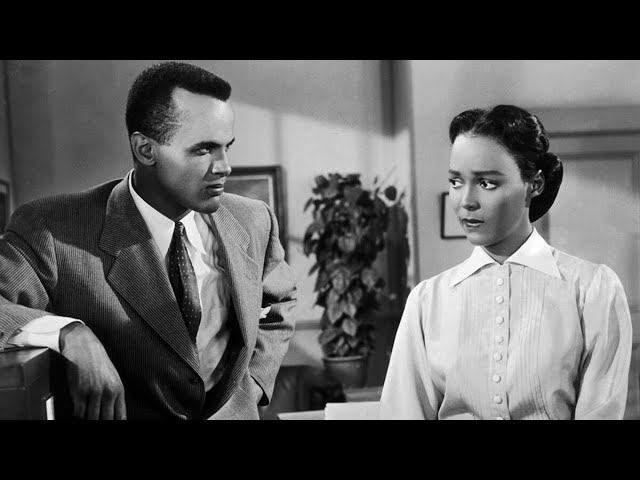
Bright Road is a 1953 low-budget film adapted from the Christopher Award-winning short story "See How They Run" by Mary Elizabeth Vroman. Directed by Gerald Mayer and featuring a nearly all-black cast, the film stars Dorothy Dandridge as an idealistic first-year elementary school teacher trying to communicate with a problem student. The film is also notable as the first appearance by Harry Belafonte, who costars as the principal of the school. Bright Road was groundbreaking for its positive and realistic depiction of Black professionals in a time when such portrayals were rare in Hollywood. Dandridge had been attracted to the lack of racial conflict in the story. She wrote that she was "profoundly fond of ... a theme which showed that beneath any color skin, people were simply people. I had a feeling that themes like this might do more real good than the more hard-hitting protest pictures. I wanted any black girl in the audience to look at me performing in this film and be able to say to herself, 'Why, this schoolteacher could be me.'" Alongside schoolteacher Jane Richards (Dorothy Dandridge) is Principal Williams (Harry Belafonte), who provides support as Jane seeks to inspire and uplift her students. The film is a touching portrayal of perseverance, the power of education, and the impact of dedicated Black educators on young lives. Synopsis: A young teacher helps a troubled student who's fascinated by a caterpillar's metamorphosis. After losing his sister and facing challenges, he proves himself by handling a bee crisis at school. Plot: A drama starring Dorothy Dandridge as a dedicated teacher in a rural African American community. The film explores her struggles and triumphs as she aims to inspire her young students, confronting societal challenges along the way. Review: "Bright Road" is a film that Hollywood decided to present with an almost all black cast, something that was not done often prior to the fifties and the arrival of such stars as Dorothy Dandridge, Harry Belafonte, and the man that would make it all possible for other performers of color: Sidney Poitier! The story is simple, and yet, it speaks volumes of what a good teacher can do to inspire the young people in her charge. Jane Richards is such a person. She sees the good bottled inside C.T. Young, the rebellious poor boy that, deep inside, is a wonderful youngster who has had no luck with other teachers in the school, who have made him repeat two years and haven't really seen the potential in him. Dorothy Dandridge makes a sweet, yet firm Jane Richards. She was a star that could do anything, as proved by her other films, most notably in "Carmen Jones". She was a beautiful presence in this film, who with her positive attitude changes and inspires her students. Tall and handsome Harry Belafonte is seen as the Principal in his screen debut. Dandridge and Belafonte are an attractive duo when they are onscreen together. Philip Hepburn played C.T. Young with conviction for such a small child. Bright Road showcases an inspiring tale of hope, resilience, and transformation. Through powerful performances and a compelling narrative, the film explores the challenges of education, love, and growth. CT's journey, symbolized by a caterpillar’s metamorphosis, reminds us of the importance of second chances and personal change. Don't miss this rare and beautiful moment in Black cinema history, a film whose message resonates as much today as it did in 1953. "Bright Road" is a charming film thanks to Ms. Dandridge and the direction of Mr. Mayer. We do not own the rights to any of this film. This film is being used for historical and educational purposes only. No copyright infringement intended. Black Excellence:
Starring Dorothy Dandridge, Philip Hepburn, Harry Belafonte
Bright Road

Cotton Comes to Harlem is a 1970 American neo-noir action comedy film co-written and directed by Ossie Davis and starring Godfrey Cambridge, Raymond St. Jacques, and Redd Foxx. The film, later cited as an early example of the Blaxploitation genre, is based on Chester Himes' novel of the same name. The opening theme, "Ain't Now But It's Gonna Be", was written by Ossie Davis and performed by Melba Moore. The film was one of the many black films that appeared in the 1970s and became overnight hits. It was followed two years later by the sequel Come Back, Charleston Blue (1972). Synopsis: Two Harlem cops investigate a robbery, believing that a reverend has staged it in order to steal the money he's collected for a local fundraiser. Storyline: Gravedigger Jones and Coffin Ed Johnson are two black cops with a reputation for breaking the odd head. Both are annoyed at the success of the Reverend Deke O'Mailey who is selling trips back to Africa to the poor on the installment plan. When his truck is hijacked and a bale of cotton stuffed with money is lost in the chase, Harlem is turned upside down by Gravedigger and Coffin Ed, the Reverend, and the hijackers. Hilarity ensues!Much of the humor is urban black, which was unusual in 1970. Production: The film saw the debut of Calvin Lockhart, Judy Pace, and Cleavon Little. Another debut was by Redd Foxx, already well known as a veteran nightclub comic, leading him to be considered for the TV Show Sanford and Son. Themes: Cotton Comes to Harlem is hailed by many as the first blaxploitation film, although others felt that it was merely an action comedy film. Detectives Gravedigger and Coffin Ed do not always follow the rules. They are not necessarily fighting to protect the rule of law, but they try to protect their people from racist attitudes. Reception: Ken Hanke of the Mountain Xpress called Cotton Comes to Harlem "one of the earliest and best Blaxploitation films. Box Office: Cotton Comes to Harlem is one of the most commercially successful films Hollywood produced in the 1970s starring a predominantly black cast. The film was one of the many black films that appeared in the 1970s eventually becoming a cult classic. Cotton Comes to Harlem inspired more black films during the 1970s, including more action-packed numbers such as Shaft and Super Fly. We do not own the rights to any of this film. This film is being used for historical and educational purposes only. No copyright infringement intended. Black Excellence:
Starring Godfrey Cambridge, Raymond St. Jacques, Calvin Lockhart
Cotton Comes to Harlem

Le robaron su milagro. Les devolvió un desastre. María vive en una cueva donde un manantial le proporciona el agua para preparar un remedio al que se atribuyen propiedades curativas. Cuando don Abundio, un poderoso terrateniente del pueblo, descubre una oportunidad de negocio, se apodera de su hogar… pero el manantial se seca. Mientras tanto, una inesperada confusión en el hospital deja a María al cuidado de una bebé que ella cree llegada por un milagro. Entre la codicia, los chismes y los engaños, su honradez está a punto de ponerse a prueba. María Elena Velasco da vida a su inconfundible personaje de La India María en ¡POBRE, PERO HONRADA! (1973), dirigida por Fernando Cortés. Fernando Soler interpreta al ambicioso don Abundio, acompañado por Norma Lazareno, Ángel Garasa y Adalberto Rodríguez. El humor y la ternura se unen en la historia de una mujer con muy pocas posesiones y unos principios que el dinero no puede comprar. 🎭 REPARTO María Elena Velasco — María Nicolasa Cruz Fernando Soler — Don Abundio Adalberto Rodríguez «Machuchal» — Lencho Norma Lazareno — Marcela Ángel Garasa — Padre Bonifacio José Ángel Espinosa «Ferrusquilla» — Chimino 🎞️ FICHA TÉCNICA Título original: ¡Pobre, pero honrada! Dirección: Fernando Cortés Guion: Julio Porter y Fernando Cortés (argumento), Fernando Galiana (guion) Música: Gustavo Pimentel Fotografía: Xavier Cruz Fecha de estreno: 1 de noviembre de 1973 (México, según IMDb) Lugares de rodaje: Estudios América, Ciudad de México, y Chiconcuac, Morelos, México 🎬 GÉNEROS Comedia • Drama • Cine mexicano 🌐 TÍTULOS INTERNACIONALES 🇲🇽 ¡Pobre, pero honrada! — Título original en español 🌐 Poor But Honest — Título en inglés utilizado en fuentes de referencia 💬 ¿Cuál es tu película favorita de La India María? ¡Cuéntanos en los comentarios!
Starring María Elena Velasco, Fernando Soler, Adalberto Rodríguez Machuchal
Pobre, pero honrada

Once Upon a Time... When We Were Colored is a 1996 American period drama film directed by Tim Reid and starring Al Freeman Jr., Phylicia Rashad and Leon. The screenplay was written by Paul W. Cooper. The film is based on Clifton Taulbert’s real life and his non-fiction book Once Upon a Time When We Were Colored. Based on Clifton Taulbert's memoir first published in 1989; this film is about his life experiences from his childhood in a small Mississippi town during the segregated 1950s to his emigration North in 1962 at the age of 17. Synopsis: A narrator tells the story of his childhood years in a tightly knit African American community in the deep south under racial segregation. Welcome to Glen Allan, Mississippi, 1946. Experience an America that remains only in the hearts and minds of those who were brought up in this small southern community. Lost in the sweat of the cotton fields and hidden in the juke joints of muddy water blues, the people of Glen Allan nurtured and protected each other while celebrating life to the fullest. In a time when the Ku Klux Klan terrorized the streets and "White Only" were the first words learned by African American children, Clifton was encouraged by the love and kinship of the tight-knit community to overcome the bigotry and intolerance of the South, allowing him to embark on an extraordinary journey. Quotes: Narrator: Everyone clung to the idea that if you worked hard, you get a piece of the American dream. Reception: Roger Ebert gave the movie four stars of four. At the 1997 NAACP Image Awards film received two nominations: for Outstanding Motion Picture, and Outstanding Actress in a Motion Picture (Phylicia Rashad). It also received American Black Film Festival Award for Best Film. The video has poor picture quality, but it is still a worthwhile viewing experience. We do not own the rights to any of this film. This film is being used for historical and educational purposes only. No copyright infringement intended. Black Excellence:
Starring Al Freeman Jr., Phylicia Rashād, Paula Kelly
Once Upon a Time... When We Were Colored

Most Dangerous Ways To School - Bolivia Most Dangerous Ways To School - Vietnam: The Yungas Valley in Bolivia: a unique landscape, where the Andes Mountains meet the Amazon Rain Forest. In this remote section of one of the poorest countries in South America, children have a very long and incredible dangerous walk to school ahead of them. All for one goal: education – for a better life. Seven-year-old Elmer wants to become an engineer and to build his own house, far away from the remote village. But his only way to school leads over a ravine more than 650 feet deep and about 1000 feet long: a kind of homemade zip-line. He has to entrust his live on a rusty iron pulley and a worn plastic bag. On the other side of the valley, on the summit of the mountain range, is where the sisters Helen and Mariela live. Isolated, and in the heart of the jungle. Of all the children who attend the school, the sisters live furthest away. Fear, hunger, and exhaustion are their constant companions. For them, education the key to a new, better world. And that’s why they run great risks every day in pursuit of it. All this is more than just a walk to school – It is a test in the vast jungle. Throughout this journey they all have only one goal in mind: to ultimately find a job in a city and lead a better life. __________________________________________________________ Subscribe Free Documentary Channel for free: Facebook: Twitter: __________________________________________________________ __________________________________________________________ Free Documentary is dedicated to bring high-class documentaries to you on youtube for free. With the latest camera equipment used by well-known filmmakers working for famous production studios. You will see fascinating shots from the deep seas and up in the air, capturing great stories and pictures from everything our beautiful and interesting planet has to offer. Enjoy stories about nature, wildlife, culture, people, history and more to come.
Most Dangerous Ways To School
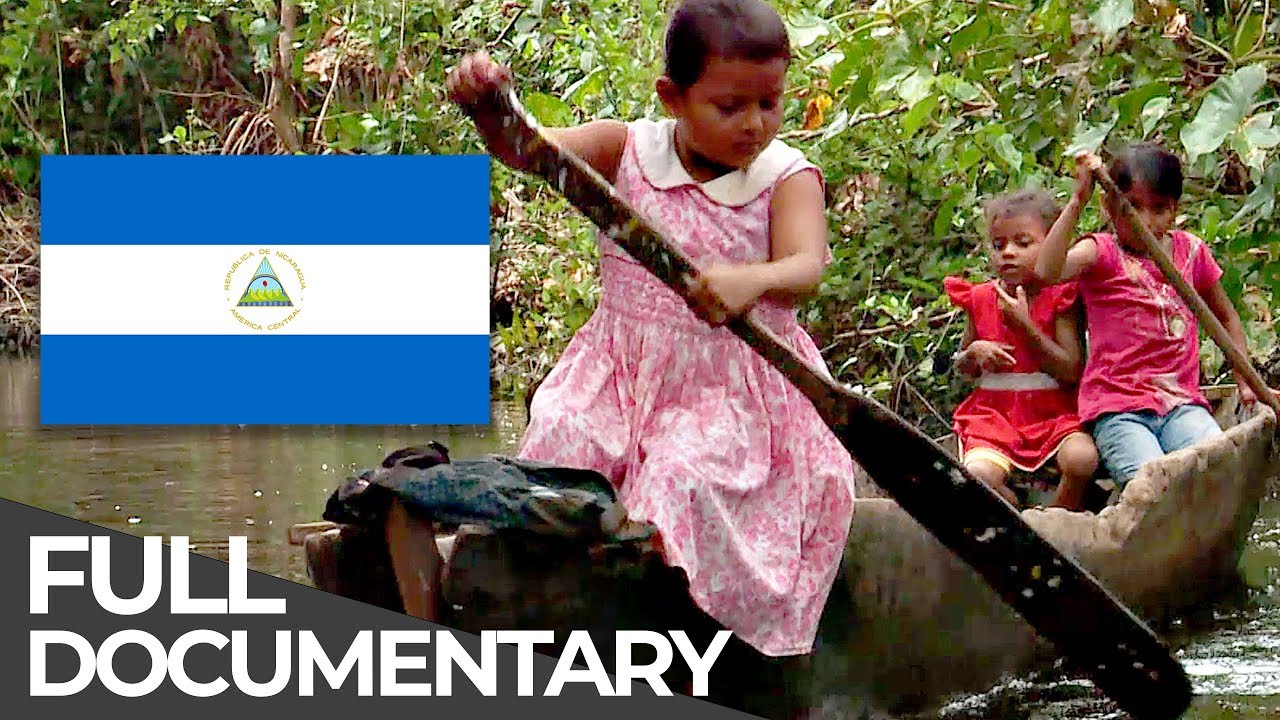
Every morning, the three sisters Julia, Yulissa and Kenya climb into their dugout in order to row to school. They live on the east coast of Nicaragua, one of the world’s poorest countries, and the youngest of them has just turned five; the oldest is nine. They row across the Rio Escondido. Not only is it one of the largest rivers in the country, it is simultaneously one of the most dangerous routes to school. While they have to watch out for snakes lurking in the trees over the river, the three sisters also struggle against the current and must ensure the dugout does not fill up with water - because it has multiples holes and could sink at any minute. Other classmates do not necessarily have it easier, because they live far from the river, and their journey to school takes them through the deep jungle. One of these classmates is 11-year-old Greyven. His daily trip takes him through the so-called ‘snake field’, in which coral snakes and the infamous boa constrictor reside. On the way to school, the rain drives the snakes from the empty coconuts on the ground; on the way back the afternoon heat, which is over 35 degrees, means that they are lively and belligerent. The daily journey – ashore and to water – to San Mariano’s small village school is an adventure almost unimaginable to us. Every time they undertake this trip, the children expose themselves to life-threatening dangers, all for the chance to have a better future.