
Results for "memoir"
4 films
The Ditchdigger's Daughters is a television movie produced by the Family Channel in 1997. The film is based upon the book of the same name by Dr. Yvonne S. Thornton. Plot: Based on the memoirs of Yvonne S. Thornton, this heartwarming, inspirational family drama centers on a poor black laborer who wanted his six daughters to grow up to be doctors. Synopsis: In 1940s New Jersey, a poor, working man aspires to give his six daughters opportunities that he never had. Storyline: In many ways "The Ditchdigger's Daughters" adheres to the well worn path of a genre best described as the black struggle in an unjust white America. But the real plot in this movie revolves around the tyranny of a father and the effect it has on his six daughters as he cajoles, demands, blusters, and drives his daughters to reach for his notion of excellence. Demanding all "A" report cards, prohibiting dating, punishing with housework, and insisting that each daughter aim her sights on a career as a doctor all harken to the underlying fact of his own failure to complete school, and his own view of being poor and black. We do not own the rights to any of this film. This film is being used for historical and educational purposes only. No copyright infringement intended. Black Excellence:
Starring Carl Lumbly, Dulé Hill, Victoria Dillard
The Ditchdigger's Daughters

Selma, Lord, Selma is a 1999 American made-for-television biographical drama film based on true events that happened in March 1965, known as Bloody Sunday in Selma, Alabama. The film tells the story through the eyes of a 9-year-old African-American girl named Sheyann Webb (Jurnee Smollett). It was directed by Charles Burnett, one of the pioneers of African-American independent cinema. It premiered on ABC on January 17, 1999. Plot: In 1965 Alabama, a 9-year-old girl (Jurnee Smollett) is touched by a speech by Martin Luther King, Jr. (Clifton Powell) and becomes a devout follower, but her resolution is tested when she joins others in the famed march from Selma to Montgomery. Production: Selma, Lord, Selma is based on a book of the same name written in 1980 by Sheyann Webb, Rachel West and Frank Sikora. The full title is Selma, Lord, Selma: Girlhood Memories of the Civil-Rights Days. It was published by the University of Alabama Press in Tuscaloosa, AL. It is written in the style of memoirs by Sheyann and Rachel. Selma, Lord, Selma was made into a movie. Walt Disney Pictures picked it up and on January 17, 1999, one day prior to the national holiday commemorating Dr. King's birthday, it was broadcast on the ABC television network. Dr. King's daughter Yolanda is featured in the film as Miss Bright, Sheyann's teacher who marches with her. Music composed by Stephen James Taylor, with vocals by Brides of the Wind. We do not own the rights to any of this film. This film is being used for historical and educational purposes only. No copyright infringement intended. Black Excellence:
Starring Mackenzie Astin, Jurnee Smollett-Bell, Clifton Powell
Selma, Lord, Selma

Once Upon a Time... When We Were Colored is a 1996 American period drama film directed by Tim Reid and starring Al Freeman Jr., Phylicia Rashad and Leon. The screenplay was written by Paul W. Cooper. The film is based on Clifton Taulbert’s real life and his non-fiction book Once Upon a Time When We Were Colored. Based on Clifton Taulbert's memoir first published in 1989; this film is about his life experiences from his childhood in a small Mississippi town during the segregated 1950s to his emigration North in 1962 at the age of 17. Synopsis: A narrator tells the story of his childhood years in a tightly knit African American community in the deep south under racial segregation. Welcome to Glen Allan, Mississippi, 1946. Experience an America that remains only in the hearts and minds of those who were brought up in this small southern community. Lost in the sweat of the cotton fields and hidden in the juke joints of muddy water blues, the people of Glen Allan nurtured and protected each other while celebrating life to the fullest. In a time when the Ku Klux Klan terrorized the streets and "White Only" were the first words learned by African American children, Clifton was encouraged by the love and kinship of the tight-knit community to overcome the bigotry and intolerance of the South, allowing him to embark on an extraordinary journey. Quotes: Narrator: Everyone clung to the idea that if you worked hard, you get a piece of the American dream. Reception: Roger Ebert gave the movie four stars of four. At the 1997 NAACP Image Awards film received two nominations: for Outstanding Motion Picture, and Outstanding Actress in a Motion Picture (Phylicia Rashad). It also received American Black Film Festival Award for Best Film. The video has poor picture quality, but it is still a worthwhile viewing experience. We do not own the rights to any of this film. This film is being used for historical and educational purposes only. No copyright infringement intended. Black Excellence:
Starring Al Freeman Jr., Phylicia Rashād, Paula Kelly
Once Upon a Time... When We Were Colored
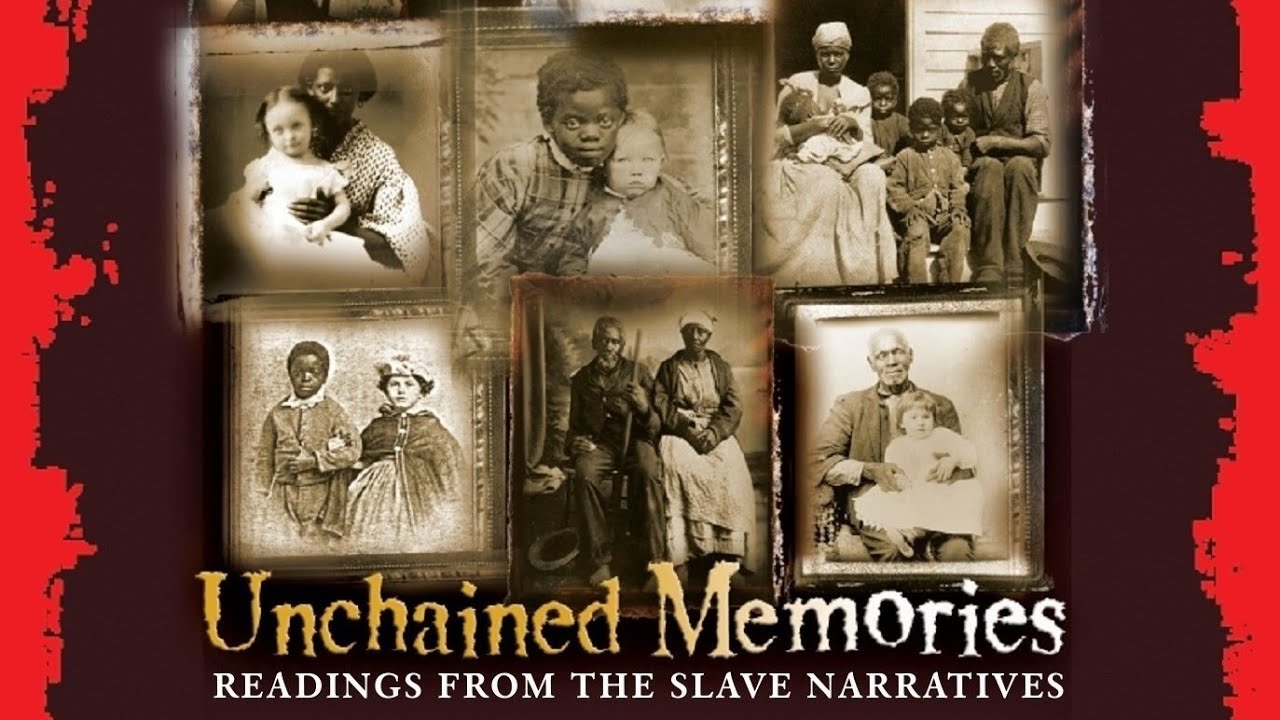
Unchained Memories is a 2003 documentary film about the stories of former slaves interviewed during the 1930s as part of the Federal Writers' Project and preserved in the WPA Slave Narrative Collection. This HBO film interpretation directed by Ed Bell and Thomas Lennon is a compilation of slave narratives, narrated by actors, emulating the original conversation with the interviewer. Readings from the Slave Narratives The slave narratives may be the most accurate in terms of the everyday activities of the enslaved, serving as personal memoirs of more than two thousand former slaves. The documentary depicts the emotions of the slaves and what they endured. The "Master" had the opportunity to sell, trade, or kill the enslaved, for retribution should one slave not obey. The largest collection of slave narratives emerged from the Federal Writers' Project. Created by the Federal Government under the WPA to reduce unemployment during the 1930s, one component of the Federal Writers' Project involved interviews with thousands of former slaves in 17 states. The oral history interview project yielded an extraordinary set of 2,300 autobiographical documents known as the Slave Narrative Collection. What emerged from these documents were pictures of living standards, the daily chores, and long days, along with stories of the good and bad "Master." The brutality, torture, and abuse under slavery are themes in the interviews. When the Civil War ended in 1865, more than four million slaves were set free. Over 70 years later, the memories of some 2,000 slave-era survivors were transcribed and preserved by the Library of Congress. These first-person anecdotes, ranging from the brutal to the bittersweet, have been brought to vivid life, featuring the on-camera voices of over a dozen top African-American actors. With thanks to HBO for the use of their film. We do not own the rights to any of this film. This film is being used for historical and educational purposes only. No copyright infringement intended. Black Excellence:
Unchained Memories: Readings from the Slave Narratives
End of the reel — 4 films