
Results for "many"
257 films
After Acme products fail him one too many times in his dogged pursuit of the Roadrunner, Wile E. Coyote decides to hire a billboard lawyer to sue the Acme Corporation.
Starring Will Forte, Lana Condor, John Cena
Coyote vs. Acme

The Ditchdigger's Daughters is a television movie produced by the Family Channel in 1997. The film is based upon the book of the same name by Dr. Yvonne S. Thornton. Plot: Based on the memoirs of Yvonne S. Thornton, this heartwarming, inspirational family drama centers on a poor black laborer who wanted his six daughters to grow up to be doctors. Synopsis: In 1940s New Jersey, a poor, working man aspires to give his six daughters opportunities that he never had. Storyline: In many ways "The Ditchdigger's Daughters" adheres to the well worn path of a genre best described as the black struggle in an unjust white America. But the real plot in this movie revolves around the tyranny of a father and the effect it has on his six daughters as he cajoles, demands, blusters, and drives his daughters to reach for his notion of excellence. Demanding all "A" report cards, prohibiting dating, punishing with housework, and insisting that each daughter aim her sights on a career as a doctor all harken to the underlying fact of his own failure to complete school, and his own view of being poor and black. We do not own the rights to any of this film. This film is being used for historical and educational purposes only. No copyright infringement intended. Black Excellence:
Starring Carl Lumbly, Dulé Hill, Victoria Dillard
The Ditchdigger's Daughters

Polly is a 1989 American made-for-television musical film adapted from the book Pollyanna by Eleanor H. Porter featuring an all African-American cast (with the exception of Celeste Holm). It was directed and choreographed by Debbie Allen, starring Keshia Knight Pulliam, Phylicia Rashad and also featured the final performance of actress Butterfly McQueen. Polly was originally broadcast on NBC on November 12, 1989. Storyline: An orphan tries to use gladness to unite the people in a small southern town. Plot: Set in Alabama during the 1950s, Polly Whittier, an orphan who is sent to live with her aunt Polly Harrington, who is a descendant of the founding family of a small Southern town (also called Harrington) during the segregation era. A key point in dividing the town is a ravine which has an unrepaired bridge which burned down many years ago, and no one knows how it started and is suspicious of everyone else. Polly is able to convince people to look at the bright side of things, but tragedy strikes when Polly falls two stories from a tree, suffering a spinal injury. We do not own the rights to any of this film. This film is being used for historical and educational purposes only. No copyright infringement intended. Black Excellence:
Starring Keshia Knight Pulliam, Phylicia Rashād, Dorian Harewood
Polly

Two strangers are brought together at an unusual wedding where, in one night, too many surprises unfold and several lies are told, spiraling into chaos that changes everything.
Starring Rishikanth, Anishma Anilkumar, Chetan
Modha Rathri
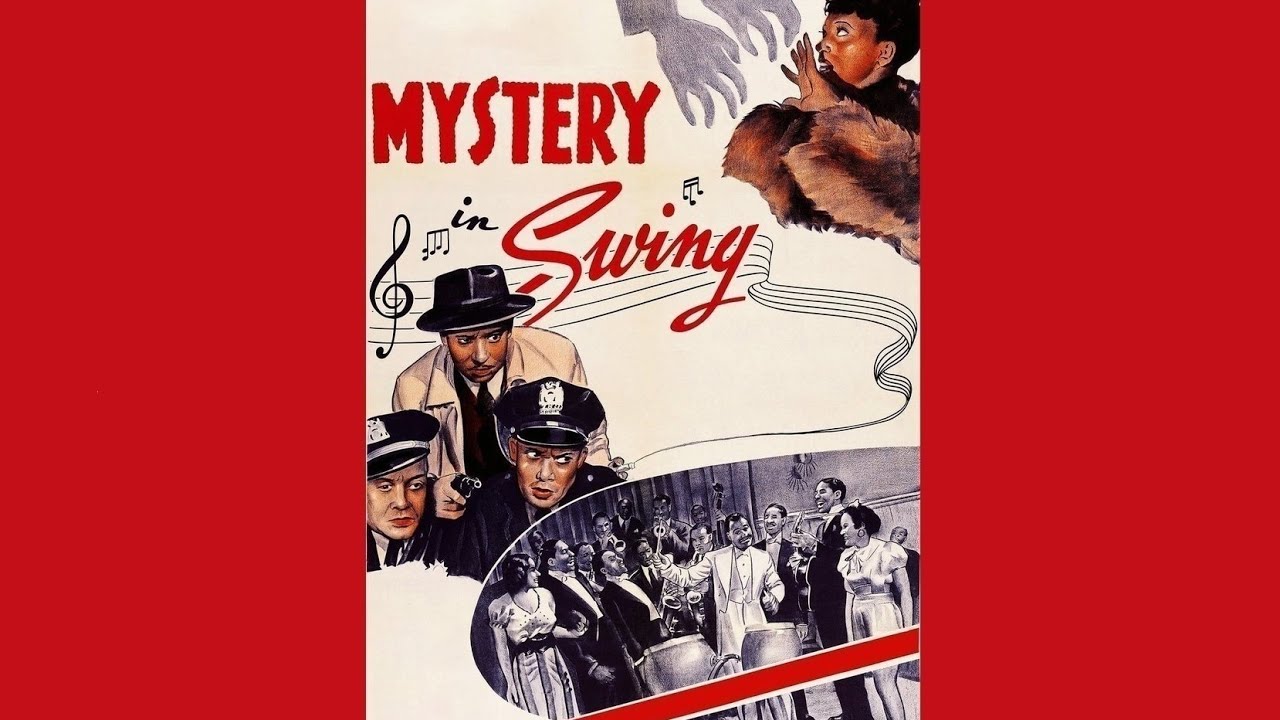
Mystery in Swing is an American murder mystery race film featuring an all-black cast that was released in 1940. It was directed by Arthur Dreifuss, based on a script by Arthur Hoerl. Mystery in Swing features music by The Four Toppers and Cee Pee Johnson and his Orchestra and was noted as being the first time a Black orchestra recorded an entire score for a film. It is currently held in the collections of the National Museum of African American History and Culture. What sets this movie apart from other films of its ilk -- both white-cast and black-cast -- are the interesting and well-played musical interludes and the comedic turn by F. E. Miller as Sgt. Slim. Miller is better known as the vaudeville (and film) partner of Mantan Moreland, but both had separate film outings as well. Both are always worth watching, alone or as a pair. Also notable here is Buck Woods, as a valet who has some memorable scenes ranging from the dramatic to the comedic. Plot: An unpopular band leader at a nightclub is murdered, and the list of suspects is long. Synopsis: In and around some great blues, swing and jazz music, a very unpopular band-leader, Prince Ellis, is killed in a Harlem nightclub, and, in and around some more great music, a detective (Monte Hawley) finds the lists of suspects is very long, as Prince Ellis was indeed very unpopular with many citizens. Tagline: THRILLS! CHILLS! MUSIC! GIRLS! (original poster - all caps) Reception and Legacy: A review in Box Office noted, "The cast, largely comprising night-club entertainers, delivers competently and there are a few welcome and well-done musical interludes." We do not own the rights to any of this film. This film is being used for historical and educational purposes only. No copyright infringement intended. Black Excellence:
Starring Monte Hawley, Tommie Moore, Edward Thompson
Mystery in Swing

No Way Out is a 1950 American crime drama film noir directed by Joseph L. Mankiewicz and starring Sidney Poitier in his film debut, alongside Richard Widmark, Linda Darnell and Stephen McNally. The film centers on an African American doctor who confronts the racism of a poor slum after he treats a racist white criminal. Nominated for the 1950 Oscar for Best Writing, Story and Screenplay, this intense drama about racial hatred pulls no punches. One of the first Hollywood films to directly address racism. No Way Out was controversial in its "graphic representation of racial violence" in what director Mankiewicz termed "the absolute blood and guts of Negro hating." The film marked the feature-acting debuts of Poitier, Mildred Joanne Smith, and Ossie Davis. Richard Widmark delivers one of his most chilling roles. Mankiewicz and Lesser Samuels were nominated for Best Story and Screenplay at the 23rd Academy Awards. It is a gripping film noir and Sidney Poitier’s powerful debut, following a Black doctor whose treatment of an injured white criminal sparks intense racial tension in a working-class community. Directed by Joseph L. Mankiewicz, it blends crime drama and social commentary, tackling racism with rare candor for its era. Praised for Poitier’s commanding performance and the film’s boldness, it remains a powerful, unsettling classic worth watching for its historical and cinematic impact. Released during the early days of the Civil Rights Movement, No Way Out received critical acclaim but faced censorship for many years due to its incendiary nature. Storyline: The Biddle brothers, shot while robbing a gas station, are taken to the prison ward of the County Hospital; Ray Biddle, a rabid racist, wants no treatment from black resident Dr. Luther Brooks. When brother John dies while Luther tries to save him, Ray is certain it's murder and becomes obsessed with vengeance and the situation slides rapidly toward violence. Trivia: Richard Widmark was apparently very uncomfortable with some of the racist comments his character, Ray Biddle, made, especially given his friendship with Sidney Poitier. As a result, after some of the takes involving particularly venomous remarks, Widmark apologized to Poitier. We do not own the rights to any of this film. This film is being used for historical and educational purposes only. No copyright infringement intended. Black Excellence:
Starring Richard Widmark, Linda Darnell, Sidney Poitier
No Way Out

Devil in a Blue Dress is a 1995 American neo-noir mystery thriller film written and directed by Carl Franklin, based on Walter Mosley's 1990 novel of the same name and features Denzel Washington, Tom Sizemore, Jennifer Beals, and Don Cheadle. Set in 1948, the film follows World War II veteran Ezekiel "Easy" Rawlins who, desperate in need of a job, becomes drawn into a search for a mysterious woman. Devil in a Blue Dress received positive reviews, with many praising Cheadle's performance. Plot: A Black war hero is hired to find a mysterious woman and gets mixed up in a murderous political scandal in 1948 Los Angeles. Storyline: It is 1948 in LA and Ezekiel "Easy" Rawlins, an African-American World War II veteran, is looking for work. At his friend's bar, he is introduced to a white man, DeWitt Albright, who is looking for someone to help him find a missing white woman assumed to be hiding somewhere in LA's Black community. This woman, Daphne Monet, happens to be the fiancée of a wealthy "blue blood," Todd Carter, who is currently the favorite in the city's mayoralty race. Daphne Monet is known to frequent the Black jazz clubs in LA. Easy, innocently, accepts Albright's offer; however, he quickly finds himself amidst murder, crooked cops, ruthless politicians, and brutalizing hoodlums. This is a Chandler-esque "who-done-it" with an African-American theme. Synopsis: The bone-deep disillusionment of postwar film noir becomes a powerful vehicle to explore America’s racial injustices in Carl Franklin’s richly atmospheric Devil in a Blue Dress, an adaptation of the hard-boiled novel by Walter Mosley. Denzel Washington has charisma to burn as the jobless ex-GI Easy Rawlins, who sees a chance to make some quick cash when he’s recruited to find the missing lover (Jennifer Beals) of a wealthy mayoral candidate in late-1940s Los Angeles—only to find himself embroiled in murder, political intrigue, and a scandal that crosses the treacherous color lines of a segregated society. Featuring breakout work by Don Cheadle as Rawlins’s cheerfully trigger-happy sidekick, this stylish mystery both channels and subverts classic noir tropes as it exposes the bitter racial realities underlying the American dream. Tagline: In a world divided by black and white, Easy Rawlins is about to cross the line. We do not own the rights to any of this film. This film is being used for historical and educational purposes only. No copyright infringement intended. Black Excellence:
Starring Denzel Washington, Tom Sizemore, Jennifer Beals
Devil in a Blue Dress

Cotton Comes to Harlem is a 1970 American neo-noir action comedy film co-written and directed by Ossie Davis and starring Godfrey Cambridge, Raymond St. Jacques, and Redd Foxx. The film, later cited as an early example of the Blaxploitation genre, is based on Chester Himes' novel of the same name. The opening theme, "Ain't Now But It's Gonna Be", was written by Ossie Davis and performed by Melba Moore. The film was one of the many black films that appeared in the 1970s and became overnight hits. It was followed two years later by the sequel Come Back, Charleston Blue (1972). Synopsis: Two Harlem cops investigate a robbery, believing that a reverend has staged it in order to steal the money he's collected for a local fundraiser. Storyline: Gravedigger Jones and Coffin Ed Johnson are two black cops with a reputation for breaking the odd head. Both are annoyed at the success of the Reverend Deke O'Mailey who is selling trips back to Africa to the poor on the installment plan. When his truck is hijacked and a bale of cotton stuffed with money is lost in the chase, Harlem is turned upside down by Gravedigger and Coffin Ed, the Reverend, and the hijackers. Hilarity ensues!Much of the humor is urban black, which was unusual in 1970. Production: The film saw the debut of Calvin Lockhart, Judy Pace, and Cleavon Little. Another debut was by Redd Foxx, already well known as a veteran nightclub comic, leading him to be considered for the TV Show Sanford and Son. Themes: Cotton Comes to Harlem is hailed by many as the first blaxploitation film, although others felt that it was merely an action comedy film. Detectives Gravedigger and Coffin Ed do not always follow the rules. They are not necessarily fighting to protect the rule of law, but they try to protect their people from racist attitudes. Reception: Ken Hanke of the Mountain Xpress called Cotton Comes to Harlem "one of the earliest and best Blaxploitation films. Box Office: Cotton Comes to Harlem is one of the most commercially successful films Hollywood produced in the 1970s starring a predominantly black cast. The film was one of the many black films that appeared in the 1970s eventually becoming a cult classic. Cotton Comes to Harlem inspired more black films during the 1970s, including more action-packed numbers such as Shaft and Super Fly. We do not own the rights to any of this film. This film is being used for historical and educational purposes only. No copyright infringement intended. Black Excellence:
Starring Godfrey Cambridge, Raymond St. Jacques, Calvin Lockhart
Cotton Comes to Harlem
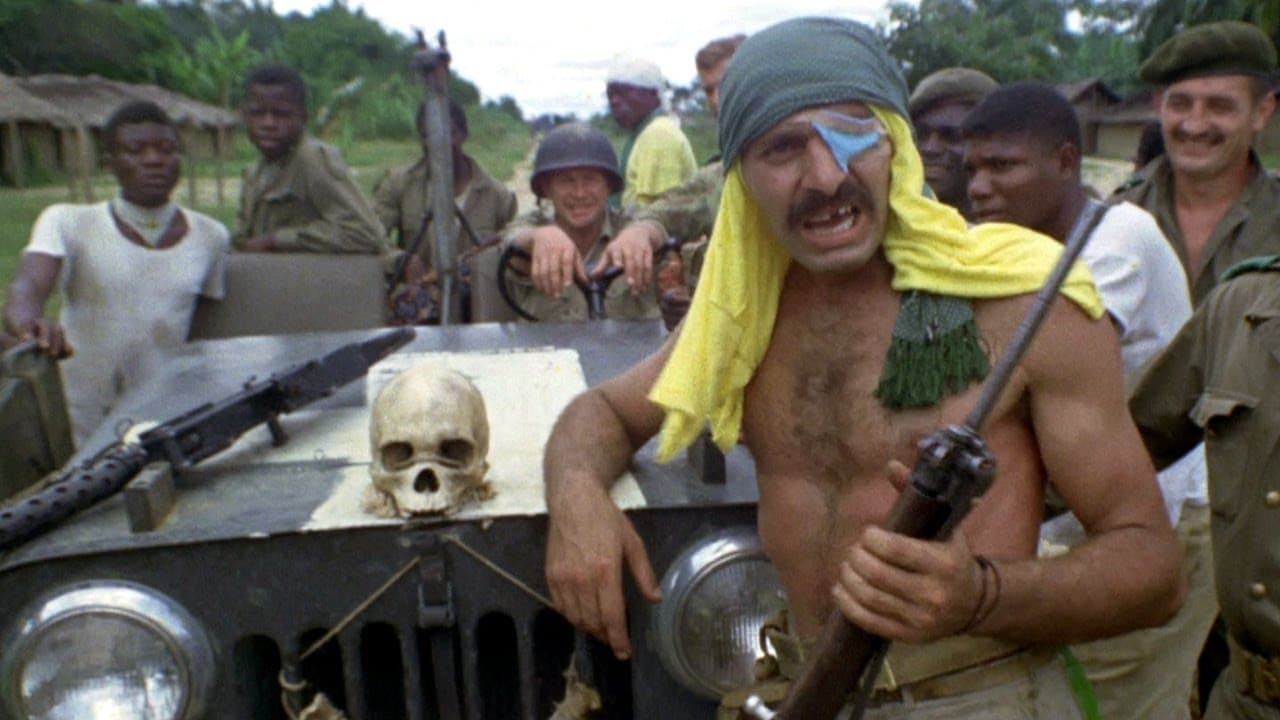
A chronicle of the violence that occurred in much of the African continent throughout the 1960s. As many African countries were transitioning from colonial rule to other forms of government, violent political upheavals were frequent. Revolutions in Zanzibar and Kenya in which thousands were killed are shown, the violence not only political; there is also extensive footage of hunters and poachers slaughtering different types of wild animals.
Starring Sergio Rossi, Jomo Kenyatta, Gualtiero Jacopetti
Africa Blood and Guts

Honeybaby, Honeybaby is a 1974 blaxploitation action thriller directed by Michael Schultz and starring Diana Sands in one of her most memorable and groundbreaking screen roles. Calvin Lockhart plays a mercenary who teams up with Sands. Diana Sands plays Laura “Honey Baby” Lewis, a young woman from Harlem whose game show trip to Beirut, Lebanon turns dangerous after she unknowingly becomes the target of international mercenaries. A stolen microdot containing a secret formula places her at the center of a high-stakes chase involving assassins, political intrigue, and betrayal. As Honey Baby navigates a web of danger involving political figures, impostors, and hired killers, she is forced to rely on her instincts and intelligence to survive. Unlike many films of the era, Honeybaby, Honeybaby places a Black woman at the center of a globe-trotting action narrative, blending suspense, style, and social commentary without reducing its lead to a stereotype. Honeybaby, Honeybaby remains a cult favorite within blaxploitation cinema and stands out as a rare example of a Black female-led international action thriller from the era. The film was also released in the United States under a variety of alternate titles such as, "Honeybaby, Honeybaby", "Honeybaby", and "Three Days in Beirut". Tagline: She's After Your Money, Honey. Trivia: Final film of Diana Sands. We do not own the rights to any of this film. This film is being used for historical and educational purposes only. No copyright infringement intended. Black Excellence:
Starring Diana Sands, Calvin Lockhart, Seth Allen
Honeybaby, Honeybaby

Carbon Copy is a 1981 comedy-drama film directed by Michael Schultz, produced by RKO Pictures and Hemdale Film Corporation, and released by Avco Embassy Pictures. The film stars George Segal, Susan Saint James, Jack Warden and Denzel Washington in his film acting debut. It was the first feature film produced by RKO after a break of many years. It is an adaptation of Stanley Shapiro's 1970 play The Engagement Baby, which starred Barry Nelson and Clifton Davis and closed on Broadway after just four performances. Synopsis: A white executive's life takes an unexpected turn when his illegitimate black son shows up. Storyline: When a rich white corporate executive finds out that he has an illegitimate black son, things start falling apart for him at home, work, and in his social circles. We do not own the rights to any of this film. This film is being used for historical and educational purposes only. No copyright infringement intended. Black Excellence:
Starring Denzel Washington, George Segal, Susan Saint James
Carbon Copy
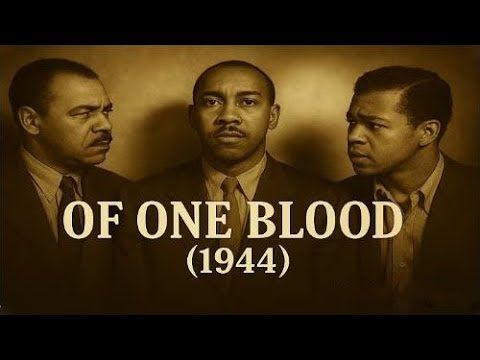
Of One Blood is a 1944 American race film directed, written by and starring Spencer Williams. The film focuses on two orphaned African American brothers who grow up to become a lawyer and a police officer, and who work together to break up a crime ring run by a miscreant who turns out to be their long-lost oldest brother. Plot: Orphaned brothers grow up to become a police officer and a lawyer, and work to rid their city of a bootlegging gang. Like many race films, all of Williams' works were thought to have been lost. At the time, films were printed on nitrate film, which is highly flammable and liable to decompose, and only a few prints of Williams' films were made due to their low budget. However, most of his 1940s films have been rediscovered; including Of One Blood. A copy has been preserved at the Library of Congress. We do not own the rights to any of this film. This film is being used for historical and educational purposes only. No copyright infringement intended. Black Excellence:
Starring Spencer Williams, Robert Orr, Geraldine Maynard