
Results for "lost"
141 films
This is the rambunctious, ridiculous and totally true story of how the Minions conquered Hollywood, became movie stars, lost everything, unleashed monsters onto the world and then banded together to try and save the planet from the mayhem they had just created.
Starring Pierre Coffin, Trey Parker, Christoph Waltz
Minions & Monsters

Welcome to the Lost 90's Television Saturday Morning Cartoon block!! This is going to be the place for 90s nostalgia. | Step Up | Full Movie | | ABOUT THIS MOVIE | Tyler Gage (Channing Tatum) has been in and out of trouble for most of his life and after finding himself before the judge again, he is sentenced to 200 hours of community service mopping floors at the Maryland School of the Arts. He quickly catches the eye of Nora (Jenna Dewan), a gifted ballet student, who is trying to use hip-hop moves with her classical routines. After some initial hesitation, Nora convinces Tyler to help her with her dance routines and the sparks fly. MORE to come so stay tuned and
Step Up

In Angola's mist-shrouded highlands, three KhoiSan master trackers embark on a spiritual quest to rediscover the legendary "ghost elephants" of Lisima, creatures presumed lost but remembered in ancestral trance, ritual, and memory.
Starring Werner Herzog, Steve Boyes, Kerllen Costa
Ghost Elephants
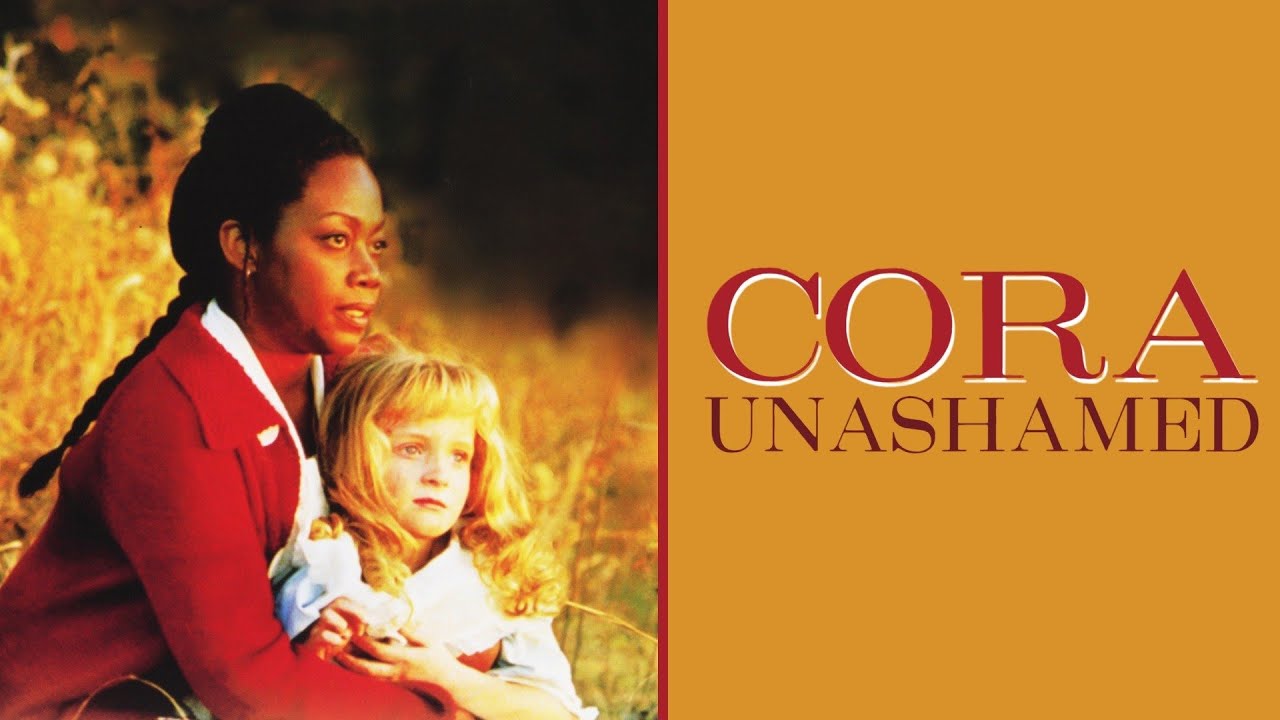
Cora Unashamed is a 2000 American made-for-television drama film from The American Collection directed by Deborah Pratt, starring Regina Taylor and Cherry Jones. The film was shot on location in October 1999 in central Iowa. Cities such as Ames, Cambridge and Story City were used. The movie is based on a short story by the same name in The Ways of White Folks, a 1934 collection of short stories by Langston Hughes. Cinematographer Ernest Holzman won an American Society of Cinematographers (ASC) Award, for Outstanding Achievement in Cinematography in Movies of the Week/Mini-Series'/Pilot for Network or Basic Broadcast TV, for his work on this film. David Herbert Donald called the short story "a brilliantly realized portrait of an isolated black woman in a small Middle Western town, who stoically survives her own sorrows, but in the end lashes out against the hypocrisy of the whites who employ her." Plot: A black servant (Regina Taylor) develops a close bond with her wealthy employers' daughter (Molly Graham) in 1930s Iowa. Storyline: Cora Jenkins and her parents are the only African-Americans in their community in 1920s Iowa, supported only by Cora's wages as housekeeper to the wealthy Studevants. When tragedy strikes, will Cora speak the truth... with consequences? Synopsis: This adaptation of Langston Hughes' powerful tale, set in the 1920s and 30s, tells the story of Cora Jenkins, the daughter of the only African-American family in the small Iowa town of Melton. Cora supports her mother and her daughter, Josephine, by working as a domestic in the home of the socially driven Mrs. Studevant, where she serves almost as a surrogate mother to the Studevants' daughter, Jessie. Cora's own daughter dies, and Cora's relationship with Jessie grows even deeper. When Jessie dies as a result of an abortion arranged by her mother and the latter lies about the cause to preserve her social standing, Cora must risk her livelihood, her security, and her place in the community in order to speak the truth and honor the memory of the child she loved and lost. Overview: An adaptation of a story by Langston Hughes that focuses on the stories of black and white families in 1916-31 Iowa. Cora, an African-American woman living in an all-white Iowa town in the 1930s, gives up her livelihood and security in order to speak the truth about the tragic deaths of two children she loved. Set in the 1930s, the story takes place in the tiny town of Melton, Iowa, where Cora Jenkins and her family live in isolation as the community's only African Americans. Their existence is supported solely by Cora's earnings as housekeeper in the household of socially driven Lizbeth Studevant. Tested early in life by the death of her daughter, Cora transfers her maternal love to the Studevants' daughter, Jessie, whose own mother is unable to demonstrate affection for her child. When Jessie dies as a result of a tragic lapse in judgment by her mother, Cora's devotion to the girl empowers her to speak the truth to the town -- regardless of the cost. We do not own the rights to any of this film. This film is being used for historical and educational purposes only. No copyright infringement intended. Black Excellence:
Starring Regina Taylor, Cherry Jones, Ellen Muth
Cora Unashamed

When a legendary thief sets his sights on the Mona Lisa, he recruits two young strangers to help him before revealing they are long-lost siblings… and oh yes, by the way, he is their father. Thrown into a chaotic reunion they never asked for, this new family must learn to work together — and try not to kill each other — if they want any chance at pulling off the heist of the century.
Starring Stanley Tucci, Simona Tabasco, Victor Belmondo
Masterplan

No Reception is a family-friendly comedy that follows a posh city dweller who becomes lost in the wilderness with nothing but his hand sanitizer. He soon becomes entangled in a longstanding feud between two forest hermits. Please visit our website to get more information: 🔔Love unique stories and talented filmmakers?
Starring Alex Campbell, Nico Wan, Donovan Bakin
No Reception

Deep in My Heart is a 1999 American drama television film directed by Anita W. Addison. It stars Anne Bancroft and Lynn Whitfield. It is based on a true story. The film was broadcast on CBS on February 14, 1999. Bancroft received a Primetime Emmy Award for Outstanding Supporting Actress in a Limited Series or Movie for her role. Synopsis: A white woman who was raped by a black man gives the baby up for adoption. The film follows the life of the child as she grows up and has children of her own. Storyline: An adopted woman decides to find her birth mother. Her search leads her to a shocking discovery that she has to face and why her upbringing was not an easy one. Critical Reception: William McDonald of The New York Times said the film is buoyed by "a strong supporting cast" and "[sidesteps] traps of sentimentality", though he admitted, "But what's lost in the blur is a fuller picture of the lonely racial limbo in which Barbara, as a girl, is forced to live. Instead, we have to trust her moodiness and her own testimony to understand her unhappiness." We do not own the rights to any of this film. This film is being used for historical and educational purposes only. No copyright infringement intended. Black Excellence:
Starring Anne Bancroft, Lynn Whitfield, Alice Krige
Deep in My Heart

Cane River is a 1982 American romantic drama independent film that was lost until its rediscovery in 2013 and its subsequent re-release in 2018 and beyond. It was written, produced, and directed by Horace B. Jenkins. The film features the lives of African Americans in the US state of Louisiana. While the film premiered in New Orleans, Louisiana, in 1982, Horace Jenkins died before the film could be released in New York City and beyond. The film was considered lost until a negative was recovered in 2013. Following its re-release, Cane River received critical acclaim. Highly rated on Rotten Tomatoes and Metacritic, it was lauded for its exploration of racial history and blending romance with political undertones. Despite some noted technical limitations, critics highlighted its pioneering portrayal of black experiences and its significance in American cinema. Storyline: Written, produced, and directed by the late Emmy Award-winning Horace B. Jenkins, financed by the prominent New Orleans' Rhodes family, and crafted by an entirely African American cast and crew - CANE RIVER is a historically informed love story set in Louisiana's Natchitoches Parish, a "free community of color." Aspiring writer and hopeless romantic Peter - former athlete and scion of an elite Creole family - returns to his hometown and immediately falls for a breathtaking historical tour guide, Maria. Maria's disenfranchised, darker-skinned family disapprove of Peter's family and condemn their burgeoning romance while highlighting the painful legacy of colorism in their tightly-knit community. The lovers must work through Peter's contentious family legacy as privileged, former slave-owning, light-skinned Creoles if they want their romance to survive. Synopsis: The New Orleans Film Society described the film, "Cane River is set near Natchitoches, in one of the first 'free communities of color.' Richard Romain plays Peter Metoyer, home to fight for his land, and Tommye Myrick plays the headstrong Maria Mathis, reluctant to succumb to his charms just because he's the scion of a famous family. Together they confront schisms of class, color and complexion within the black community that threaten to keep them apart and that still roil America today." Themes: Cane River delves into the intricacies of independence and the burdens of personal and collective history. A significant focus is placed on racial identities, emphasizing the interplay between race, complexion, class and societal structure. The economic disparities prevalent in society are not left unaddressed, along with the legacy of Black American history. The story also touches upon the nuances of forbidden romance, and the web of relationships that individuals navigate through. History, both personal and cultural, especially as it pertains to Louisiana, is a recurring theme, The film sheds light on the importance of personal and collective identity, intellect, and the significance of one's roots. Racial complexities and the trauma of slavery are meticulously explored, further delving into the caste systems that still have remnants in society. Themes of love are omnipresent, intertwined with land ownership and its implications. Lastly, the film brings to the fore conflicts revolving around class and skin color, emphasizing the significance of heritage. We do not own the rights to any of this film. This film is being used for historical and educational purposes only. No copyright infringement intended. Black Excellence:
Starring Tommye Myrick, Richard Romain, Barbara Tasker
Cane River

The Girl from Chicago is a 1932 American drama race film produced and directed by pioneering African American filmmaker Oscar Micheaux, with an all-African American cast including lead actors Star Calloway and Carl Mahon. Produced on a shoestring budget, this independent production features a largely non-professional cast. The film contrasts rural and urban Black life, blending crime, romance, and social commentary. As is common in Micheaux's films, the story line is punctuated with period musical numbers, offering a glimpse of African American musical and dancing talent of the time. The fact that Micheaux often lacked sufficient funding for his sound films affected the technical quality of his productions. But his surviving films represent the beginnings of Black Cinema. Plot: A federal agent falls in love while on assignment in Mississippi. He helps his lover escape a local thug. They then go to Harlem where they become involved in the assassination of a Cuban racketeer. Storyline: An undercover government agent on a case in Mississippi meets and falls in love with a beautiful young woman who's being menaced by a local crime boss. He rescues the girl, and they leave Mississippi and head to Harlem, but their troubles follow them: they become involved in the murder of a local crime boss there. Review: “Micheaux had the progressive idea of presenting a black man as a Secret Service agent who worked with Scotland Yard—when none existed in real life” —Sergio Mims About the Film: A remake of Micheaux’s now-lost 1926 silent film The Spider’s Web, The Girl from Chicago (1932) is a film that explores the cultural rift between the urban and the rural, set in both Harlem and Batesburg, Mississippi. As had become his forte, Micheaux punctuates the dramatic scenes with musical numbers, set both in domestic parlors and the lively “The Radium Club.” About the Filmmaker: Oscar Devereaux Micheaux was an author, film writer and director, and independent producer of more than 44 silent films and sound films from 1919—1948. Micheaux was the first African American filmmaker to produce a full feature-length film and is regarded as a prominent producer of race films, and the most successful African American filmmaker of the first half of the 20th century. Micheaux’s work is not only a milestone in African American cinema, but an incredible insight into American history regarding race in society. Preservation Status: The film is historically significant with a copy held in the Library of Congress collection. The Girl from Chicago is an early all-black talkie, so it has historical value, but amateur acting and low production values hamper this flawed film. While not a masterpiece, it’s worth watching for its cultural importance and Micheaux’s groundbreaking vision. We do not own the rights to any of this film. This film is being used for historical and educational purposes only. No copyright infringement intended. Black Excellence:
Starring Carl Mahon, Starr Calloway, Alice B. Russell
The Girl from Chicago

Cotton Comes to Harlem is a 1970 American neo-noir action comedy film co-written and directed by Ossie Davis and starring Godfrey Cambridge, Raymond St. Jacques, and Redd Foxx. The film, later cited as an early example of the Blaxploitation genre, is based on Chester Himes' novel of the same name. The opening theme, "Ain't Now But It's Gonna Be", was written by Ossie Davis and performed by Melba Moore. The film was one of the many black films that appeared in the 1970s and became overnight hits. It was followed two years later by the sequel Come Back, Charleston Blue (1972). Synopsis: Two Harlem cops investigate a robbery, believing that a reverend has staged it in order to steal the money he's collected for a local fundraiser. Storyline: Gravedigger Jones and Coffin Ed Johnson are two black cops with a reputation for breaking the odd head. Both are annoyed at the success of the Reverend Deke O'Mailey who is selling trips back to Africa to the poor on the installment plan. When his truck is hijacked and a bale of cotton stuffed with money is lost in the chase, Harlem is turned upside down by Gravedigger and Coffin Ed, the Reverend, and the hijackers. Hilarity ensues!Much of the humor is urban black, which was unusual in 1970. Production: The film saw the debut of Calvin Lockhart, Judy Pace, and Cleavon Little. Another debut was by Redd Foxx, already well known as a veteran nightclub comic, leading him to be considered for the TV Show Sanford and Son. Themes: Cotton Comes to Harlem is hailed by many as the first blaxploitation film, although others felt that it was merely an action comedy film. Detectives Gravedigger and Coffin Ed do not always follow the rules. They are not necessarily fighting to protect the rule of law, but they try to protect their people from racist attitudes. Reception: Ken Hanke of the Mountain Xpress called Cotton Comes to Harlem "one of the earliest and best Blaxploitation films. Box Office: Cotton Comes to Harlem is one of the most commercially successful films Hollywood produced in the 1970s starring a predominantly black cast. The film was one of the many black films that appeared in the 1970s eventually becoming a cult classic. Cotton Comes to Harlem inspired more black films during the 1970s, including more action-packed numbers such as Shaft and Super Fly. We do not own the rights to any of this film. This film is being used for historical and educational purposes only. No copyright infringement intended. Black Excellence:
Starring Godfrey Cambridge, Raymond St. Jacques, Calvin Lockhart
Cotton Comes to Harlem

In a post-apocalyptic world, a virus has transformed humans into violently deranged cannibals. A bereaved mother has lost everything and takes refuge in an isolated mountain cabin, until a desperate wounded stranger arrives with a story of hope.
Starring Lily Sullivan, Callan Mulvey, Richard Roxburgh
Forgive Us All
In a post-apocalyptic world, a virus has transformed humans into violently deranged cannibals. A bereaved mother has lost everything and takes refuge in an isolated mountain cabin, until a desperate wounded stranger arrives with a story of hope.