
Results for "james earl jones"
5 films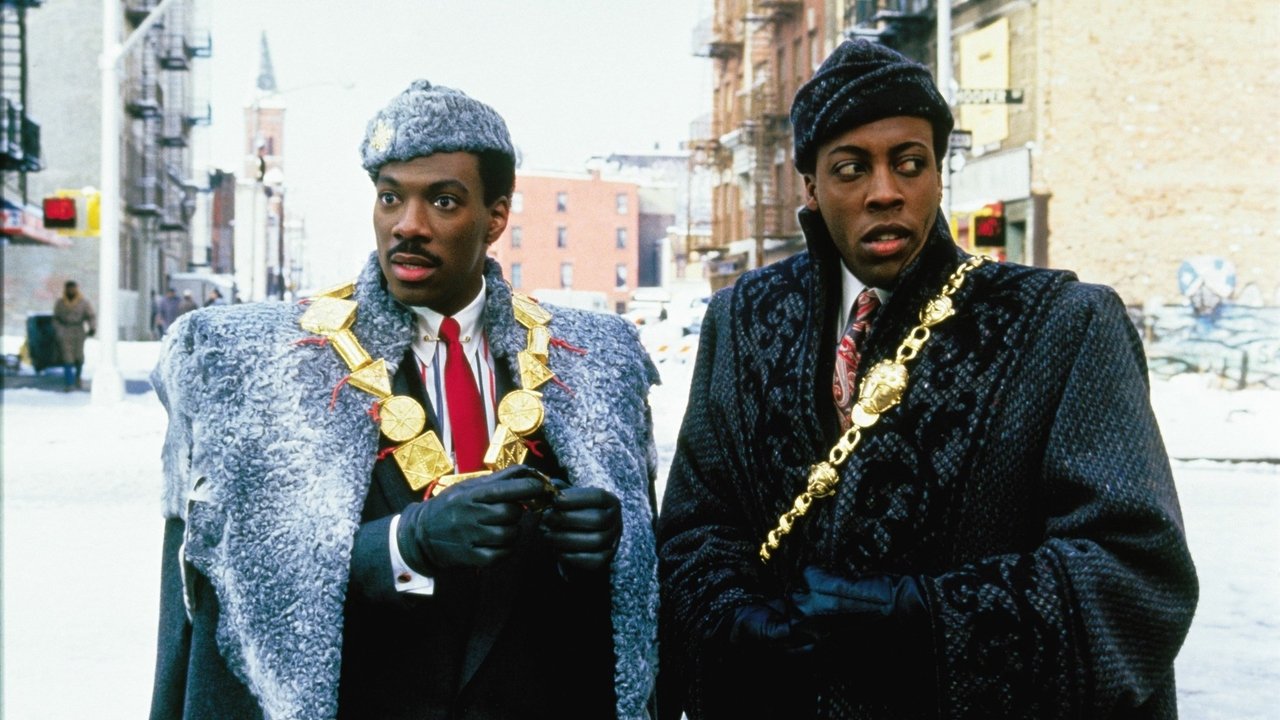
An African prince decides it’s time for him to find a princess... and his mission leads him and his most loyal friend to Queens, New York. In disguise as an impoverished immigrant, the pampered prince quickly finds himself a new job, new friends, new digs, new enemies and lots of trouble.
Starring Eddie Murphy, Shari Headley, Arsenio Hall
Dir. John Landis
Coming to America

Claudine is a 1974 American romantic comedy-drama film, directed by John Berry. Claudine was written by Lester Pine and Tina Pine, produced by Third World Cinema, and distributed by 20th Century Fox, starring James Earl Jones, Diahann Carroll, and Lawrence Hilton-Jacobs. The film was released on April 22, 1974, grossing about $6 million, a modest hit for the times. It was praised for showing a new dimension in black cinema during the height of blaxploitation. Synopsis: A single mother of six on welfare and a garbage collector fall in love in 1970s Harlem. Plot: Claudine is a single mother on welfare in New York City who endures an exhausting commute to the suburbs where she works as a maid for wealthy families. In one carefully tended white community, she meets Roop, a charismatic but irresponsible garbage collector. Romance quickly ensues, but Claudine doubts that their relationship is good for her six children, and Rupert, despite his good nature, is reluctant to take on fatherhood. Storyline: Diahann Carroll is radiant in an unforgettable, Oscar-nominated performance as Claudine, a strong-willed single mother, raising six kids in Harlem, whose budding relationship with a gregarious garbage collector (an equally fantastic James Earl Jones) is stressed by the difficulty of getting by in an oppressive system. As directed by the formerly blacklisted leftist filmmaker John Berry, this romantic comedy with a social conscience deftly balances warm humor with a serious look at the myriad issues—from cycles of poverty to the indignities of the welfare system—that shape its characters’ realities. The result is an empathetic chronicle of both Black working-class struggle and Black joy, a bittersweet, bighearted celebration of family and community set to a sunny soul soundtrack composed by Curtis Mayfield and performed by Gladys Knight & the Pips. We do not own the rights to any of this film. This film is being used for historical and educational purposes only. No copyright infringement intended. Black Excellence:
Starring Diahann Carroll, James Earl Jones, Lawrence Hilton-Jacobs
Dir. John Berry
Claudine

The Great White Hope is a 1970 American biographical romantic drama film written and adapted from the 1967 Howard Sackler play of the same name. The film was directed by Martin Ritt, starring James Earl Jones, Jane Alexander, Chester Morris, Hal Holbrook, Beah Richards and Moses Gunn. Jones and Alexander, who also appeared in the same roles in the stage versions, received Best Actor and Actress Academy Award nominations for their performances. This unflinching look at racism, pride, and perseverance remains painfully relevant today. The film and play is based on the true story of boxer Jack Johnson and his first wife, Etta Terry Duryea, and the controversy over their marriage and Duryea's death by suicide in 1912. The Great White Hope is a powerful drama that explores the resilience and struggle of a Black heavyweight boxing champion, Jack Jefferson, as he faces relentless challenges from a society intent on his downfall. Based on true events, The Great White Hope tells the story of Jefferson and his white partner, Eleanor, whose relationship stirs controversy and hostility. With themes of racial prejudice, love, and perseverance, this cinematic gem dives deep into the struggles and sacrifices of a man determined to rise above society’s expectations. Directed by the acclaimed Martin Ritt and starring the legendary James Earl Jones alongside Jane Alexander, The Great White Hope brings heart-wrenching moments, raw performances, and an unflinching look at race and identity in America. Plot: A Black champion boxer and his white female companion struggle to survive while the white boxing establishment looks for ways to knock him down. Synopsis: Jack Jefferson (James Earl Jones) is the boxing heavyweight champion of early 1910s America. But as a black man, he's not only fighting other boxers, but discrimination and prejudice as well. The boxing fans and press resent the idea of a black champion and are actively searching for a "great white hope" that can defeat him. But it's Jefferson's activities outside the ring, primarily involving the white Eleanor Bachman (Jane Alexander), that may prove to be his downfall. Storyline: Boxer Jack Jefferson (James Earl Jones) is the world's reigning heavyweight boxing champion. There's just one problem: he is also the first Black heavyweight champion, which bothers a lot of people. Jack's celebration is cut short when he is framed for crossing a state line with Eleanor, his white fiancée (Jane Alexander in her first film role), a violation of the Mann Act. Facing a prison sentence, Jack escapes to Europe with Eleanor in tow, encountering problems in England, and then France, and eventually landing in Cuba. In Havana, Jack agrees to enter the boxing ring for what might be the bout of his life. Both Jones and Alexander were nominated for Oscars. Tagline: The most honored play in the history of Broadway... becomes an electrifying motion picture! Reception: The film opened to positive responses from both audiences and critics. They especially loved the performances of both James Earl Jones and Jane Alexander, who were in the original stage play: they won Tony Awards for the play. Jones would get bigger roles after this film, and Alexander made a debut here. Jones later contributed commentary to a documentary about Jack Johnson that would sum up this film, saying: "To know the story of Jack Johnson is to know that it is a study in hubris." Critic Emanuel Levy wrote called it a "well-acted drama". Variety said: “Jones' re-creation of his stage role is an eye-riveting experience. The towering rages and unrestrained joys of which his character was capable are portrayed larger than life.” We do not own the rights to any of this film. This film is being used for historical and educational purposes only. No copyright infringement intended. Black Excellence:
Starring James Earl Jones, Jane Alexander, Lou Gilbert
Dir. Martin Ritt
The Great White Hope

The River Niger is a 1976 film adaptation of the 1972 Joseph A. Walker play of the same title. The film was directed by Krishna Shah, and starred James Earl Jones, Cicely Tyson, and Louis Gossett Jr. The film had a limited commercial release in 1976 and has rarely been seen in later years. The soundtrack is by War, including the theme song "River Niger". Plot: An intimate look at life in the ghetto: Johnny Williams is a house painter who moonlights as a poet, struggling to financially and emotionally support his cancer-ridden wife Mattie. But times are tough and the poverty-troubled streets are even tougher, and it takes every ounce of Johnny's love and courage for the couple to make it through their strife, finding redemption in the River Niger. Storyline: In a poor African-American neighborhood in Los Angeles, once-aspiring poet Johnny Williams (James Earl Jones) takes a low-paying job as a house painter in order to support his family. Already struggling to make ends meet, Williams -- who rests his hopes on his son Jeff (Glynn Turman), an Air Force lieutenant -- grows more despondent when he learns his wife, Mattie (Cicely Tyson), has terminal cancer. Now, Williams must summon the depths of his spirit to overcome his family's plight. Tagline: Some rivers can't be dammed... some people won't be broken. We do not own the rights to any of this film. This film is being used for historical and educational purposes only. No copyright infringement intended. Black Excellence:
Starring James Earl Jones, Cicely Tyson, Louis Gossett Jr.
Dir. Krishna Shah
The River Niger
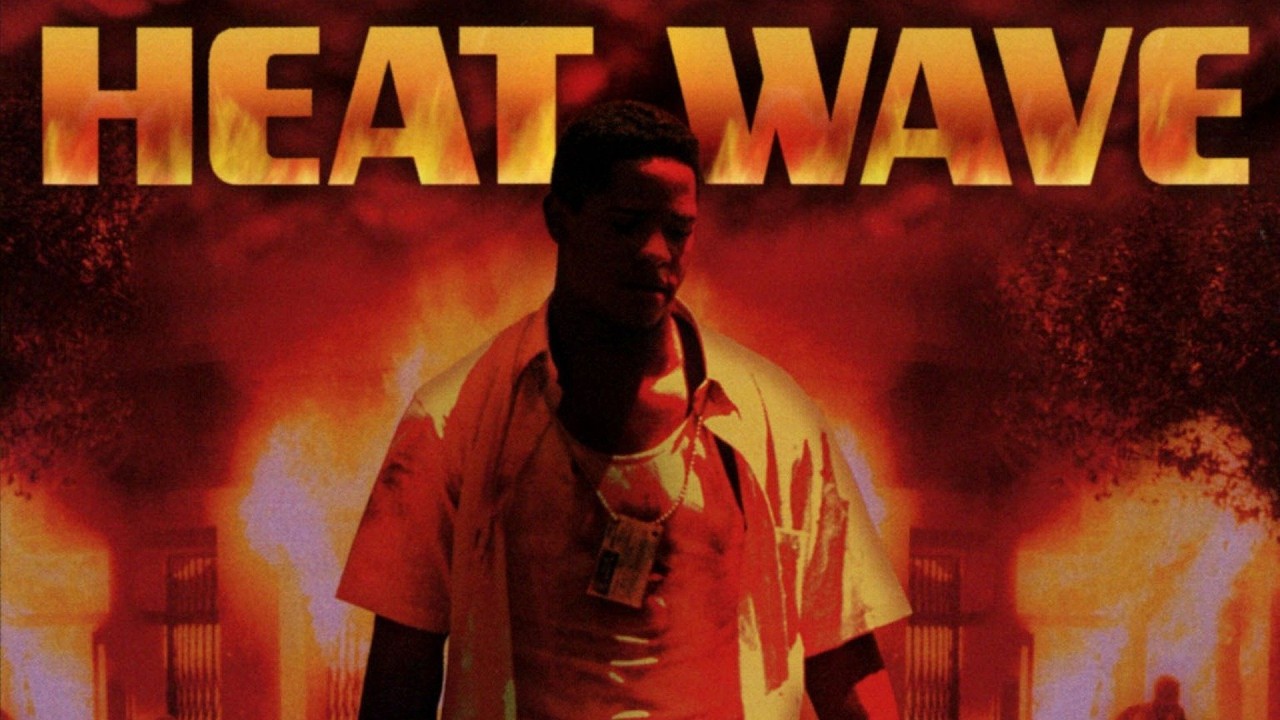
Heat Wave is a 1990 American thriller-drama television film about the 1965 Los Angeles Watts Riots, directed by Kevin Hooks and starring Blair Underwood, Cicely Tyson, James Earl Jones, Margaret Avery, and David Strathairn. On August 11, 1965, a routine traffic stop on a summer night sparks years of frustration within Los Angeles' African American community into a race riot that shocks the United States. A rookie black journalist investigates the tensions of the Watts section of Los Angeles in the bloody summer of 1965. A superb depiction of the Watts riot and how it possibly started in great detail. Storyline: The events that led to the 1965 race riots in Watts, Los Angeles, are covered by a black messenger-turned-reporter at the L.A. Times, as he was one of the first correspondents to arrive at the scene. The movie also follows the troubled times he, his family and friends went through in one of the most tense and sad moments in American history. Review: The Watts ghetto uprising of 1965 is a proving ground for a young black journalist. Excellent cast and fine script portray the anger and frustration of blacks in Los Angeles and the U.S. in the 1960s and the fear of change felt by blacks and whites when civil rights reform began. Strong drama with minimal emotionalism. We do not own the rights to any of this film. This film is being used for historical and educational purposes only. No copyright infringement intended. Black Excellence:
Starring Cicely Tyson, Blair Underwood, Sally Kirkland
Dir. Kevin Hooks
Heat Wave
End of the reel — 5 films