
Results for "correctional"
3 films
Attica is a 1980 American television film directed by Marvin J. Chomsky. It stars Morgan Freeman, Henry Darrow, Charles Durning, Joel Fabiani and Anthony Zerbe. It depicts the events leading up to and during the 1971 Attica Correctional Facility riot and the aftermath. Storyline: A TV-movie re-creation of the tragic events which followed the Attica Correctional Facility rebellion of September 9, 1971. Inmates demanding better food and living conditions took 38 guards as hostage. Negotiations begin immediately, only to continually break down thanks to uncompromising stubbornness on both sides. Four days into the crisis, the rebellion ends in a bloodbath, with state troopers firing on the prisoners, killing several of the guards in the process. Based on the eyewitness reporting of the New York Times' Tom Wicker, who was one of the civilian negotiators during the stalemate. We do not own the rights to any of this film. This film is being used for historical and educational purposes only. No copyright infringement intended. Black Excellence:
Starring Henry Darrow, Charles Durning, Joel Fabiani
Dir. Marvin J. Chomsky
Attica

Behind Bars - World’s Toughest Prisons: Northeast Correctional Center, Missouri, USA | Prison Documentary 2024 Behind Bars - Picaleña Prison, Colombia: We’ve partnered with our friends at Photocircle to create a beautiful product that not only helps people in need but also combats climate change. Introducing our wide selection of wall calendars! For every calendar sold, we plant 12 trees in Ethiopia. Get one of these amazing 2025 wall calendars here: 23,137 people are behind bars in Missouri. One of the inmates is Michael Whitfield, 60 years old, tattooed, fit, convicted in the 90s. Whitfield is one of the few prison inmates enjoying his stay - more or less - and is optimistic about the future. That is due to a small revolution behind the prison walls. The state of Missouri invests over 800 million dollars each year in the Department of Corrections and operates 21 state prisons. The North East Correctional Center (NECC) in Bowling Green is one of them and a good hour's drive north of St. Louis. From the perspective of Officer Peterson and Richard McCool, the film shows everyday prison life and a completely new development in the Missouri State Prison System. ▬▬▬▬▬▬▬▬▬
Behind Bars: NECC Missouri USA
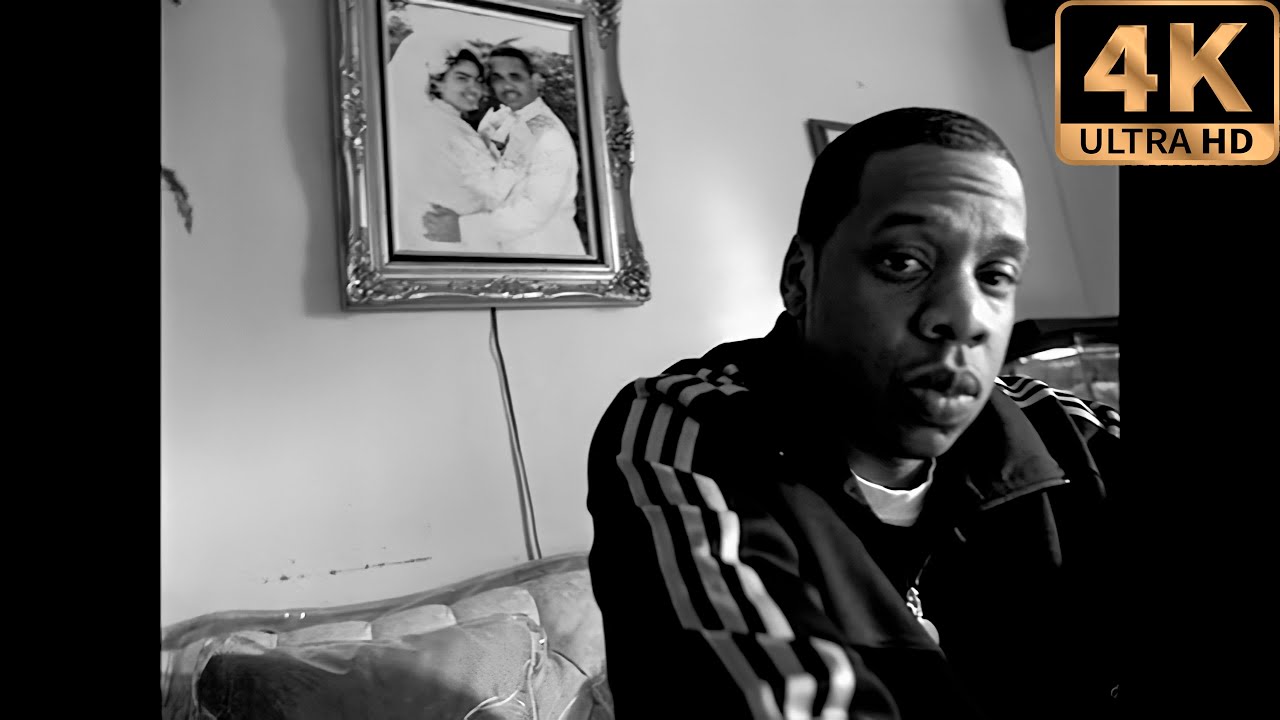
Jay-Z - 99 Problems (Uncensored) [Explicit Version] [Remastered In 4K] (Official Music Video) Provided to YouTube by Universal Music Group 99 Problems · JAY-Z The Black Album ℗ 2003 S. Carter Enterprises, LLC., Distributed by Roc Nation Released on: 2003-11-14 Producer, Studio Personnel, Mixer: Rick Rubin Studio Personnel, Recording Engineer, Mixer: Andrew Scheps Programmer: Jason Lader Composer Lyricist: Shawn Carter Composer Lyricist: Rick Rubin Composer Lyricist: Norman Landsberg Composer Lyricist: Felix Pappalardi Composer Lyricist: Leslie Weinstein Composer Lyricist: John Ventura Composer Lyricist: William Squier Composer Lyricist: Tracy Marrow Composer Lyricist: Alphonso Henderson Auto-generated by YouTube. "99 Problems" is the third single released by American rapper Jay-Z in 2004 from The Black Album. It was released on April 27, 2004. The chorus hook "I got 99 problems, but a bitch ain't one" is taken from the Ice-T single "99 Problems" from the album Home Invasion (1993). The hook was coined during a conversation between Ice-T and Brother Marquis of Miami-based 2 Live Crew. Marquis used the phrase in the 1996 2 Live Crew song "Table Dance". The track was produced by Rick Rubin, his first hip hop production in many years. Rubin provided Jay-Z with a guitar riff and stripped-down beat that were once his trademarks. In creating the track, Rubin used some classic 1980s sample staples such as "The Big Beat" by Billy Squier, "Long Red" by Mountain, and "Get Me Back On Time" by Wilson Pickett.Featuring the same Billy Squier drum beat sample, Dizzee Rascal released "Fix Up, Look Sharp" in August 2003 prior to The Black Album's release. The title and chorus are derived from Ice-T's, from his 1993 album Home Invasion. The song featured Brother Marquis of 2 Live Crew. The original song was more profane and describes a wide range of sexual conquests. The music video premiered in April 2004 and was directed by Mark Romanek. It received praises from critics such as Armond White, and was nominated for four MVPA awards in 2005, of which it won three. It also won the MTV Video Music Awards for Best Rap Video, Best Director, Best Editing and Best Cinematography, as well as gaining nominations for Video of the Year and Best Male Video. It was criticized, however, by the Humane Society of the United States for scenes in the video that glorified dog fighting. The video accompanied The Black Album which, at the time, was to be Jay-Z's final release. Jay-Z has stated that he wanted the video to be as auto-biographical as the rest of the album. The goal for the video was to create a portrait of where Jay-Z grew up. In a conversation with the video's director, Jay-Z stated that he wanted the video to "make a pissy wall look like art". The job of directing this video was originally intended for Quentin Tarantino, however Rick Rubin suggested that Jay-Z offer the job to Mark Romanek. Due to the research and influence of Romanek and the videos cinematographer, Joaquin Baca Asay, the video borrows visual characteristics from many New York street photographers and black and white photographs (Martin Dixon and Eugene Richards to name a few). The video is shot entirely on black-and-white film. It consists mainly of scenes filmed in close proximity to Jay-Z's childhood home, The Marcy Houses in Bedford Stuyvesant. These include: Jay-Z and Rubin in a Lexus GS300 being stopped by the police (lyrical reenactment). Jay-Z in the Marcy Houses housing project where he grew up. Break dancers and a group doing a rhythm choreography. Jay-Z performing in Transit Wheelers Motorcycle/Van Club House. Jay-Z on the Brooklyn Bridge. A woman putting on makeup. Inmates of a prison in the Bronx known as Vernon C. Bain Correctional Center. Rick Rubin walking with Vincent Gallo. A funeral director making preparations. A rabbi praying. A dogfight with many spectators, and the owners of the dogs taunting them in preparation for the fight. Members of Alpha Phi Alpha performing a complex stepping routine. Jay-Z's lawyer, facilitating bail then reacting to news of his death. African-American motorcycle clubs in front of Transit Wheelers MC Club House in Brooklyn, New York, performing street stunts. Jay-Z being shot with multiple bullets by unseen assailants. This final scene was very controversial as music video networks normally remove any scenes with violent content. On MTV, every airing of the video featured an introduction by John Norris explaining why the network felt it was proper to air the video unedited.
Jay-Z - 99 Problems
End of the reel — 3 films