
Results for "community"
253 films
Welcome to the Lost 90's Television Saturday Morning Cartoon block!! This is going to be the place for 90s nostalgia. | Step Up | Full Movie | | ABOUT THIS MOVIE | Tyler Gage (Channing Tatum) has been in and out of trouble for most of his life and after finding himself before the judge again, he is sentenced to 200 hours of community service mopping floors at the Maryland School of the Arts. He quickly catches the eye of Nora (Jenna Dewan), a gifted ballet student, who is trying to use hip-hop moves with her classical routines. After some initial hesitation, Nora convinces Tyler to help her with her dance routines and the sparks fly. MORE to come so stay tuned and Subscribe for more.
Step Up
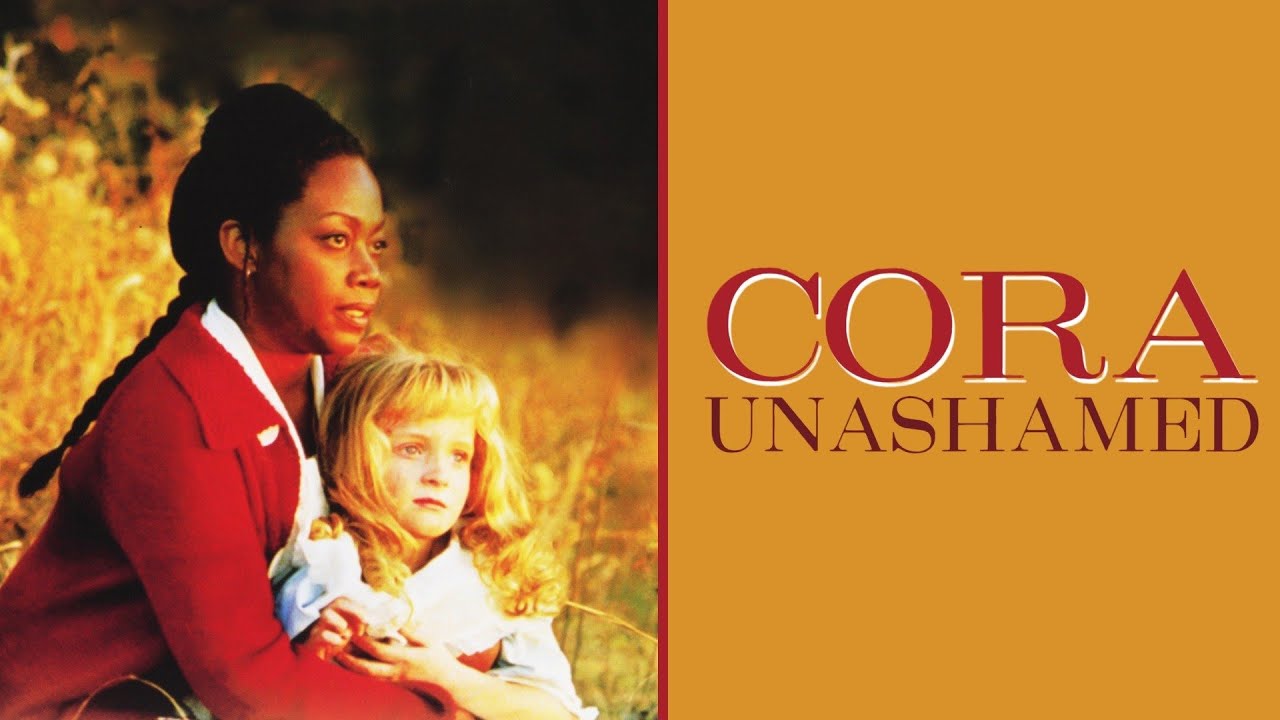
Cora Unashamed is a 2000 American made-for-television drama film from The American Collection directed by Deborah Pratt, starring Regina Taylor and Cherry Jones. The film was shot on location in October 1999 in central Iowa. Cities such as Ames, Cambridge and Story City were used. The movie is based on a short story by the same name in The Ways of White Folks, a 1934 collection of short stories by Langston Hughes. Cinematographer Ernest Holzman won an American Society of Cinematographers (ASC) Award, for Outstanding Achievement in Cinematography in Movies of the Week/Mini-Series'/Pilot for Network or Basic Broadcast TV, for his work on this film. David Herbert Donald called the short story "a brilliantly realized portrait of an isolated black woman in a small Middle Western town, who stoically survives her own sorrows, but in the end lashes out against the hypocrisy of the whites who employ her." Plot: A black servant (Regina Taylor) develops a close bond with her wealthy employers' daughter (Molly Graham) in 1930s Iowa. Storyline: Cora Jenkins and her parents are the only African-Americans in their community in 1920s Iowa, supported only by Cora's wages as housekeeper to the wealthy Studevants. When tragedy strikes, will Cora speak the truth... with consequences? Synopsis: This adaptation of Langston Hughes' powerful tale, set in the 1920s and 30s, tells the story of Cora Jenkins, the daughter of the only African-American family in the small Iowa town of Melton. Cora supports her mother and her daughter, Josephine, by working as a domestic in the home of the socially driven Mrs. Studevant, where she serves almost as a surrogate mother to the Studevants' daughter, Jessie. Cora's own daughter dies, and Cora's relationship with Jessie grows even deeper. When Jessie dies as a result of an abortion arranged by her mother and the latter lies about the cause to preserve her social standing, Cora must risk her livelihood, her security, and her place in the community in order to speak the truth and honor the memory of the child she loved and lost. Overview: An adaptation of a story by Langston Hughes that focuses on the stories of black and white families in 1916-31 Iowa. Cora, an African-American woman living in an all-white Iowa town in the 1930s, gives up her livelihood and security in order to speak the truth about the tragic deaths of two children she loved. Set in the 1930s, the story takes place in the tiny town of Melton, Iowa, where Cora Jenkins and her family live in isolation as the community's only African Americans. Their existence is supported solely by Cora's earnings as housekeeper in the household of socially driven Lizbeth Studevant. Tested early in life by the death of her daughter, Cora transfers her maternal love to the Studevants' daughter, Jessie, whose own mother is unable to demonstrate affection for her child. When Jessie dies as a result of a tragic lapse in judgment by her mother, Cora's devotion to the girl empowers her to speak the truth to the town -- regardless of the cost. We do not own the rights to any of this film. This film is being used for historical and educational purposes only. No copyright infringement intended. Black Excellence:
Starring Regina Taylor, Cherry Jones, Ellen Muth
Cora Unashamed

Claudine is a 1974 American romantic comedy-drama film, directed by John Berry. Claudine was written by Lester Pine and Tina Pine, produced by Third World Cinema, and distributed by 20th Century Fox, starring James Earl Jones, Diahann Carroll, and Lawrence Hilton-Jacobs. The film was released on April 22, 1974, grossing about $6 million, a modest hit for the times. It was praised for showing a new dimension in black cinema during the height of blaxploitation. Synopsis: A single mother of six on welfare and a garbage collector fall in love in 1970s Harlem. Plot: Claudine is a single mother on welfare in New York City who endures an exhausting commute to the suburbs where she works as a maid for wealthy families. In one carefully tended white community, she meets Roop, a charismatic but irresponsible garbage collector. Romance quickly ensues, but Claudine doubts that their relationship is good for her six children, and Rupert, despite his good nature, is reluctant to take on fatherhood. Storyline: Diahann Carroll is radiant in an unforgettable, Oscar-nominated performance as Claudine, a strong-willed single mother, raising six kids in Harlem, whose budding relationship with a gregarious garbage collector (an equally fantastic James Earl Jones) is stressed by the difficulty of getting by in an oppressive system. As directed by the formerly blacklisted leftist filmmaker John Berry, this romantic comedy with a social conscience deftly balances warm humor with a serious look at the myriad issues—from cycles of poverty to the indignities of the welfare system—that shape its characters’ realities. The result is an empathetic chronicle of both Black working-class struggle and Black joy, a bittersweet, bighearted celebration of family and community set to a sunny soul soundtrack composed by Curtis Mayfield and performed by Gladys Knight & the Pips. We do not own the rights to any of this film. This film is being used for historical and educational purposes only. No copyright infringement intended. Black Excellence:
Starring Diahann Carroll, James Earl Jones, Lawrence Hilton-Jacobs
Claudine

Words by Heart is a poignant 1985 TV movie that explores themes of racial prejudice and resilience through the eyes of a young African American girl, Lena Sills, in a small Midwestern town. Words by Heart was directed by Robert C. Thompson and features performances by actors such as Robert Hooks and Alfre Woodard. The film is based on the 1979 novel by Ouida Sebestyen, which further enriches its narrative depth. Storyline: After moving north from the Deep South at the turn of the 20th century, the Sills family finds prejudice waiting for them in the small Midwestern town of Bethel Springs, as seen through the eyes of the family's young daughter, Lena. In a town where the rules of segregation apply to all manner of daily life, do the values of empathy, forgiveness, and friendship stand a chance? Themes: The film addresses important themes such as empathy, forgiveness, and the struggle against racial injustice. It portrays the Sills family's determination to overcome adversity and the moral conflicts that arise in a racially divided society. The narrative emphasizes the importance of community, understanding, and resilience in the face of prejudice. We do not own the rights to any of this film. This film is being used for historical and educational purposes only. No copyright infringement intended. Black Excellence:
Starring Ed Call, Leo Geter, Robert Hooks
Words by Heart

No Way Out is a 1950 American crime drama film noir directed by Joseph L. Mankiewicz and starring Sidney Poitier in his film debut, alongside Richard Widmark, Linda Darnell and Stephen McNally. The film centers on an African American doctor who confronts the racism of a poor slum after he treats a racist white criminal. Nominated for the 1950 Oscar for Best Writing, Story and Screenplay, this intense drama about racial hatred pulls no punches. One of the first Hollywood films to directly address racism. No Way Out was controversial in its "graphic representation of racial violence" in what director Mankiewicz termed "the absolute blood and guts of Negro hating." The film marked the feature-acting debuts of Poitier, Mildred Joanne Smith, and Ossie Davis. Richard Widmark delivers one of his most chilling roles. Mankiewicz and Lesser Samuels were nominated for Best Story and Screenplay at the 23rd Academy Awards. It is a gripping film noir and Sidney Poitier’s powerful debut, following a Black doctor whose treatment of an injured white criminal sparks intense racial tension in a working-class community. Directed by Joseph L. Mankiewicz, it blends crime drama and social commentary, tackling racism with rare candor for its era. Praised for Poitier’s commanding performance and the film’s boldness, it remains a powerful, unsettling classic worth watching for its historical and cinematic impact. Released during the early days of the Civil Rights Movement, No Way Out received critical acclaim but faced censorship for many years due to its incendiary nature. Storyline: The Biddle brothers, shot while robbing a gas station, are taken to the prison ward of the County Hospital; Ray Biddle, a rabid racist, wants no treatment from black resident Dr. Luther Brooks. When brother John dies while Luther tries to save him, Ray is certain it's murder and becomes obsessed with vengeance and the situation slides rapidly toward violence. Trivia: Richard Widmark was apparently very uncomfortable with some of the racist comments his character, Ray Biddle, made, especially given his friendship with Sidney Poitier. As a result, after some of the takes involving particularly venomous remarks, Widmark apologized to Poitier. We do not own the rights to any of this film. This film is being used for historical and educational purposes only. No copyright infringement intended. Black Excellence:
Starring Richard Widmark, Linda Darnell, Sidney Poitier
No Way Out

In the remote South Korean village of Hope Harbor, police chief Bum-seok and officer Sung-ae are called to investigate a mysterious creature wreaking havoc on the community. But all is not as it seems, and perceptions can be misleading. What begins as ignorance plants the seed of disaster, escalating through human conflict into a tragedy of cosmic proportions.
Starring Hwang Jung-min, Zo In-sung, Hoyeon
Hope

A struggling primary school teacher is forced to take drastic action because of a foul-mouthed, violent student, and uncovers how her community will turn a blind eye to the most outrageous events to preserve harmony and their sense of safety.
Starring Saoirse Ronan, Eddie Waller, Nia Brown
Bad Apples

Cornbread, Earl and Me is a 1975 American coming-of-age drama film that stars Tierre Turner, Laurence Fishburne (in his film debut), and NBA player Jamaal Wilkes. It was directed and co-produced by Joseph Manduke. The film is loosely based on the 1966 Ronald Fair novel Hog Butcher. Plot: High school basketball star Nathaniel "Cornbread" Hamilton (Keith Wilkes) is the pride of his urban neighborhood, and he appears destined for big things on the court and in the classroom. But a dare leads to a fatal misunderstanding when Nathaniel is shot dead by police who take him for someone who's just committed a violent crime. As police officers try to protect one of their own, members of the oppressed African-American community do what they must in order to find justice. Storyline: Nathaniel "Cornbread" Hamilton was the black urban dream and a hero to youngsters Wilford Robinson and Earl Carter. Shortly before he would have become the first man from his community to go to college, he demonstrates his scholarship-winning running ability to his friends and admirers in the neighborhood. At the same time, the police are on a manhunt for an armed rapist. They mistake Cornbread for the rapist and shoot him dead in the street. In the aftermath of the community's shattered dream, and in the face of an intimidating police cover-up, Wilford is determined not to betray the memory of his hero. We do not own the rights to any of this film. This film is being used for historical and educational purposes only. No copyright infringement intended. Black Excellence:
Starring Moses Gunn, Rosalind Cash, Bernie Casey
Cornbread, Earl and Me

Heat Wave is a 1990 American thriller-drama television film about the 1965 Los Angeles Watts Riots, directed by Kevin Hooks and starring Blair Underwood, Cicely Tyson, James Earl Jones, Margaret Avery, and David Strathairn. On August 11, 1965, a routine traffic stop on a summer night sparks years of frustration within Los Angeles' African American community into a race riot that shocks the United States. A rookie black journalist investigates the tensions of the Watts section of Los Angeles in the bloody summer of 1965. A superb depiction of the Watts riot and how it possibly started in great detail. Storyline: The events that led to the 1965 race riots in Watts, Los Angeles, are covered by a black messenger-turned-reporter at the L.A. Times, as he was one of the first correspondents to arrive at the scene. The movie also follows the troubled times he, his family and friends went through in one of the most tense and sad moments in American history. Review: The Watts ghetto uprising of 1965 is a proving ground for a young black journalist. Excellent cast and fine script portray the anger and frustration of blacks in Los Angeles and the U.S. in the 1960s and the fear of change felt by blacks and whites when civil rights reform began. Strong drama with minimal emotionalism. We do not own the rights to any of this film. This film is being used for historical and educational purposes only. No copyright infringement intended. Black Excellence:
Starring Cicely Tyson, Blair Underwood, Sally Kirkland
Heat Wave

Devil in a Blue Dress is a 1995 American neo-noir mystery thriller film written and directed by Carl Franklin, based on Walter Mosley's 1990 novel of the same name and features Denzel Washington, Tom Sizemore, Jennifer Beals, and Don Cheadle. Set in 1948, the film follows World War II veteran Ezekiel "Easy" Rawlins who, desperate in need of a job, becomes drawn into a search for a mysterious woman. Devil in a Blue Dress received positive reviews, with many praising Cheadle's performance. Plot: A Black war hero is hired to find a mysterious woman and gets mixed up in a murderous political scandal in 1948 Los Angeles. Storyline: It is 1948 in LA and Ezekiel "Easy" Rawlins, an African-American World War II veteran, is looking for work. At his friend's bar, he is introduced to a white man, DeWitt Albright, who is looking for someone to help him find a missing white woman assumed to be hiding somewhere in LA's Black community. This woman, Daphne Monet, happens to be the fiancée of a wealthy "blue blood," Todd Carter, who is currently the favorite in the city's mayoralty race. Daphne Monet is known to frequent the Black jazz clubs in LA. Easy, innocently, accepts Albright's offer; however, he quickly finds himself amidst murder, crooked cops, ruthless politicians, and brutalizing hoodlums. This is a Chandler-esque "who-done-it" with an African-American theme. Synopsis: The bone-deep disillusionment of postwar film noir becomes a powerful vehicle to explore America’s racial injustices in Carl Franklin’s richly atmospheric Devil in a Blue Dress, an adaptation of the hard-boiled novel by Walter Mosley. Denzel Washington has charisma to burn as the jobless ex-GI Easy Rawlins, who sees a chance to make some quick cash when he’s recruited to find the missing lover (Jennifer Beals) of a wealthy mayoral candidate in late-1940s Los Angeles—only to find himself embroiled in murder, political intrigue, and a scandal that crosses the treacherous color lines of a segregated society. Featuring breakout work by Don Cheadle as Rawlins’s cheerfully trigger-happy sidekick, this stylish mystery both channels and subverts classic noir tropes as it exposes the bitter racial realities underlying the American dream. Tagline: In a world divided by black and white, Easy Rawlins is about to cross the line. We do not own the rights to any of this film. This film is being used for historical and educational purposes only. No copyright infringement intended. Black Excellence:
Starring Denzel Washington, Tom Sizemore, Jennifer Beals
Devil in a Blue Dress
A struggling primary school teacher is forced to take drastic action because of a foul-mouthed, violent student, and uncovers how her community will turn a blind eye to the most outrageous events to preserve harmony and their sense of safety.
Bad Apples

Cane River is a 1982 American romantic drama independent film that was lost until its rediscovery in 2013 and its subsequent re-release in 2018 and beyond. It was written, produced, and directed by Horace B. Jenkins. The film features the lives of African Americans in the US state of Louisiana. While the film premiered in New Orleans, Louisiana, in 1982, Horace Jenkins died before the film could be released in New York City and beyond. The film was considered lost until a negative was recovered in 2013. Following its re-release, Cane River received critical acclaim. Highly rated on Rotten Tomatoes and Metacritic, it was lauded for its exploration of racial history and blending romance with political undertones. Despite some noted technical limitations, critics highlighted its pioneering portrayal of black experiences and its significance in American cinema. Storyline: Written, produced, and directed by the late Emmy Award-winning Horace B. Jenkins, financed by the prominent New Orleans' Rhodes family, and crafted by an entirely African American cast and crew - CANE RIVER is a historically informed love story set in Louisiana's Natchitoches Parish, a "free community of color." Aspiring writer and hopeless romantic Peter - former athlete and scion of an elite Creole family - returns to his hometown and immediately falls for a breathtaking historical tour guide, Maria. Maria's disenfranchised, darker-skinned family disapprove of Peter's family and condemn their burgeoning romance while highlighting the painful legacy of colorism in their tightly-knit community. The lovers must work through Peter's contentious family legacy as privileged, former slave-owning, light-skinned Creoles if they want their romance to survive. Synopsis: The New Orleans Film Society described the film, "Cane River is set near Natchitoches, in one of the first 'free communities of color.' Richard Romain plays Peter Metoyer, home to fight for his land, and Tommye Myrick plays the headstrong Maria Mathis, reluctant to succumb to his charms just because he's the scion of a famous family. Together they confront schisms of class, color and complexion within the black community that threaten to keep them apart and that still roil America today." Themes: Cane River delves into the intricacies of independence and the burdens of personal and collective history. A significant focus is placed on racial identities, emphasizing the interplay between race, complexion, class and societal structure. The economic disparities prevalent in society are not left unaddressed, along with the legacy of Black American history. The story also touches upon the nuances of forbidden romance, and the web of relationships that individuals navigate through. History, both personal and cultural, especially as it pertains to Louisiana, is a recurring theme, The film sheds light on the importance of personal and collective identity, intellect, and the significance of one's roots. Racial complexities and the trauma of slavery are meticulously explored, further delving into the caste systems that still have remnants in society. Themes of love are omnipresent, intertwined with land ownership and its implications. Lastly, the film brings to the fore conflicts revolving around class and skin color, emphasizing the significance of heritage. We do not own the rights to any of this film. This film is being used for historical and educational purposes only. No copyright infringement intended. Black Excellence:
Starring Tommye Myrick, Richard Romain, Barbara Tasker