
Results for "around"
244 films
The Big Blue - Ocean Stories from Down Under | Full Series | Free Documentary Nature Our Big Blue Backyard is a new blue-chip series that dives deep into the seas to discover stunning stories of New Zealand’s native ocean animals. Six epic marine environments - each hosting a neighbourhood of marine animals living out their daily dramas. Our Big Blue Backyard is a new blue-chip series that dives deep into the seas to discover stunning stories of New Zealand’s native ocean animals. The series travels south to north, exploring six very special environments: 1. It’s the great white shark versus little blue penguins in the southern oasis of Stewart Island; 2. A fur-seal summer off New Zealand’s Wild West Coast; 3. A day out with the athletic Dusky Dolphins of Kaikoura; 4. quality time with the big old snapper and crayfish of Goat Island; 5. Drama in the egg nurseries of the stunning Poor Knights Islands as parents try to protect their young, and 6. Predator versus prey as surfing Orcas travel the golden harbours of Northland, searching for their stingray victims. Each episode is structured around an ocean “neighbourhood” and features the colourful and varied inhabitants as they interact in their unique locations. The range and behaviours of these species in such close proximity are fascinating; from the giant to the tiny and the acrobatic to the rock scrapers - there is plenty of action in these aquatic communities. Orcas and mud crabs, seals and crayfish play out their lives as close neighbours, and their stories weave together to reveal entertaining animal dramas.
Starring Rosanna Arquette, Jean-Marc Barr, Jean Reno
The Big Blue

Medical courier Bryan unwittingly finds himself fighting for survival as one fateful, horrifying night collapses around him in chaos.
Starring Austin Abrams, Paul Walter Hauser, Kali Reis
Resident Evil

Starring Ryan Reynolds, Gemma Arterton, Anna Kendrick
The Voices

The Ditchdigger's Daughters is a television movie produced by the Family Channel in 1997. The film is based upon the book of the same name by Dr. Yvonne S. Thornton. Plot: Based on the memoirs of Yvonne S. Thornton, this heartwarming, inspirational family drama centers on a poor black laborer who wanted his six daughters to grow up to be doctors. Synopsis: In 1940s New Jersey, a poor, working man aspires to give his six daughters opportunities that he never had. Storyline: In many ways "The Ditchdigger's Daughters" adheres to the well worn path of a genre best described as the black struggle in an unjust white America. But the real plot in this movie revolves around the tyranny of a father and the effect it has on his six daughters as he cajoles, demands, blusters, and drives his daughters to reach for his notion of excellence. Demanding all "A" report cards, prohibiting dating, punishing with housework, and insisting that each daughter aim her sights on a career as a doctor all harken to the underlying fact of his own failure to complete school, and his own view of being poor and black. We do not own the rights to any of this film. This film is being used for historical and educational purposes only. No copyright infringement intended. Black Excellence:
Starring Carl Lumbly, Dulé Hill, Victoria Dillard
The Ditchdigger's Daughters
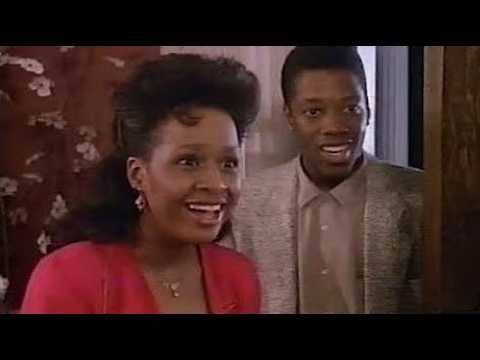
Dream Date is a lighthearted 1989 romantic comedy TV movie about a widowed, overprotective father (Clifton Davis) who, fearing the motives of his teenage daughter’s first date with the high school football captain (Kadeem Hardison), hilariously tags along under the pretense of his own date with the school nurse. Featuring familiar faces from 80s sitcoms, it’s a harmless and nostalgic watch with humor, best enjoyed by fans of vintage television movies. Originally titled Home by Midnight. Storyline: Billie's daughter (Tempestt Bledsoe) is going on her first date. Since he was a real girl chaser in high school, he is sure her date will be the same. So he gets a date with the school nurse, so he (a widower) can follow her around and make sure she doesn't get into trouble. Dream Date remains a nostalgic example of late-80s TV comedies, combining teen romance, family humor, and the era’s sitcom-style storytelling. We do not own the rights to any of this film. This film is being used for historical and educational purposes only. No copyright infringement intended. Black Excellence:
Starring Tempestt Bledsoe, Clifton Davis, Kadeem Hardison
Dream Date

Chen Yutong, a girl's middle school student, was bullied at school, but her mother Li Han was unable to save her daughter from the "hell." Everyone around her turned a blind eye, and a collective silence brewed greater violence.
Starring Wang Chuanjun, Ning Chang, Francis Ng Chun-yu
A Place Called Silence

The Rosa Parks Story is a 2002 American television movie written by Paris Qualles and directed by Julie Dash. Angela Bassett portrays Rosa Parks, with Cicely Tyson in a supporting role as her mother. It was broadcast by CBS on February 24, 2002. It received awards from the NAACP and the Black Reel Awards. Storyline: A seamstress recalls events leading to her act of peaceful defiance that prompted the 1955 bus boycott in Montgomery, Alabama. Plot: This biopic tells the story of civil rights activist Rosa Parks (Angela Bassett) from her days as a private-school student to her public battle against racism and segregation. As a secretary for the National Association for the Advancement of Colored People, Parks defends local children who have been victimized by racism. But when she is arrested after refusing to give up her bus seat for a white passenger, Parks inspires the 1955 Montgomery Bus Boycott. Synopsis: Television movie about Mrs. Rosa L. Parks, the woman who inspired others when, exhausted after a long day at work, she refused to give up her seat to a white man on a city bus in Montgomery, Alabama in 1955. Mrs. Parks was then arrested and jailed. Her courage and defiance led to the Montgomery bus boycott, one of the most successful non-violent protests in American History. The stand-off ended only when the U.S. Supreme Court ruled bus segregation illegal. Quotes: Rosa Louise McCauley Parks: Why do you always push us around? Tagline: They needed a common cause... Her heroic stand gave them one. We do not own the rights to any of this film. This film is being used for historical and educational purposes only. No copyright infringement intended. Black Excellence:
Starring Angela Bassett, Peter Francis James, Tonea Stewart
The Rosa Parks Story
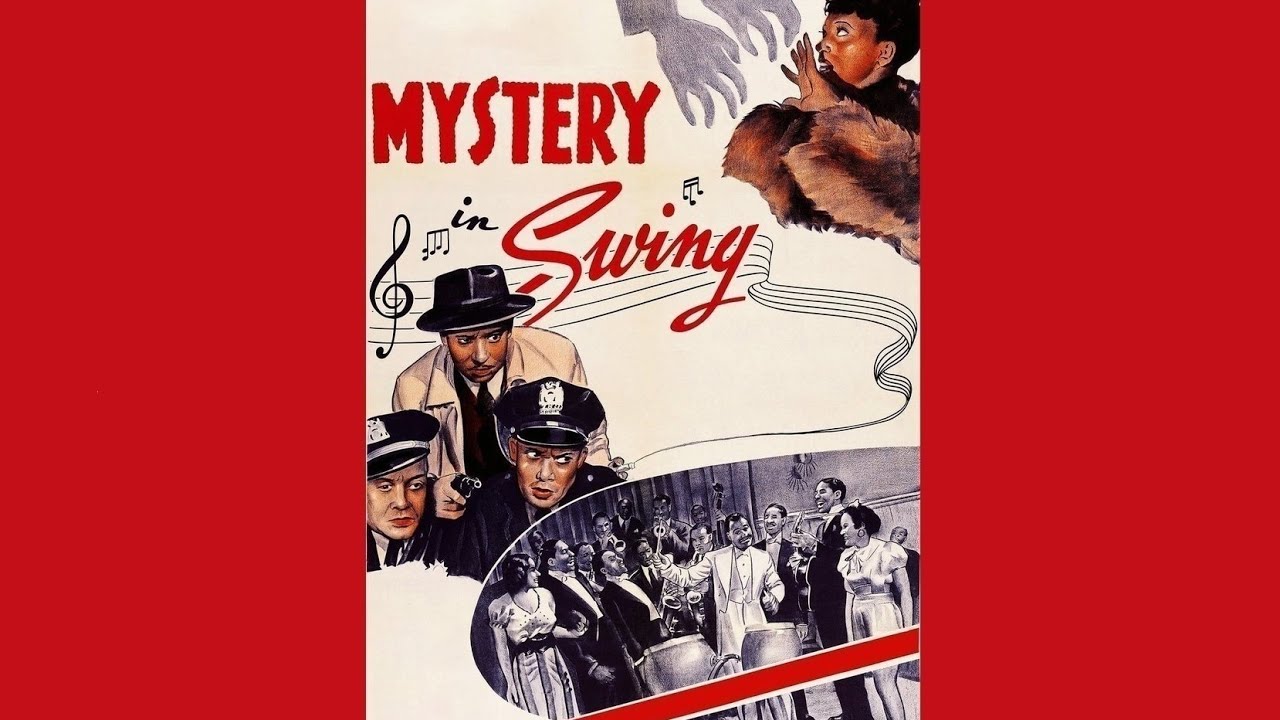
Mystery in Swing is an American murder mystery race film featuring an all-black cast that was released in 1940. It was directed by Arthur Dreifuss, based on a script by Arthur Hoerl. Mystery in Swing features music by The Four Toppers and Cee Pee Johnson and his Orchestra and was noted as being the first time a Black orchestra recorded an entire score for a film. It is currently held in the collections of the National Museum of African American History and Culture. What sets this movie apart from other films of its ilk -- both white-cast and black-cast -- are the interesting and well-played musical interludes and the comedic turn by F. E. Miller as Sgt. Slim. Miller is better known as the vaudeville (and film) partner of Mantan Moreland, but both had separate film outings as well. Both are always worth watching, alone or as a pair. Also notable here is Buck Woods, as a valet who has some memorable scenes ranging from the dramatic to the comedic. Plot: An unpopular band leader at a nightclub is murdered, and the list of suspects is long. Synopsis: In and around some great blues, swing and jazz music, a very unpopular band-leader, Prince Ellis, is killed in a Harlem nightclub, and, in and around some more great music, a detective (Monte Hawley) finds the lists of suspects is very long, as Prince Ellis was indeed very unpopular with many citizens. Tagline: THRILLS! CHILLS! MUSIC! GIRLS! (original poster - all caps) Reception and Legacy: A review in Box Office noted, "The cast, largely comprising night-club entertainers, delivers competently and there are a few welcome and well-done musical interludes." We do not own the rights to any of this film. This film is being used for historical and educational purposes only. No copyright infringement intended. Black Excellence:
Starring Monte Hawley, Tommie Moore, Edward Thompson
Mystery in Swing
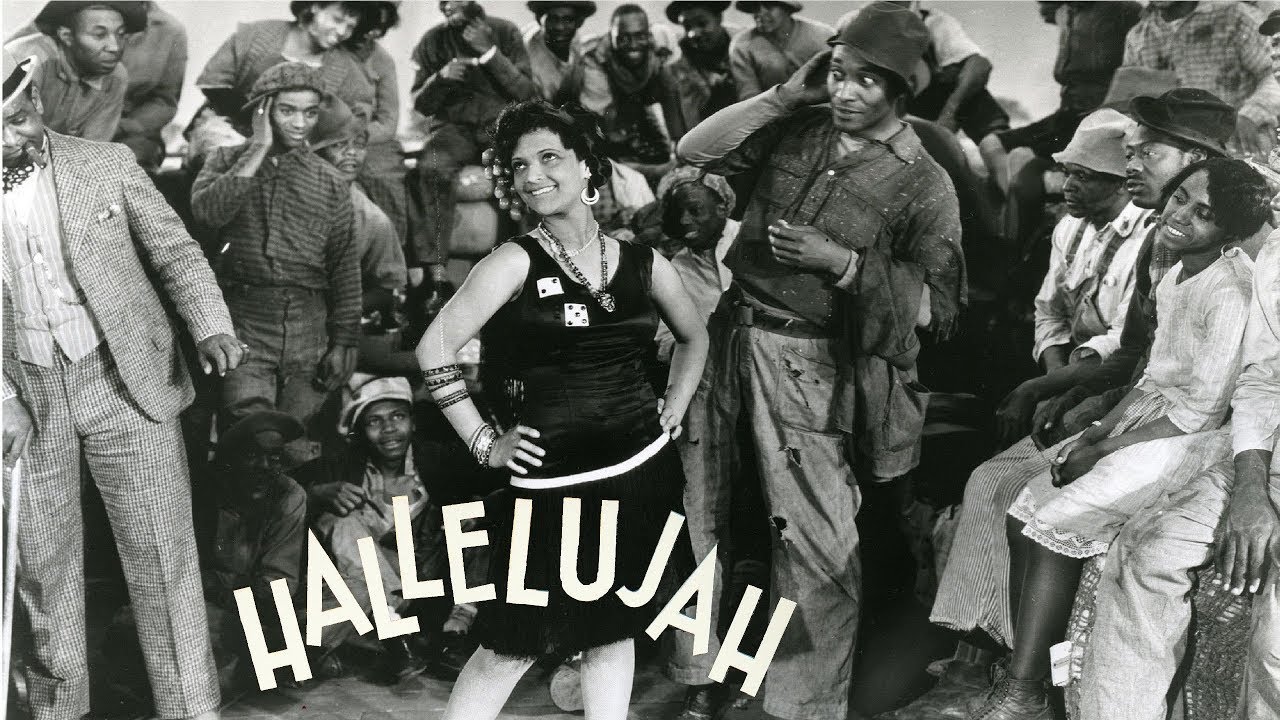
Hallelujah is a 1929 American Metro-Goldwyn-Mayer musical featuring an all-black cast directed by King Vidor and starring Daniel L. Haynes and Nina Mae McKinney. Filmed in Tennessee and Arkansas and chronicling the troubled quest of a sharecropper, Zeke Johnson (Haynes), and his relationship with the seductive Chick (McKinney), Hallelujah was one of the first films with an all-African American cast produced by a major studio. (Although frequently touted as Hollywood's first all-black cast musical, that distinction more properly belongs to Hearts in Dixie, which premiered several months earlier.) It was intended for a general audience and was considered so risky a venture by MGM that they required King Vidor to invest his own salary in the production. Vidor expressed an interest in "showing the Southern Negro as he is" and attempted to present a relatively non-stereotyped view of African-American life. Plot: A sharecropper decides to become a preacher after falling for a vamp from the city. Development: Years before creating Hallelujah, King Vidor had longed to make a film employing an all-African American cast. He had floated the idea around for years but "the studio kept turning the idea down". Vidor’s was in Europe during 1928 promoting his film The Crowd, when heard of talking motion pictures emerging in the United States. He wanted an all-African American cast to sing "Negro spirituals" after he had seen the success of it on Broadway. Vidor stated, "If stage plays with all Negro casts, and stories like those by Octavus Roy Cohen and others, could have such great success, why shouldn’t the screen make a successful Negro play?" Vidor was able to convince Nicholas Schenck, who was the president of MGM at the time, to get the movie made by framing it more as a film that depicted African American’s sexual deviance. Schenck put it simply to Vidor, "Well, if you think like that, I’ll let you make a picture about whores". Vidor received the inspiration to create this film based on real incidents he witnessed as a child during his time at home in the south. He observed: "I used to watch the Negroes in the South, which was my home. I studied their music, and I used to wonder at the pent-up romance in them". Vidor began shooting in Arkansas, Memphis and Southern California at the MGM studios. Hallelujah was King Vidor's first sound film, and combined sound recorded on location and sound recorded post-production in Hollywood. King Vidor was nominated for a Best Director Oscar for the film. Given the equipment available at the time, the film's soundtrack was a technical achievement, employing a much wider range of editing and mixing techniques than was generally used in "talkies" in this period. The Music: The film gives, in some sections, an authentic representation of black entertainment and religious music in the 1920s, though some of the sequences are Europeanized and over-arranged. A sequence which is of vital importance in the history of classic jazz is in the dancehall, where Nina Mae McKinney performs Irving Berlin's "Swanee Shuffle." Although actually filmed in a New York studio using black actors, the sequence gives an accurate representation of a low-life black dance-hall - part of the roots of classic jazz. Most Hollywood films of the period sanitized black music. Hallelujah and Black Stereotypes: Hallelujah was one of the early projects that gave African Americans significant roles in a movie, and though some contemporary film historians and archivists have said that it had "a freshness and truth that was not attained again for thirty years", a number of contemporary film historians and archivists agree that Hallelujah exhibits Vidor’s paternalistic view of rural blacks that included racial stereotyping. Reception: Exhibitors were worried that white audiences would stay away due to the black cast. They hosted two premieres, one in Manhattan and one in Harlem. The Black people who came to watch the film in Manhattan were forced to sit in the balcony. Hallelujah was commercially and critically successful. Photoplay praised the film for its depiction of African Americans and commented on the cast: "Every member of Vidor's cast is excellent. Although none of them ever worked before a camera or a microphone before, they give unstudied and remarkably spontaneous performances. That speaks a lot for Vidor's direction." Mordaunt Hall, in The New York Times, wrote approvingly of the all-Black cast, stating, "Hallelujah!, with its clever Negro cast, is one of the few talking pictures that is really a separate and distinct form of entertainment from a stage play". The combination of two groundbreaking aspects of the film, audible dialogue and an all-black cast, set the movie apart from its contemporaries. Hallelujah entered the public domain on January 1, 2025. Black Excellence:
Hallelujah

Cane River is a 1982 American romantic drama independent film that was lost until its rediscovery in 2013 and its subsequent re-release in 2018 and beyond. It was written, produced, and directed by Horace B. Jenkins. The film features the lives of African Americans in the US state of Louisiana. While the film premiered in New Orleans, Louisiana, in 1982, Horace Jenkins died before the film could be released in New York City and beyond. The film was considered lost until a negative was recovered in 2013. Following its re-release, Cane River received critical acclaim. Highly rated on Rotten Tomatoes and Metacritic, it was lauded for its exploration of racial history and blending romance with political undertones. Despite some noted technical limitations, critics highlighted its pioneering portrayal of black experiences and its significance in American cinema. Storyline: Written, produced, and directed by the late Emmy Award-winning Horace B. Jenkins, financed by the prominent New Orleans' Rhodes family, and crafted by an entirely African American cast and crew - CANE RIVER is a historically informed love story set in Louisiana's Natchitoches Parish, a "free community of color." Aspiring writer and hopeless romantic Peter - former athlete and scion of an elite Creole family - returns to his hometown and immediately falls for a breathtaking historical tour guide, Maria. Maria's disenfranchised, darker-skinned family disapprove of Peter's family and condemn their burgeoning romance while highlighting the painful legacy of colorism in their tightly-knit community. The lovers must work through Peter's contentious family legacy as privileged, former slave-owning, light-skinned Creoles if they want their romance to survive. Synopsis: The New Orleans Film Society described the film, "Cane River is set near Natchitoches, in one of the first 'free communities of color.' Richard Romain plays Peter Metoyer, home to fight for his land, and Tommye Myrick plays the headstrong Maria Mathis, reluctant to succumb to his charms just because he's the scion of a famous family. Together they confront schisms of class, color and complexion within the black community that threaten to keep them apart and that still roil America today." Themes: Cane River delves into the intricacies of independence and the burdens of personal and collective history. A significant focus is placed on racial identities, emphasizing the interplay between race, complexion, class and societal structure. The economic disparities prevalent in society are not left unaddressed, along with the legacy of Black American history. The story also touches upon the nuances of forbidden romance, and the web of relationships that individuals navigate through. History, both personal and cultural, especially as it pertains to Louisiana, is a recurring theme, The film sheds light on the importance of personal and collective identity, intellect, and the significance of one's roots. Racial complexities and the trauma of slavery are meticulously explored, further delving into the caste systems that still have remnants in society. Themes of love are omnipresent, intertwined with land ownership and its implications. Lastly, the film brings to the fore conflicts revolving around class and skin color, emphasizing the significance of heritage. We do not own the rights to any of this film. This film is being used for historical and educational purposes only. No copyright infringement intended. Black Excellence:
Starring Tommye Myrick, Richard Romain, Barbara Tasker
Cane River
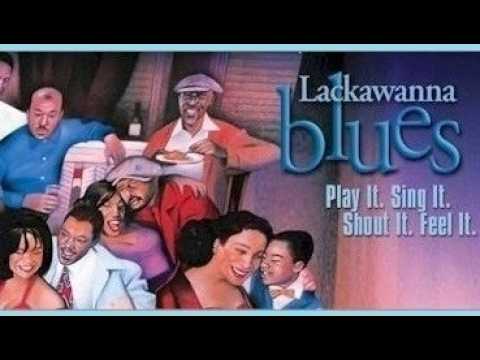
Lackawanna Blues is a 2005 American biographical drama television film directed by George C. Wolfe and written by Ruben Santiago-Hudson. It aired on HBO on February 12, 2005. It is based on the play of the same name by Santiago-Hudson. Wolfe had commissioned the stage version. For her work in the movie, S. Epatha Merkerson won a Primetime Emmy Award, a Golden Globe Award, and a Screen Actors Guild Award in 2006. Synopsis: In a story fueled by rhythm and blues, a young boy's life is shaped by love and the stories of a cast of characters in the boarding house where he lives in 1950s and 1960s Lackawanna, New York. Storyline: In the 1950s and 1960s, Ruben Santiago-Hudson Jr. lives in a lively boardinghouse in the blue-collar town of Lackawanna, New York, with his father after his parents separate. Run by the motherly Nanny Crosby and her taciturn husband, the boardinghouse residents, including The Bandleader, singer Pauline and cabaret owner Dick Barrymore, teach the young boy about life and art. Premise: Lackawanna Blues is the true story of Ruben Santiago Jr. growing up in Lackawanna, New York. He was raised by his father and mother and the neighborhood boarding house lady known as Rachel "Nanny" Crosby. Ruben was born in 1956 to his Puerto Rican father Ruben Santiago and his African-American mother Alean Hudson. His mother was too mentally unstable to take good care of him; residing in mental hospitals, Alean disappears and reappears throughout Ruben's life. His father stayed at Nanny's boarding house, but he was frequently not around due to working long hours or out looking for work. Nanny more or less took care of Ruben Jr. as a mother figure. The television movie depicts his life growing up there and the diverse characters that he meets during his and their stays at the boarding house. Taglines: Play it. Sing it. Shout it. Feel it. We do not own the rights to any of this film. This film is being used for historical and educational purposes only. No copyright infringement intended. Black Excellence:
Starring S. Epatha Merkerson, Marcus Carl Franklin, Yasiin Bey
Lackawanna Blues
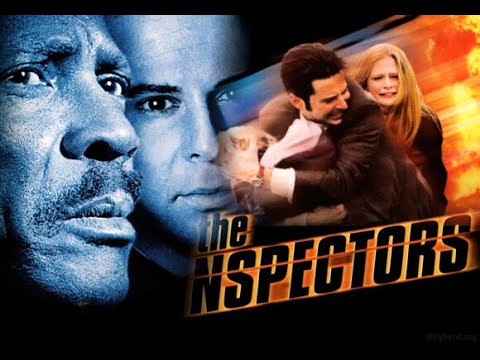
Two very unlikely postal inspectors are assigned to find the person who planted a deadly mail bomb. Director : Brad Turner Writer :Bruce Zimmerman Stars :Louis Gossett Jr. || Jonathan Silverman || Tobias Mehler Storyline U.S Postal Inspectors are called in when a suburban couple are killed by a mail bomb. Suspicion immediately falls on the couple's estranged and heavily in debt son, who also just happens to be a Navy munitions expert. But investigations reveal that he is on the run from a past event in his life that is associated with the bombings. The Inspectors (TV Movie 1998) - IMDbThe Inspectors in 1998 was a TV movie that followed two unlikely U.S. Postal Inspectors investigating a murder by mail, focusing on a suburban couple killed by a mail bomb and their indebted, Navy-expert son as a prime suspect. Here are the key details about The Inspectors: Title : The Inspectors Year : 1998 Format : Television movie Plot : The story revolves around a murder case involving a mail bomb. The plot centers on two contrasting U.S. Postal Inspectors who are assigned to find the bomber. Investigation : Their investigation leads them to a suburban couple who are victims of a mail bomb. The prime suspect is the couple's estranged son, a heavily in-debt former Navy munitions expert. Themes : The movie likely explores themes of family dynamics, past events coming to the surface, and a classic detective story centered on a criminal investigation. Production : The film's plot is attributed to John Sacksteder. This movie is available on various platforms, including Filmaffinity.
Starring Louis Gossett Jr., Jonathan Silverman, Samantha Ferris