
Results for "african"
134 films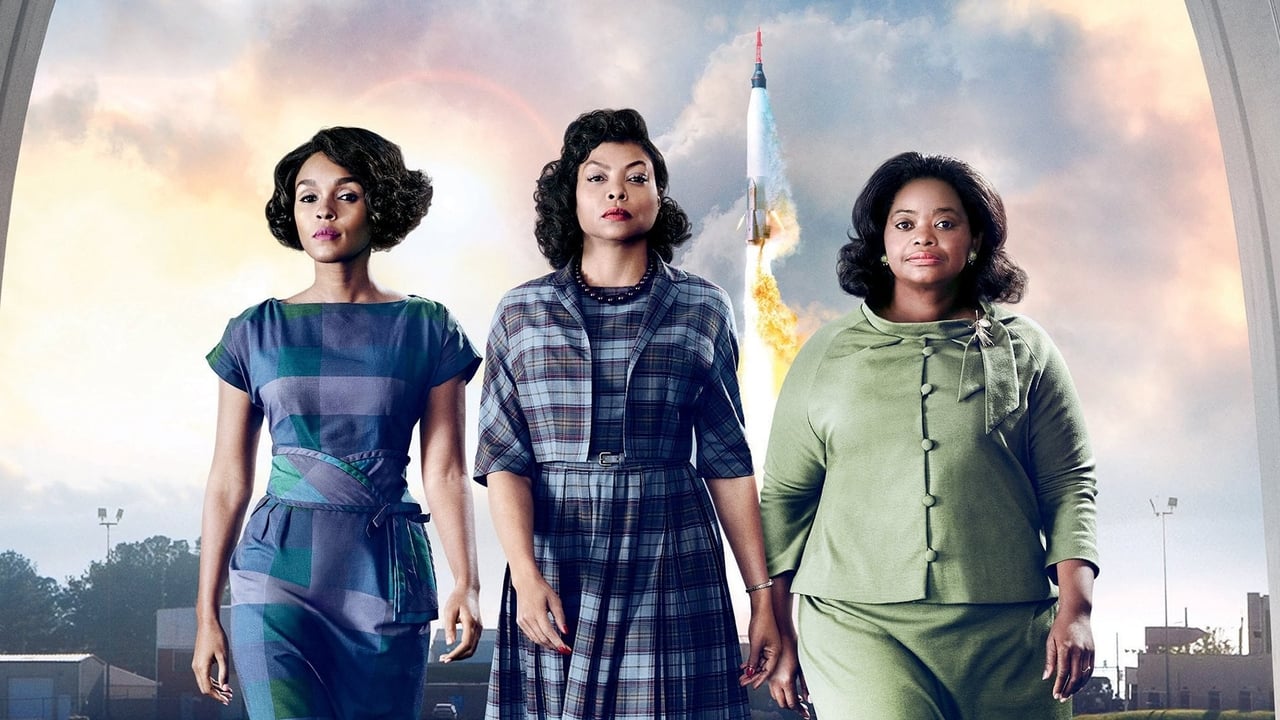
The untold story of Katherine G. Johnson, Dorothy Vaughan and Mary Jackson – brilliant African-American women working at NASA and serving as the brains behind one of the greatest operations in history – the launch of astronaut John Glenn into orbit. The visionary trio crossed all gender and race lines to inspire generations to dream big.
Starring Taraji P. Henson, Octavia Spencer, Janelle Monáe
Hidden Figures

Colorado Springs, late 1970s. Ron Stallworth, an African American police officer, and Flip Zimmerman, his Jewish colleague, run an undercover operation to infiltrate the Ku Klux Klan.
Starring John David Washington, Adam Driver, Topher Grace
BlacKkKlansman

King T'Challa returns home to the reclusive, technologically advanced African nation of Wakanda to serve as his country's new leader. However, T'Challa soon finds that he is challenged for the throne by factions within his own country as well as without. Using powers reserved to Wakandan kings, T'Challa assumes the Black Panther mantle to join with ex-girlfriend Nakia, the queen-mother, his princess-kid sister, members of the Dora Milaje (the Wakandan 'special forces') and an American secret agent, to prevent Wakanda from being dragged into a world war.
Starring Chadwick Boseman, Michael B. Jordan, Lupita Nyong'o
Black Panther

An African prince decides it’s time for him to find a princess... and his mission leads him and his most loyal friend to Queens, New York. In disguise as an impoverished immigrant, the pampered prince quickly finds himself a new job, new friends, new digs, new enemies and lots of trouble.
Starring Eddie Murphy, Shari Headley, Arsenio Hall
Coming to America

The Ditchdigger's Daughters is a television movie produced by the Family Channel in 1997. The film is based upon the book of the same name by Dr. Yvonne S. Thornton. Plot: Based on the memoirs of Yvonne S. Thornton, this heartwarming, inspirational family drama centers on a poor black laborer who wanted his six daughters to grow up to be doctors. Synopsis: In 1940s New Jersey, a poor, working man aspires to give his six daughters opportunities that he never had. Storyline: In many ways "The Ditchdigger's Daughters" adheres to the well worn path of a genre best described as the black struggle in an unjust white America. But the real plot in this movie revolves around the tyranny of a father and the effect it has on his six daughters as he cajoles, demands, blusters, and drives his daughters to reach for his notion of excellence. Demanding all "A" report cards, prohibiting dating, punishing with housework, and insisting that each daughter aim her sights on a career as a doctor all harken to the underlying fact of his own failure to complete school, and his own view of being poor and black. We do not own the rights to any of this film. This film is being used for historical and educational purposes only. No copyright infringement intended. Black Excellence:
Starring Carl Lumbly, Dulé Hill, Victoria Dillard
The Ditchdigger's Daughters

Polly is a 1989 American made-for-television musical film adapted from the book Pollyanna by Eleanor H. Porter featuring an all African-American cast (with the exception of Celeste Holm). It was directed and choreographed by Debbie Allen, starring Keshia Knight Pulliam, Phylicia Rashad and also featured the final performance of actress Butterfly McQueen. Polly was originally broadcast on NBC on November 12, 1989. Storyline: An orphan tries to use gladness to unite the people in a small southern town. Plot: Set in Alabama during the 1950s, Polly Whittier, an orphan who is sent to live with her aunt Polly Harrington, who is a descendant of the founding family of a small Southern town (also called Harrington) during the segregation era. A key point in dividing the town is a ravine which has an unrepaired bridge which burned down many years ago, and no one knows how it started and is suspicious of everyone else. Polly is able to convince people to look at the bright side of things, but tragedy strikes when Polly falls two stories from a tree, suffering a spinal injury. We do not own the rights to any of this film. This film is being used for historical and educational purposes only. No copyright infringement intended. Black Excellence:
Starring Keshia Knight Pulliam, Phylicia Rashād, Dorian Harewood
Polly

Something the Lord Made is a 2004 American made-for-television biographical drama film about the black cardiac pioneer Vivien Thomas (1910–1985) and his complex and volatile partnership with white surgeon Alfred Blalock (1899–1964), the "Blue Baby doctor" who pioneered modern heart surgery. Based on the National Magazine Award-winning Washingtonian magazine article "Like Something the Lord Made" by Katie McCabe, the film was directed by Joseph Sargent and written by Peter Silverman and Robert Caswell. Synopsis: Although Vivien Thomas (Mos Def), a black man in the 1930s, is originally hired as a janitor, he proves himself adept at assisting the "Blue Baby doctor," Alfred Blalock (Alan Rickman), with his medical research. When Blalock insists that Thomas follow him to Johns Hopkins University, they must find a way to skirt a racist system to continue their study of infant heart disease. Thomas is indispensable to Blalock's progress, but Blalock is the only one who is allowed to receive the acclaim. Plot: Fact-based story of a white surgeon and a black lab technician who revolutionized heart surgery amidst the racial injustice of the 1940s. Storyline: Alfred Blalock (1899-1964), a cardiologist (therefore, self-confident to the point of arrogance), leaves Vanderbilt for Johns Hopkins taking with him his lab technician, Vivien Thomas (1910-1985). Thomas, an African-American without a college degree, is a gifted mechanic and tool-maker with hands splendidly adept at surgery. In 1941, Blalock and Thomas take on the challenge of blue babies and invent bypass surgery. After trials on dogs, their first patient is baby Eileen, sure to die without the surgery. In defiance of custom and Jim Crow, Blalock brings Thomas into the surgery to advise him, but when Life Magazine and kudos come, Thomas is excluded. Will he receive his due? Film Background: A man who in life avoided the limelight, Thomas remained virtually unknown outside the circle of Hopkins surgeons he trained. Thomas' story was first brought to public attention by Washington writer Katie McCabe, who learned of his work with Blalock on the day of his death in a 1985 interview with a prominent Washington, D.C. surgeon who described Thomas as "an absolute legend." McCabe's 1989 Washingtonian magazine article on Thomas, "Like Something the Lord Made", generated widespread interest in the story and inspired the making of a 2003 public television documentary on Thomas and Blalock, "Partners of the Heart." A Washington, D.C. dentist, Irving Sorkin, discovered McCabe's article and brought it to Hollywood, where it was developed into the film. Tagline: A breakthrough that changed the face of medicine. A unique partnership that broke the rules. We do not own the rights to any of this film. This film is being used for historical and educational purposes only. No copyright infringement intended. Black Excellence:
Starring Alan Rickman, Yasiin Bey, Kyra Sedgwick
Something the Lord Made
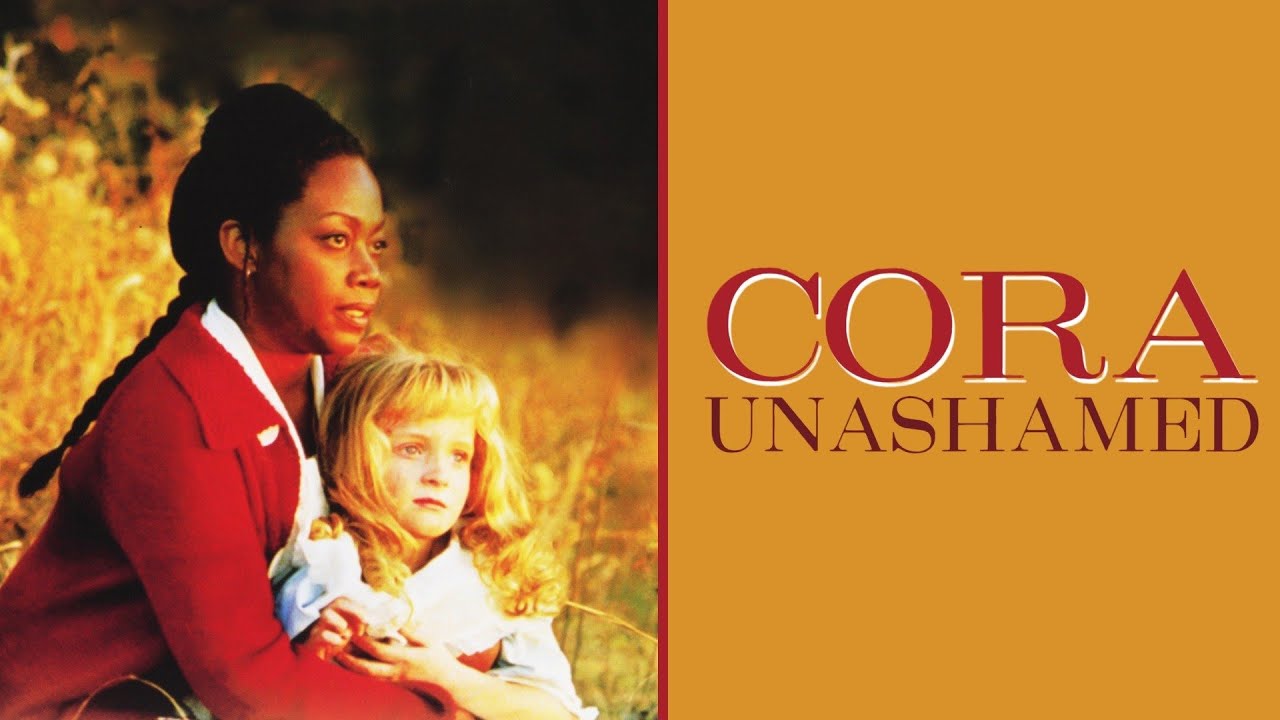
Cora Unashamed is a 2000 American made-for-television drama film from The American Collection directed by Deborah Pratt, starring Regina Taylor and Cherry Jones. The film was shot on location in October 1999 in central Iowa. Cities such as Ames, Cambridge and Story City were used. The movie is based on a short story by the same name in The Ways of White Folks, a 1934 collection of short stories by Langston Hughes. Cinematographer Ernest Holzman won an American Society of Cinematographers (ASC) Award, for Outstanding Achievement in Cinematography in Movies of the Week/Mini-Series'/Pilot for Network or Basic Broadcast TV, for his work on this film. David Herbert Donald called the short story "a brilliantly realized portrait of an isolated black woman in a small Middle Western town, who stoically survives her own sorrows, but in the end lashes out against the hypocrisy of the whites who employ her." Plot: A black servant (Regina Taylor) develops a close bond with her wealthy employers' daughter (Molly Graham) in 1930s Iowa. Storyline: Cora Jenkins and her parents are the only African-Americans in their community in 1920s Iowa, supported only by Cora's wages as housekeeper to the wealthy Studevants. When tragedy strikes, will Cora speak the truth... with consequences? Synopsis: This adaptation of Langston Hughes' powerful tale, set in the 1920s and 30s, tells the story of Cora Jenkins, the daughter of the only African-American family in the small Iowa town of Melton. Cora supports her mother and her daughter, Josephine, by working as a domestic in the home of the socially driven Mrs. Studevant, where she serves almost as a surrogate mother to the Studevants' daughter, Jessie. Cora's own daughter dies, and Cora's relationship with Jessie grows even deeper. When Jessie dies as a result of an abortion arranged by her mother and the latter lies about the cause to preserve her social standing, Cora must risk her livelihood, her security, and her place in the community in order to speak the truth and honor the memory of the child she loved and lost. Overview: An adaptation of a story by Langston Hughes that focuses on the stories of black and white families in 1916-31 Iowa. Cora, an African-American woman living in an all-white Iowa town in the 1930s, gives up her livelihood and security in order to speak the truth about the tragic deaths of two children she loved. Set in the 1930s, the story takes place in the tiny town of Melton, Iowa, where Cora Jenkins and her family live in isolation as the community's only African Americans. Their existence is supported solely by Cora's earnings as housekeeper in the household of socially driven Lizbeth Studevant. Tested early in life by the death of her daughter, Cora transfers her maternal love to the Studevants' daughter, Jessie, whose own mother is unable to demonstrate affection for her child. When Jessie dies as a result of a tragic lapse in judgment by her mother, Cora's devotion to the girl empowers her to speak the truth to the town -- regardless of the cost. We do not own the rights to any of this film. This film is being used for historical and educational purposes only. No copyright infringement intended. Black Excellence:
Starring Regina Taylor, Cherry Jones, Ellen Muth
Cora Unashamed

"A Dream for Christmas" is a TV movie which originally aired on television on December 24, 1973. It was originally designed as the pilot for a never-sold TV series titled The Douglas Family. Synopsis: An all-black cast shines in this pilot for a proposed series involving a southern minister who is assigned to a poor parish in California with the congregation drifting away and the church scheduled for demolition. But it's close to Christmas, a time when miracles have been known to happen. The hope here was for writer Earl Hamner to repeat his success with "The Waltons." Plot: An African-American minister, the Rev. Will Douglas (Hari Rhodes), and his large family relocate from their Arkansas home to Los Angeles in the 1950s. Douglas has been hired to lead the congregation of a neighborhood church. But, when the family finally arrives, they discover that the church is in major disrepair and scheduled for demolition. Douglas; his wife, Sarah (Lynn Hamilton) ; Grandma (Beah Richards) ; and the children must come together as various hardships rock their household. Review: Good Family Entertainment! I hadn't heard of this made for TV movie before it aired on the Me TV channel during the holidays. While it's not a classic in its field, it does prove to be a pleasurable watch. It's interesting that the entire cast is made up of African-Americans, and equally interesting that these characters and experiences have been almost totally written to be universal regardless of what your ethnicity might be. And while the central character is a preacher struggling to keep his church alive, the movie wisely doesn't lay on the religion thick - his words and actions are also universal to all viewers regardless of what your religion might be. We do not own the rights to any of this film. This film is being used for historical and educational purposes only. No copyright infringement intended. Black Excellence:
Starring Hari Rhodes, Beah Richards, Lynn Hamilton
A Dream for Christmas

Selma, Lord, Selma is a 1999 American made-for-television biographical drama film based on true events that happened in March 1965, known as Bloody Sunday in Selma, Alabama. The film tells the story through the eyes of a 9-year-old African-American girl named Sheyann Webb (Jurnee Smollett). It was directed by Charles Burnett, one of the pioneers of African-American independent cinema. It premiered on ABC on January 17, 1999. Plot: In 1965 Alabama, a 9-year-old girl (Jurnee Smollett) is touched by a speech by Martin Luther King, Jr. (Clifton Powell) and becomes a devout follower, but her resolution is tested when she joins others in the famed march from Selma to Montgomery. Production: Selma, Lord, Selma is based on a book of the same name written in 1980 by Sheyann Webb, Rachel West and Frank Sikora. The full title is Selma, Lord, Selma: Girlhood Memories of the Civil-Rights Days. It was published by the University of Alabama Press in Tuscaloosa, AL. It is written in the style of memoirs by Sheyann and Rachel. Selma, Lord, Selma was made into a movie. Walt Disney Pictures picked it up and on January 17, 1999, one day prior to the national holiday commemorating Dr. King's birthday, it was broadcast on the ABC television network. Dr. King's daughter Yolanda is featured in the film as Miss Bright, Sheyann's teacher who marches with her. Music composed by Stephen James Taylor, with vocals by Brides of the Wind. We do not own the rights to any of this film. This film is being used for historical and educational purposes only. No copyright infringement intended. Black Excellence:
Starring Mackenzie Astin, Jurnee Smollett-Bell, Clifton Powell
Selma, Lord, Selma

Claudine is a 1974 American romantic comedy-drama film, directed by John Berry. Claudine was written by Lester Pine and Tina Pine, produced by Third World Cinema, and distributed by 20th Century Fox, starring James Earl Jones, Diahann Carroll, and Lawrence Hilton-Jacobs. The film was released on April 22, 1974, grossing about $6 million, a modest hit for the times. It was praised for showing a new dimension in black cinema during the height of blaxploitation. Synopsis: A single mother of six on welfare and a garbage collector fall in love in 1970s Harlem. Plot: Claudine is a single mother on welfare in New York City who endures an exhausting commute to the suburbs where she works as a maid for wealthy families. In one carefully tended white community, she meets Roop, a charismatic but irresponsible garbage collector. Romance quickly ensues, but Claudine doubts that their relationship is good for her six children, and Rupert, despite his good nature, is reluctant to take on fatherhood. Storyline: Diahann Carroll is radiant in an unforgettable, Oscar-nominated performance as Claudine, a strong-willed single mother, raising six kids in Harlem, whose budding relationship with a gregarious garbage collector (an equally fantastic James Earl Jones) is stressed by the difficulty of getting by in an oppressive system. As directed by the formerly blacklisted leftist filmmaker John Berry, this romantic comedy with a social conscience deftly balances warm humor with a serious look at the myriad issues—from cycles of poverty to the indignities of the welfare system—that shape its characters’ realities. The result is an empathetic chronicle of both Black working-class struggle and Black joy, a bittersweet, bighearted celebration of family and community set to a sunny soul soundtrack composed by Curtis Mayfield and performed by Gladys Knight & the Pips. We do not own the rights to any of this film. This film is being used for historical and educational purposes only. No copyright infringement intended. Black Excellence:
Starring Diahann Carroll, James Earl Jones, Lawrence Hilton-Jacobs
Claudine

The Rosa Parks Story is a 2002 American television movie written by Paris Qualles and directed by Julie Dash. Angela Bassett portrays Rosa Parks, with Cicely Tyson in a supporting role as her mother. It was broadcast by CBS on February 24, 2002. It received awards from the NAACP and the Black Reel Awards. Storyline: A seamstress recalls events leading to her act of peaceful defiance that prompted the 1955 bus boycott in Montgomery, Alabama. Plot: This biopic tells the story of civil rights activist Rosa Parks (Angela Bassett) from her days as a private-school student to her public battle against racism and segregation. As a secretary for the National Association for the Advancement of Colored People, Parks defends local children who have been victimized by racism. But when she is arrested after refusing to give up her bus seat for a white passenger, Parks inspires the 1955 Montgomery Bus Boycott. Synopsis: Television movie about Mrs. Rosa L. Parks, the woman who inspired others when, exhausted after a long day at work, she refused to give up her seat to a white man on a city bus in Montgomery, Alabama in 1955. Mrs. Parks was then arrested and jailed. Her courage and defiance led to the Montgomery bus boycott, one of the most successful non-violent protests in American History. The stand-off ended only when the U.S. Supreme Court ruled bus segregation illegal. Quotes: Rosa Louise McCauley Parks: Why do you always push us around? Tagline: They needed a common cause... Her heroic stand gave them one. We do not own the rights to any of this film. This film is being used for historical and educational purposes only. No copyright infringement intended. Black Excellence:
Starring Angela Bassett, Peter Francis James, Tonea Stewart